
Anthropic introduced tools that help companies see what they get for their AI spending.
Anthropic reports operating profit and 900% retention as Claude Code grows; new tools help enterprises track token spend and AI value.
Key Takeaways
- Anthropic reported Q2 operating profit and 900% net revenue retention, showing Claude Code adoption is turning enterprise AI coding into durable revenue.
- Anthropic launched enterprise reporting tools that connect token spend to measurable output, cost, workflow failures, and improvement recommendations, while defaulting not to train on customer data.
- Pooled group budgets and analytics aim to help companies manage AI token spending and demonstrate return on investment amid rising costs.
- Jellyfish data shows Claude Code/Anthropic-powered tools are widely adopted, accounting for nearly a third of proposed code changes and 10x spending growth, though still about 2% of engineering cost.
- Enterprise switching costs and embedded workflows help Anthropic retain customers despite competition from OpenAI’s newer models.
Meta description: Anthropic reported operating profit and 900% net revenue retention as Claude Code adoption grows and new reporting tools target enterprise token spend.
Tags: Anthropic, Claude Code, AI coding, enterprise AI, token spend
Featured image: 
The financials Anthropic shared with investors this week point to Claude Code delivering the business outcome the frontier lab wanted. The company recorded an operating profit in the second quarter and reported 900% net revenue retention, meaning spending from the same customers in Q3 2025 grew nine times in Q3 2026. The result matters because it moves the discussion from developer excitement to whether enterprise AI coding can produce durable revenue.
Background: Claude Code shifts from tool to enterprise budget line
Anthropic has focused on keeping enterprise users, and the new reporting launch shows why retention matters. Claude Code is now part of a broader effort to connect AI usage to measurable business value. While usage among venture-backed firms is driving token spend, most Fortune 500 companies are not seeing major gains from deploying AI, raising the need to justify costs and improve outcomes.
Development: Reporting tools bring token spend under management
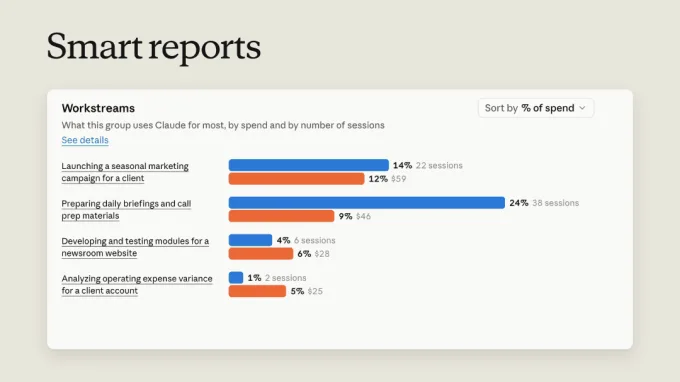
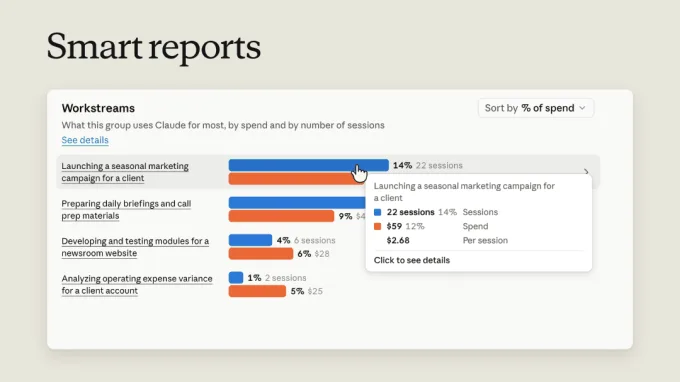
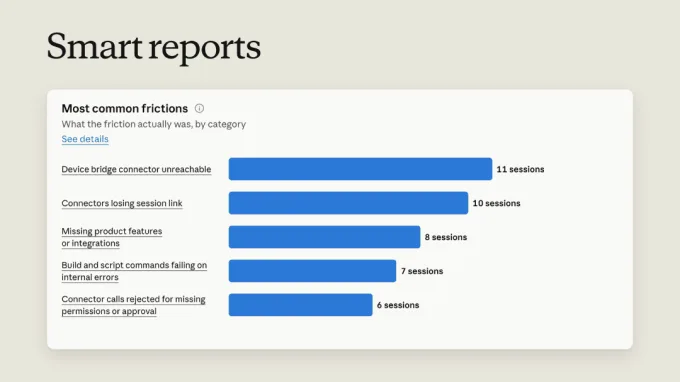
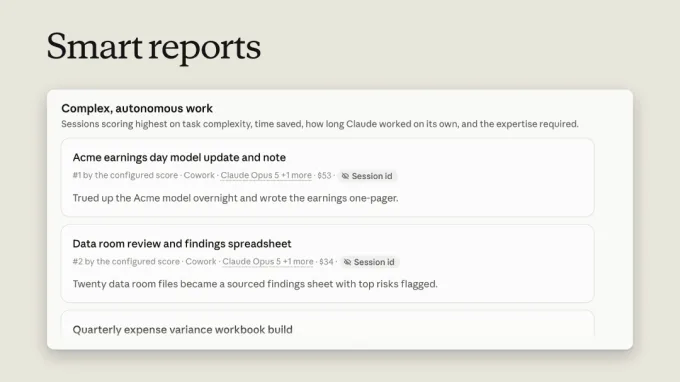
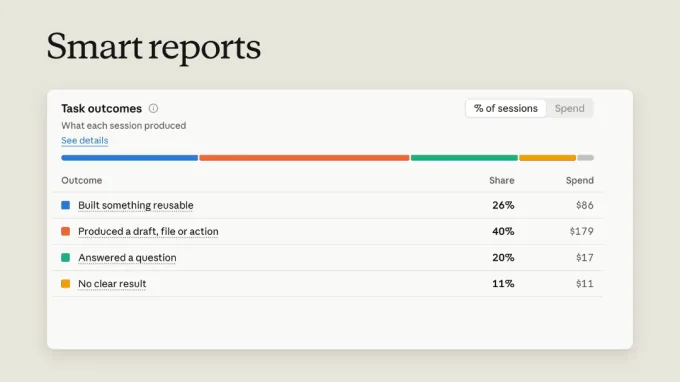
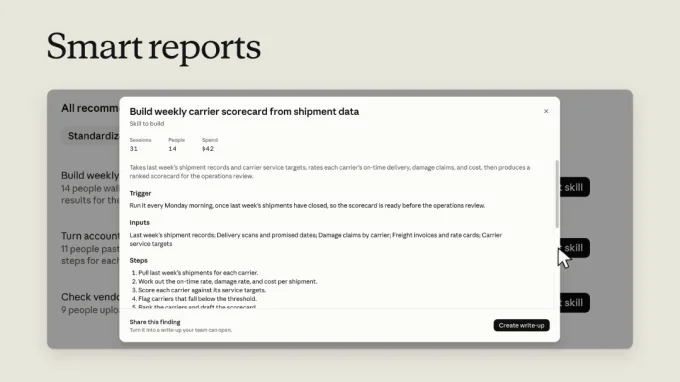
On Wednesday, Anthropic announced a new suite of reporting tools designed to give enterprise customers a finer-grained understanding of the value they get from their token spend, meaning the cost of using model tokens. Using internal analytics and employee surveys, managers can review a team’s work over a given date range, see what the team produced, understand how much it cost, and identify where workflows broke down. Anthropic says it will not use this data for model training by default, and the reports will offer recommendations on how to improve results.
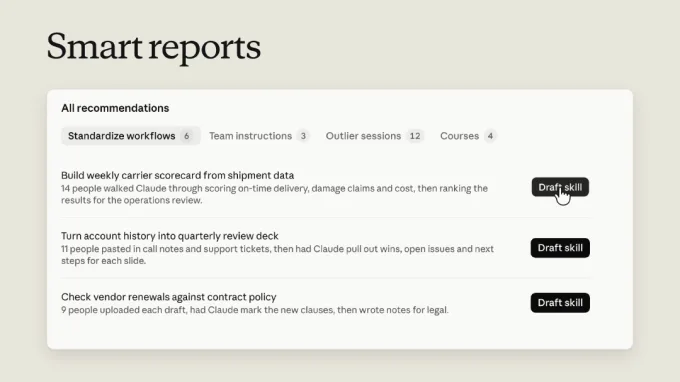
Anthropic is also creating pooled group budgets to allow teams to better manage token spending. The move is a clear attempt to demonstrate the return on investment of Anthropic’s tools and show customers how to improve it, a major concern among large customers. The reports turn raw AI usage into a management view, linking spending, output, and process failures inside one reporting frame.
Latest progress: Jellyfish data shows adoption and switching costs
Jellyfish, a company that makes tools for software developers, released a new report yesterday based on the use of agentic coding tools by 276,000 of its customers. Claude Code and other tools built on Anthropic models remain the most widely used in the survey, responsible for nearly a third of all proposed code changes submitted for review. Spending on those tools has grown 10x since the beginning of the year, and their cost is now equal to about 2% of total engineering cost.
Nicholas Arcolano, chief scientist at Jellyfish, told TechCrunch that 2% may still be small, but 10x growth is growth most CFOs did not plan for, and companies are realizing that spending alone is not enough; they must optimize it and make it work. Anthropic’s new reports speak to that challenge. Anthropic leads among enterprise customers, but what makes an agentic coding tool truly sticky is difficult to identify.
The release of OpenAI’s latest model, Astra, this summer appeared to be a potential threat to Anthropic, but so far it has not slowed Anthropic’s adoption numbers. Nikolas Albarran, AI product lead at Jellyfish, told TechCrunch that Codex took a long time to become visible in Jellyfish’s data and has risen with Astra. Looking at X, one could get the distinct impression that competition is more heated, with people in the Valley saying Codex is better. Albarran said Anthropic benefited from strong enterprise motions, its own incumbent weight, and tools that worked well enough for teams to standardize workflows around them, leaving no sufficiently compelling reason to switch.
The issue is not only models and workflows. The realities of business mean that once a frontier lab has embedded itself in a customer organization, switching is harder than it is for an individual programmer or small organization. Albarran pointed to the investment all major AI labs are making in forward-deployed engineering organizations, teams that embed AI consultants inside customer organizations to help them start. He described Anthropic’s new reporting tools as a lighter version of that hands-on help for Anthropic customers.
Albarran said the market is mature enough that once companies are invested, switching becomes harder because they have spent the effort. Even if platforms are mostly the same, they are slightly different and have their own quirks in how they handle agent.md files, etc., so the cost to switch is not zero.
Current stage: Enterprise AI moves from trial spending to value proof
Anthropic’s operating profit, 900% net revenue retention, new reporting tools, and Jellyfish’s findings show that enterprise AI coding has entered a phase where adoption alone is not the endpoint. Customers are being asked to connect token spend, engineering output, and workflow performance inside a single management system. The next signal to watch is whether visibility tools and pooled budgets can sustain Anthropic’s lead among enterprise customers while Codex and Astra continue to gain attention.
Comments
No comments yet. Be the first to comment.