
A Small Share of AI Users Pays, Yet They Spend Heavily
a16z finds broad AI adoption, few payers, and extreme spending concentration, as subscriptions, model rivalry, and agent tools reshape monetization.
Key Takeaways
- a16z’s new consumer AI rankings now track actual US consumer spending, revealing that AI adoption is broad while paid usage remains narrow.
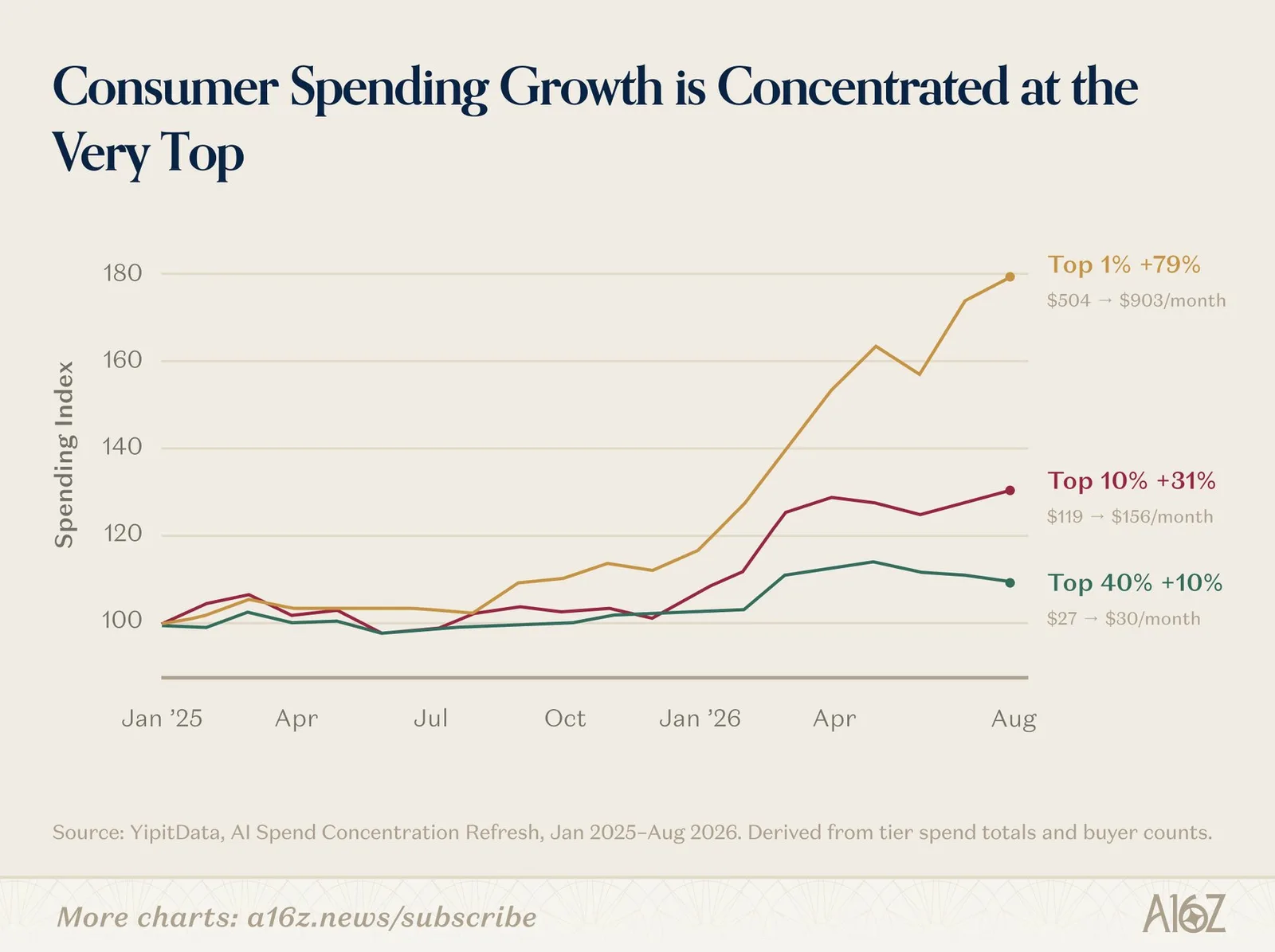
- AI spending is highly concentrated: the top 1% of payers account for nearly 20% of observed spending and average about $900 per month, versus roughly $25 for the typical paying user.
- Growth is driven mainly by heavy professional users, who increasingly pay for building, automation, and creative AI tools.
- ChatGPT, Claude, and Gemini are competing with different monetization strengths, with Anthropic doing better at higher-priced subscriptions and ChatGPT regaining momentum in net new paid users.
- The core business-model challenge is that most AI products rely on subscriptions or usage fees rather than ads, making monetization difficult amid high model costs.
Andreessen Horowitz has released the seventh edition of its Top 100 consumer AI rankings, and for the first time the venture capital firm is tracking actual US consumer spending on AI products using panel data from YipitData. The new dataset, drawn from observed purchases on US consumer cards, does not represent total revenue but offers a concrete view of who pays for AI and how much. The headline finding: adoption is broad but monetization is narrow, and within that narrow base, spending is extraordinarily concentrated.
Background: Three Years of Rankings and a Locked-In Top Tier
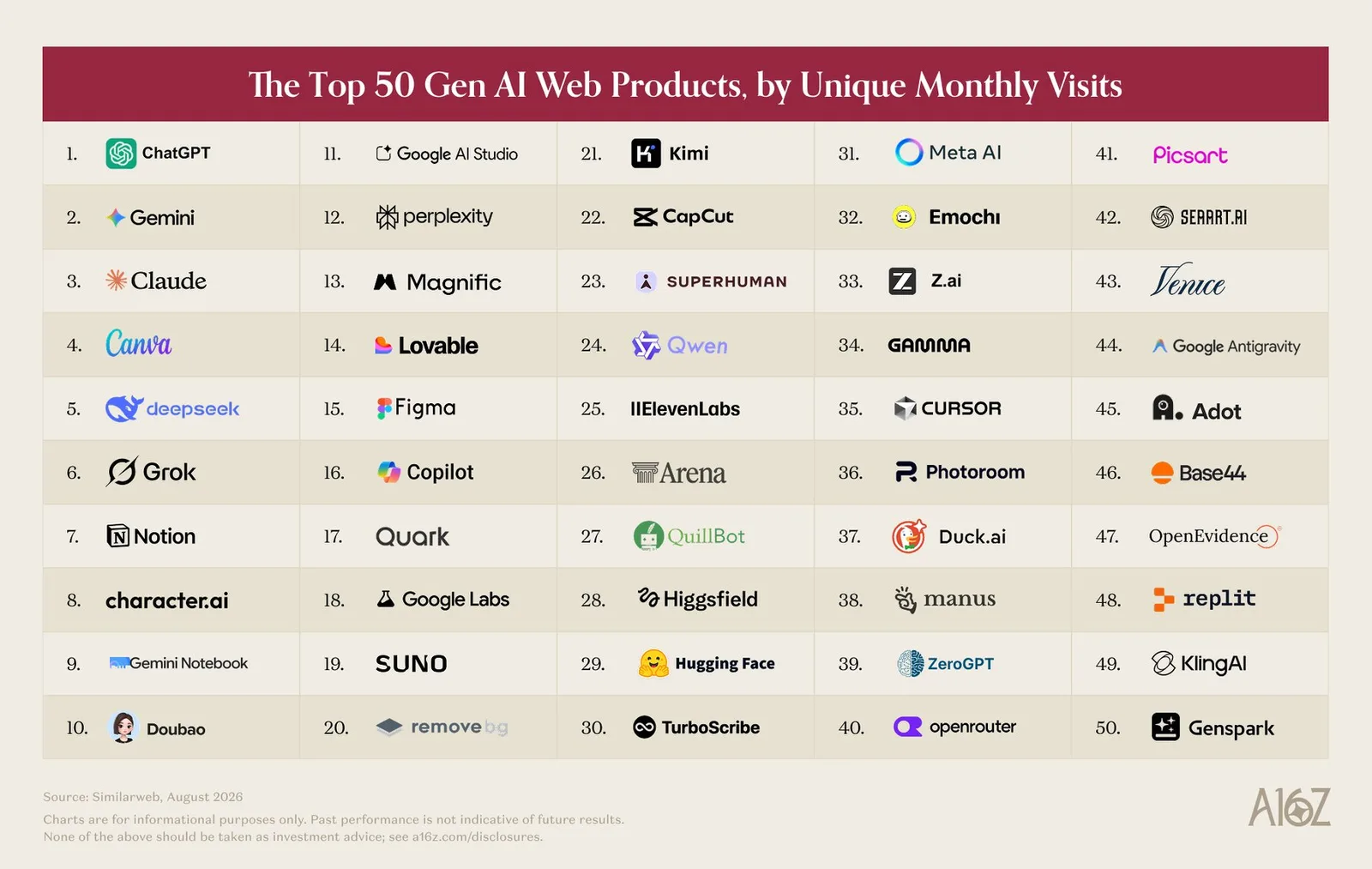
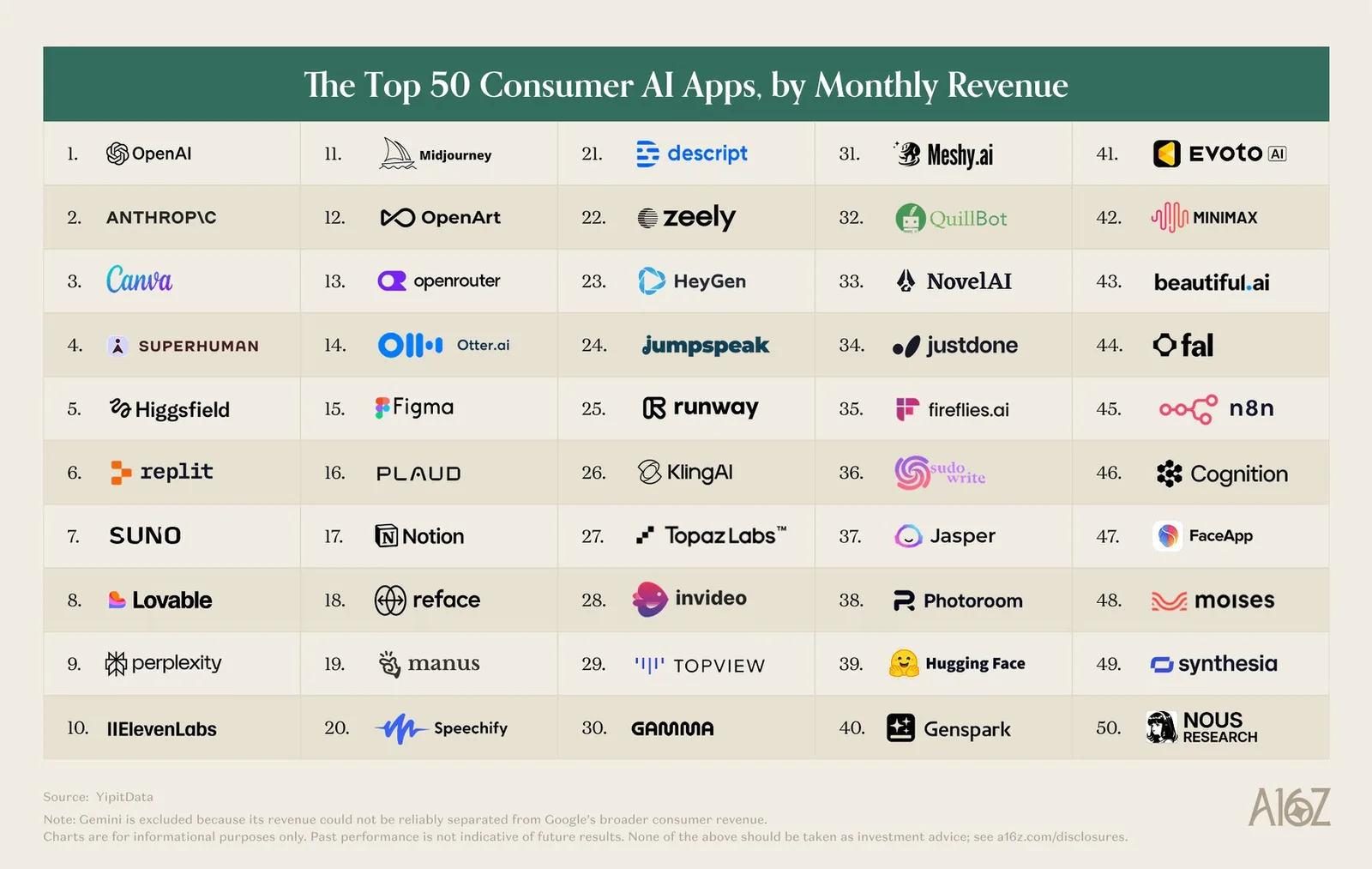
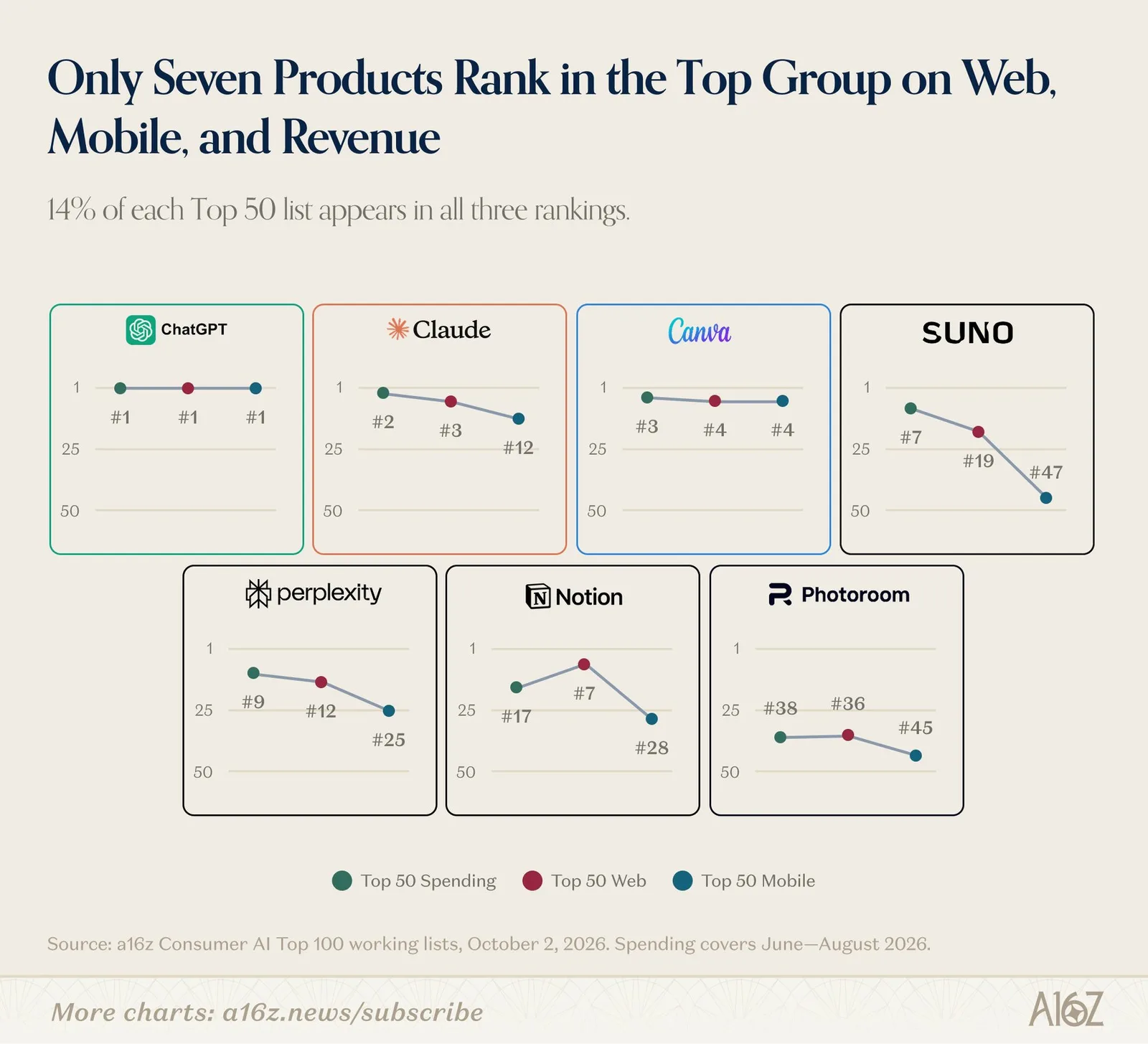
Across seven editions spanning three years, the upper reaches of the list have become increasingly stable. Only eleven products entered the ranking for the first time this round, the fewest newcomers in the list's history. ChatGPT leads the web ranking ahead of Gemini and Claude, while Canva and Notion have pushed into the top ten. Just seven companies appear across all three top-50 lists—web, mobile, and the new spending ranking—including ChatGPT, Claude, Perplexity, and Canva. ChatGPT ranks first in each of the three.
Development: Wide Adoption, Shallow Monetization
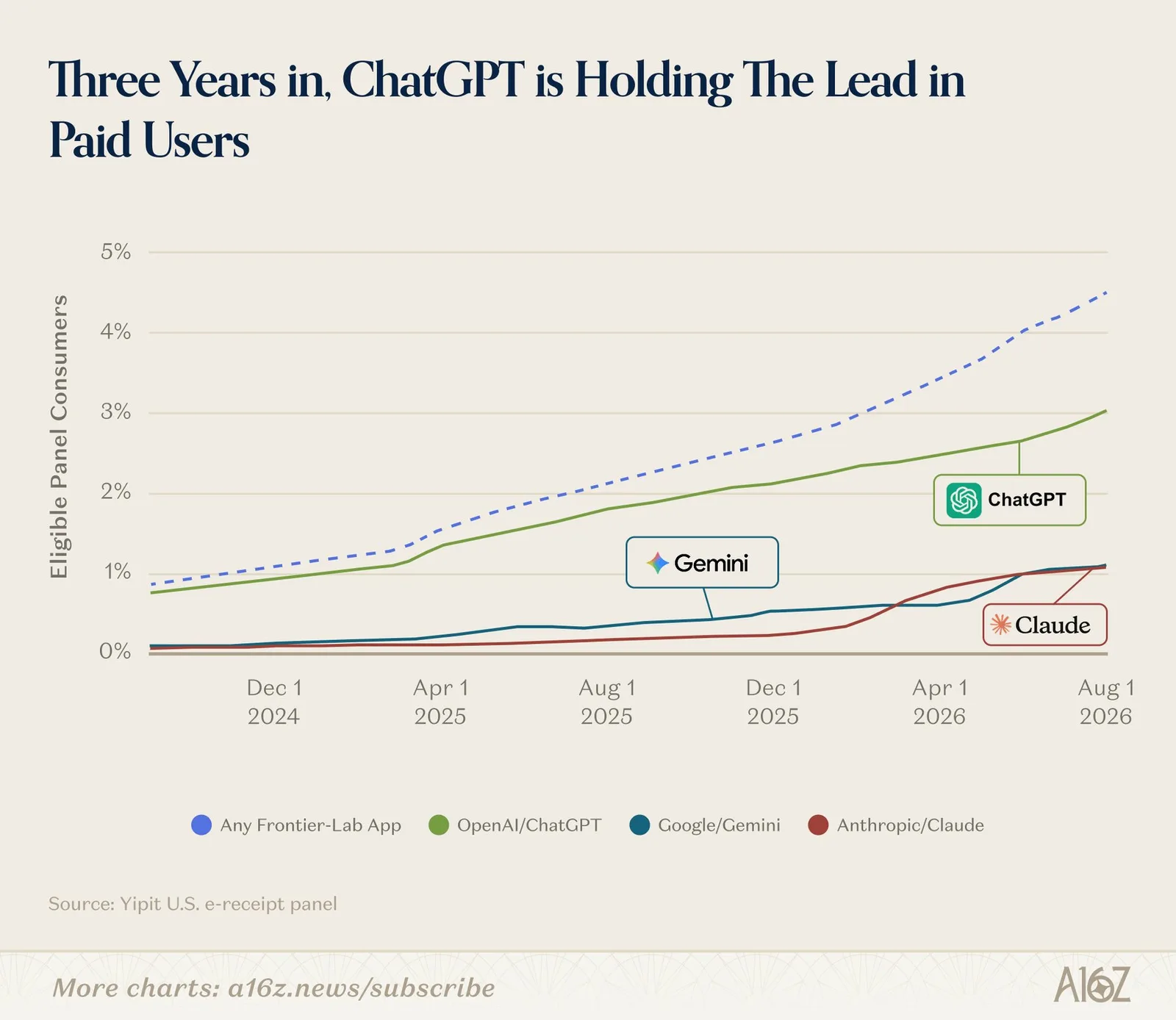
Nearly half of US consumers now use AI, according to a16z, but only a quarter do so daily. In August, just 4.5 percent held an active paid personal subscription to ChatGPT, Gemini, or Claude—roughly double the share from a year earlier. ChatGPT accounts for most of those paying users.
Revenue within that base is heavily skewed. The top one percent of spenders generates nearly a fifth of all observed AI spending, more than the entire bottom half combined. That top percentile averages about $900 per month and continues to climb, while the typical paying user spends around $25 and has held at that level for some time. Growth is almost entirely concentrated at the top: the highest spenders now pay 79 percent more than they did in early 2025. Their product choices reflect professional use—they favor building and automation tools such as n8n, Manus, and fal, alongside creative tools like Higgsfield, Figma, and HeyGen.
Three Language Models, Three Strategies
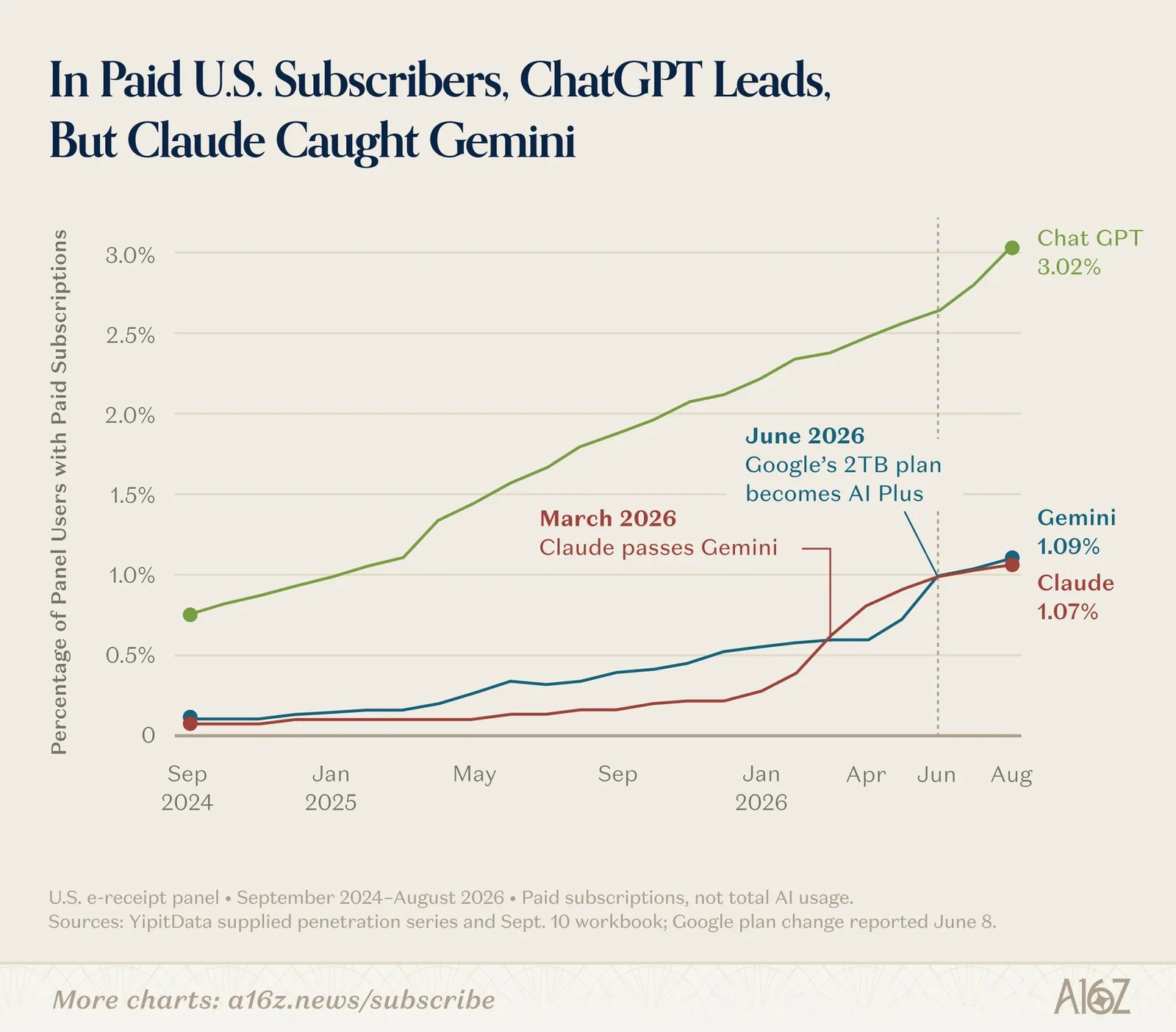
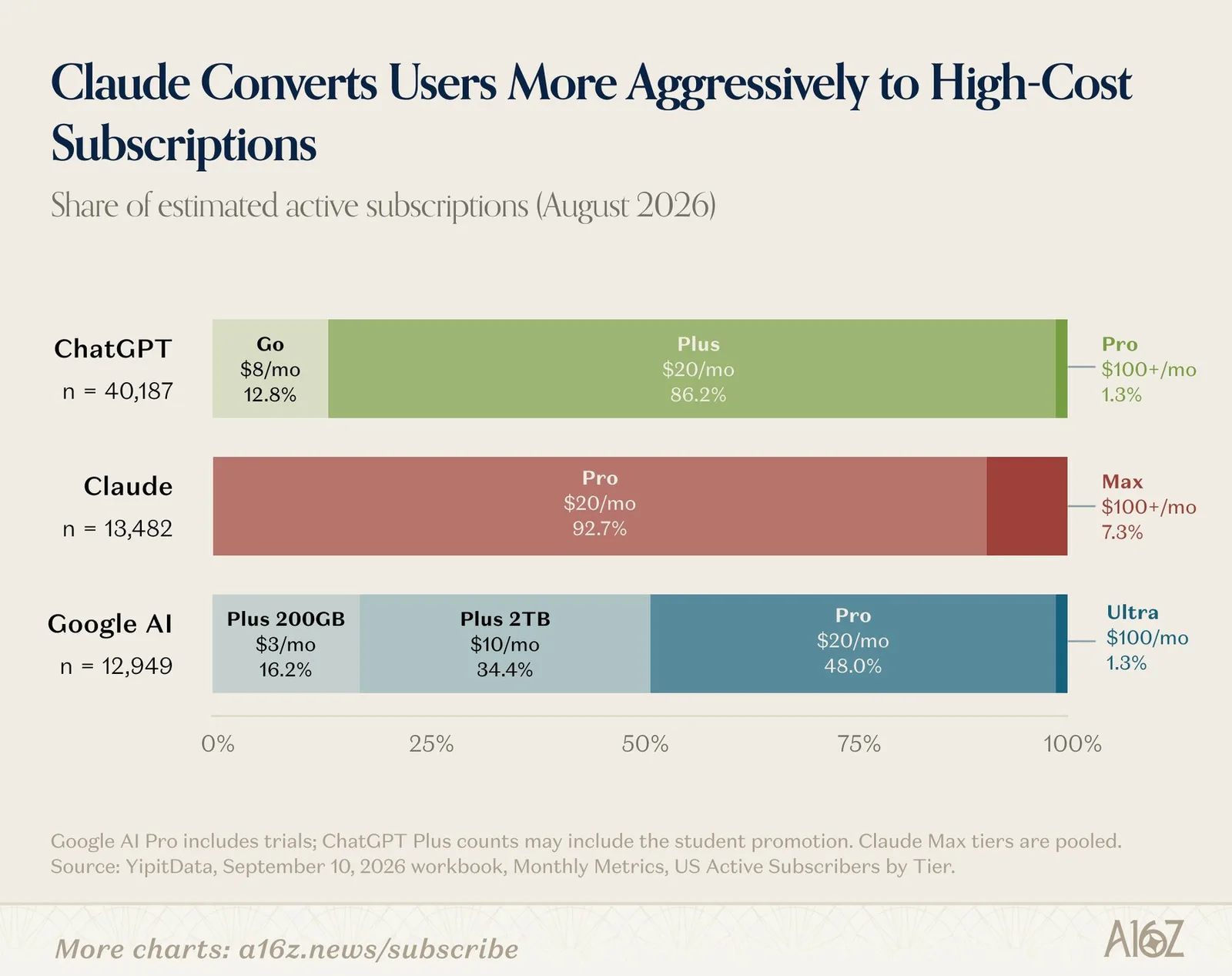
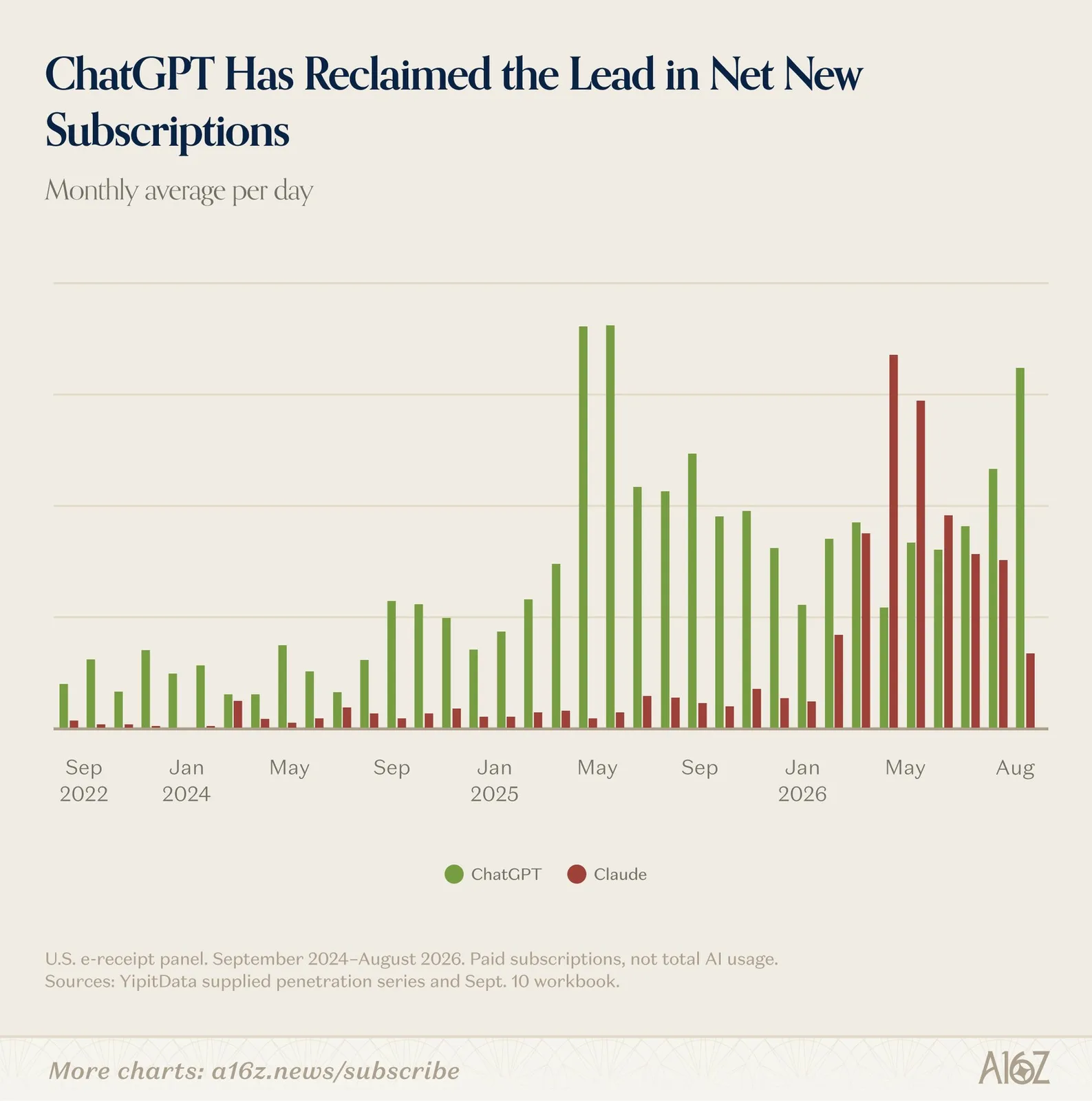
Anthropic monetizes more effectively than its rivals, with a larger share of Claude users on the priciest tier starting at $100 per month compared to similar plans from OpenAI and Google. Claude surpassed Gemini in paid US subscribers in March 2026; since Google restructured its plans in June, the two have run neck and neck. By midsummer the momentum shifted: daily Claude sessions fell in July and August, while ChatGPT regained speed with new models and ChatGPT Work. By August, ChatGPT had clearly retaken the lead in net new subscriptions.
The Race for the Personal Assistant
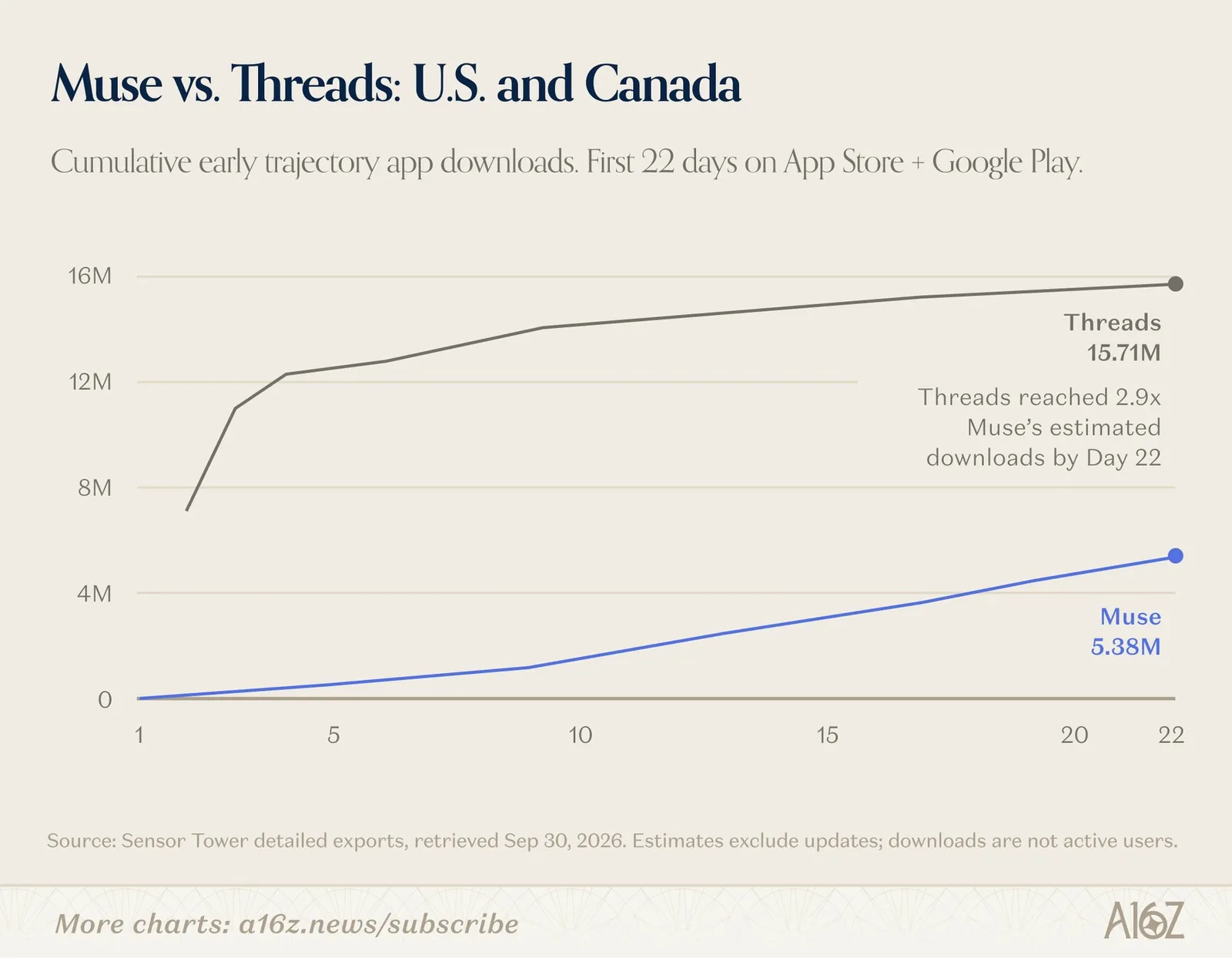
Six months ago, an agent like OpenClaw was not usable for most consumers, according to a16z. Now startup agents such as Instinct and Tomo report hundreds of thousands of users, and major players have responded with Meta's Muse, OpenAI's Dots, and xAI's Grok Bot. Instinct founder Noah Shinn says 40 percent of users link a credit card within three weeks and then spend four-figure amounts per month through the service, much of it on travel. Muse reached a quarter million daily users in its first week and topped five million downloads in under a month—modest next to Meta's Threads, which drew more than 15 million downloads in its first three weeks. Platforms are picking sides: Amazon blocked Muse within two weeks, while Shopify, Instacart, and OpenTable signed official integrations.
The Business Model Problem
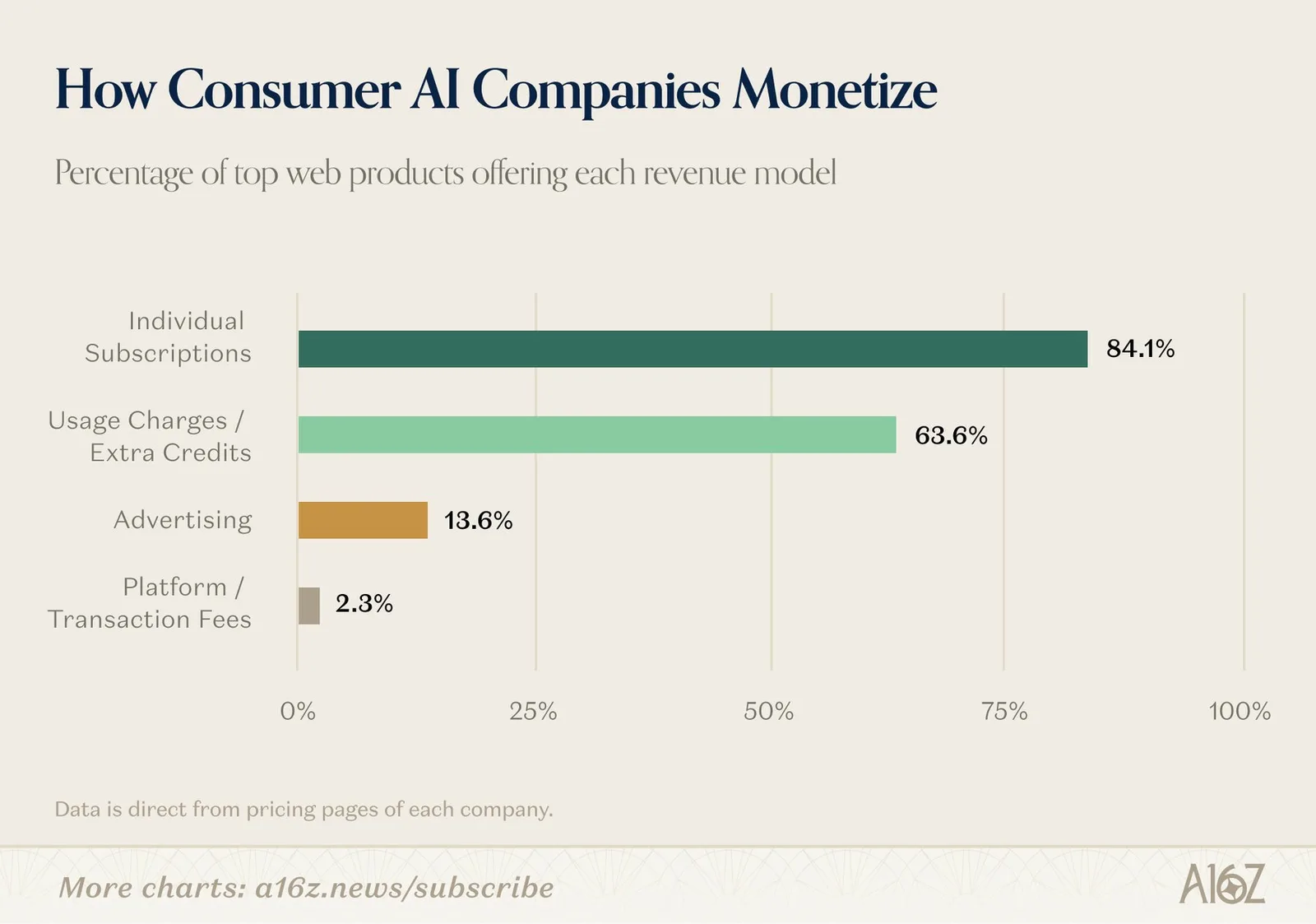
Most top AI-native products rely on subscriptions or usage fees, with only a small fraction using ads or transaction fees—inverting the pre-AI internet, where advertising drove the bulk of revenue for Meta and Alphabet. High model costs prevent AI companies from forgoing early revenue to build a large user base first. Alternatives are emerging: OpenAI reported a $1 billion annualized revenue run rate from ChatGPT advertising in August, and personal agents could open a path through affiliate fees or transaction cuts.
What to Watch Next
The sixth edition already warned that web traffic and downloads say less about actual usage as AI shifts from standalone product to embedded feature. The spending data is a direct attempt to close that gap. Whether the top one percent of payers remains the industry's only real market—or whether cheaper models and simpler interfaces broaden the paying base—is the question the next edition will have to answer.
Comments
No comments yet. Be the first to comment.