
Microsoft aims to expand its in-house Maia AI chips to gigawatt-scale capacity by 2027
Microsoft plans multi-gigawatt Azure Maia AI chips by 2027. Maia 200 runs Copilot; Maia 300 targets higher tokens per megawatt with HBM4 memory.
Key Takeaways
- Microsoft plans to deploy Azure Maia AI chips at multi-gigawatt scale from 2027, making them the main inference system across its AI products.
- Maia 200 is already serving Microsoft Copilot in the US, Europe, and Australia, with GitHub Copilot and Foundry expected to adopt it by year’s end.
- Microsoft says Maia 200 can deliver up to 1.7 times more tokens per watt than leading GPUs in Teams, handling OpenAI, MAI, and open-source models.
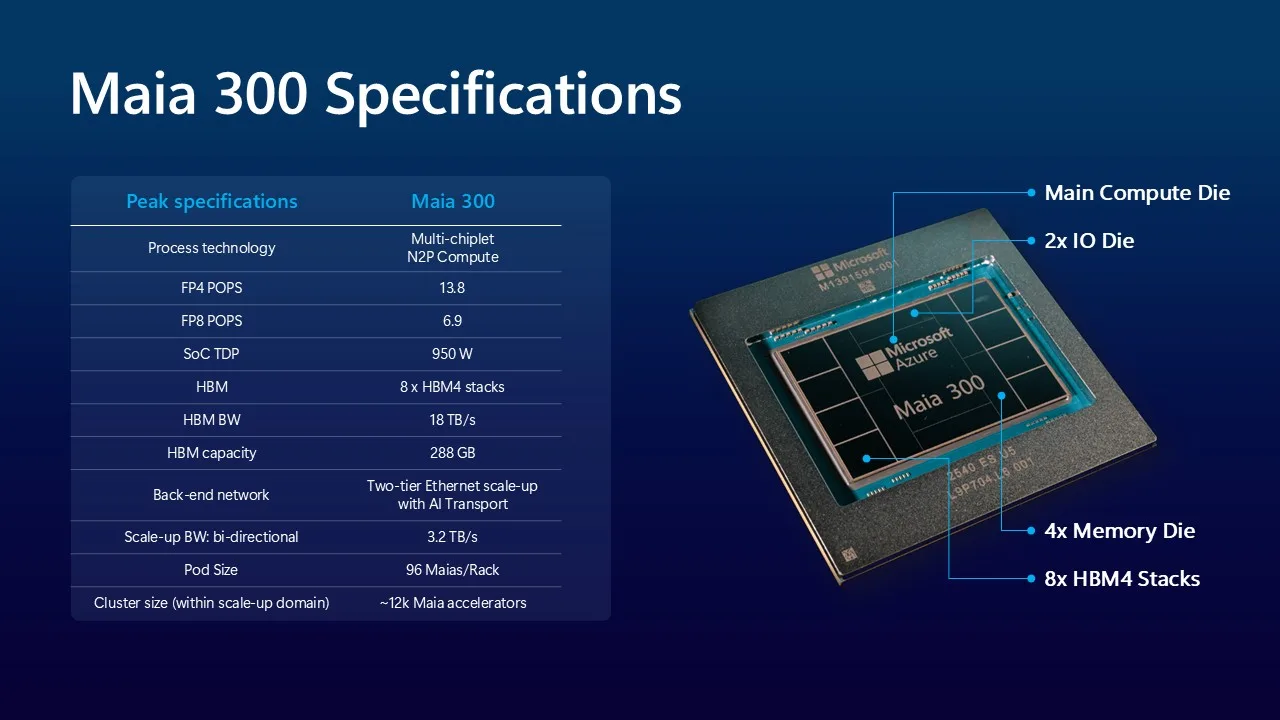
- Maia 300 offers 950W per chip, eight HBM4 stacks, 288GB memory, and 18TB/s bandwidth, with Microsoft claiming 40% more tokens per megawatt than leading GPU systems.
- Further technical details are expected at Ignite 2026 in November, while the major multi-gigawatt rollout is scheduled for 2027.
Meta description: Microsoft plans multi-gigawatt Azure Maia AI chip deployments from 2027, with Maia 200 in Copilot and Maia 300 claiming 40 percent more tokens per megawatt.
Tags: Azure Maia, Microsoft AI, Maia 200, Maia 300, cloud inference
Featured image: Abstract technology-style image of glowing rack-mounted AI inference chips and cloud data-center pathways, no real people, no company logos, no text.
Microsoft plans to deploy its Azure Maia AI chips at multi-gigawatt scale starting in 2027, and the company intends for them to become the main inference system across its products. Inference, here, means running trained AI models to serve answers inside services such as Microsoft Copilot. The shift matters because it ties Microsoft's custom chip path to the everyday AI workloads that already sit behind its cloud products.
Background: Maia 200 Moves Into Product Traffic
Maia 200 already runs Microsoft Copilot in US, Europe, and Australia, according to executive Scott Guthrie. GitHub Copilot and Foundry are expected to follow by year's end. The chip handles OpenAI, MAI, and open-source models, and Microsoft says it can push up to 1.7 times more tokens per watt than leading GPUs in Teams. This first stage places Maia in workloads that already serve Microsoft products.
Development: 2027 Marks the Multi-Gigawatt Plan
Scott Guthrie writes that 2027 begins a multi-gigawatt deployment of Azure Maia AI chips. Satya Nadella described the effort as "our biggest bet yet on our own silicon." The plan turns Maia into the main inference system across Microsoft products, moving beyond a single Copilot workload to a broader Azure foundation.
Latest Progress: Maia 300 Specs and Ignite 2026
Maia 300 is rated at 950 watts per chip. Each chip packs eight HBM4 memory stacks, totaling 288 GB with 18 TB/s bandwidth. Microsoft claims 40 percent more tokens per megawatt than leading GPU systems. A 96-chip rack should produce up to seven times the tokens of a Maia 200 rack. A technical report covers details, and more information will come in November at Ignite 2026.
The plan now sits at the transition from Maia 200 production use to a 2027 multi-gigawatt rollout. The dates to track are year's end for GitHub Copilot and Foundry, November at Ignite 2026 for further details, and 2027 for the larger deployment.
Comments
No comments yet. Be the first to comment.