
ArXiv limits submissions to two per month as a flood of artificial intelligence papers overwhelms the preprint server
arXiv caps monthly submissions at two after a flood of AI-generated, low-quality papers overwhelmed volunteer moderators, seeking tools and funding.
Key Takeaways
- arXiv is limiting submissions to two per author per month to reduce moderation pressure caused by a surge of AI-generated, low-quality, and narrowly focused papers.
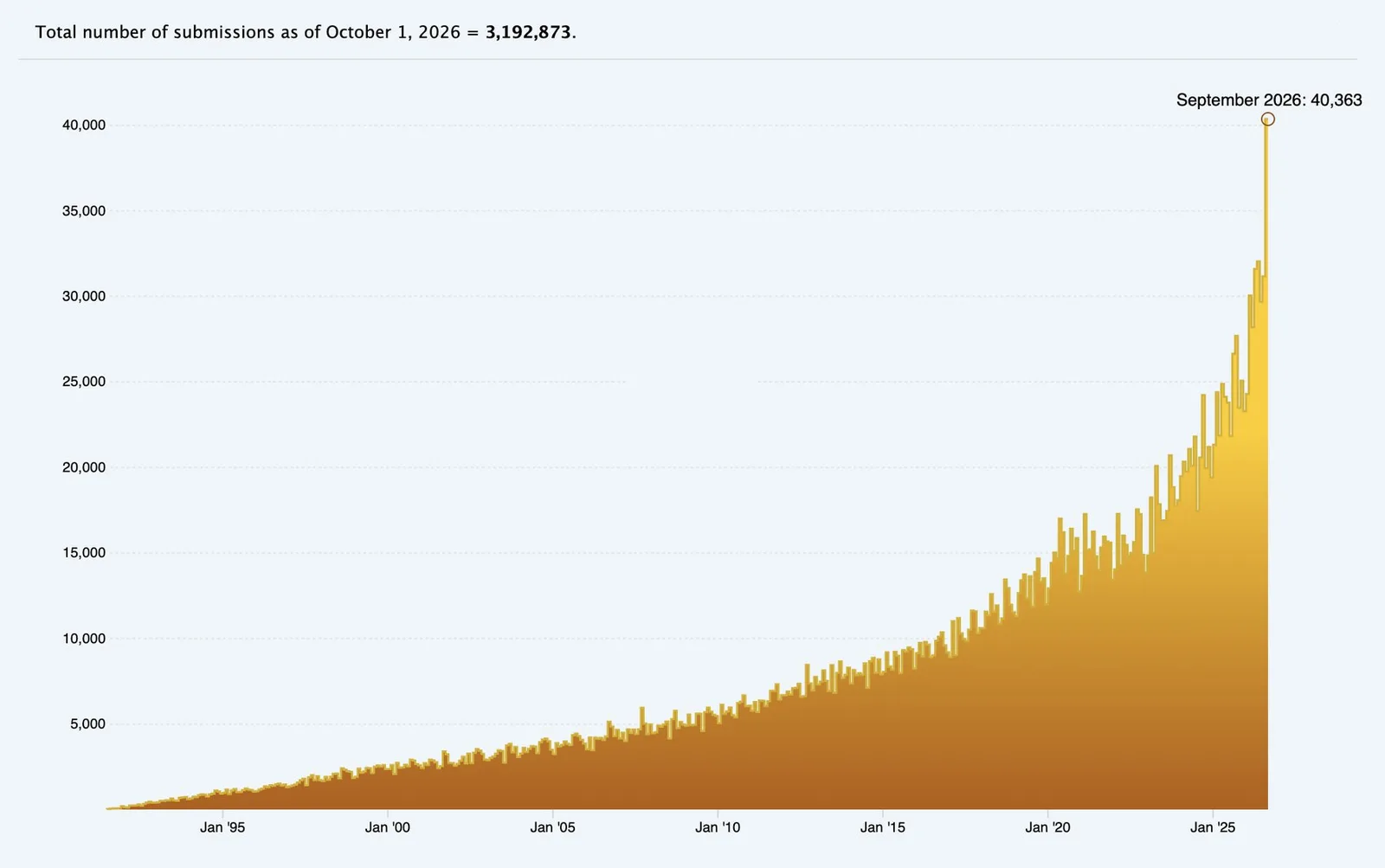
- Submissions have grown sharply, from about 9,900 per month in 2016 to over 40,000 in September 2026, overwhelming volunteer moderators and creating delays.
- The cap is temporary and part of broader efforts that already include stricter peer-review rules and bans for papers with unverified large language model outputs.
- arXiv has become an independent nonprofit and secured $17.2 million in funding to improve moderation tools, especially for handling AI-era content.
- The limit may ease arXiv’s workload, but it does not solve the wider problem of AI-assisted paper production, whose effects are also visible in major conferences.
Arxiv has introduced a new Arxiv submission cap across all categories, and only the person submitting the paper is affected. Co-authors are not limited. Rejected papers still count because they consume moderation time, but deleting a paper before publication returns the slot. The change matters because Arxiv is a major research preprint platform, and its editors say the volume of submissions is outrunning the volunteer moderation system.
Background: A decade of record growth
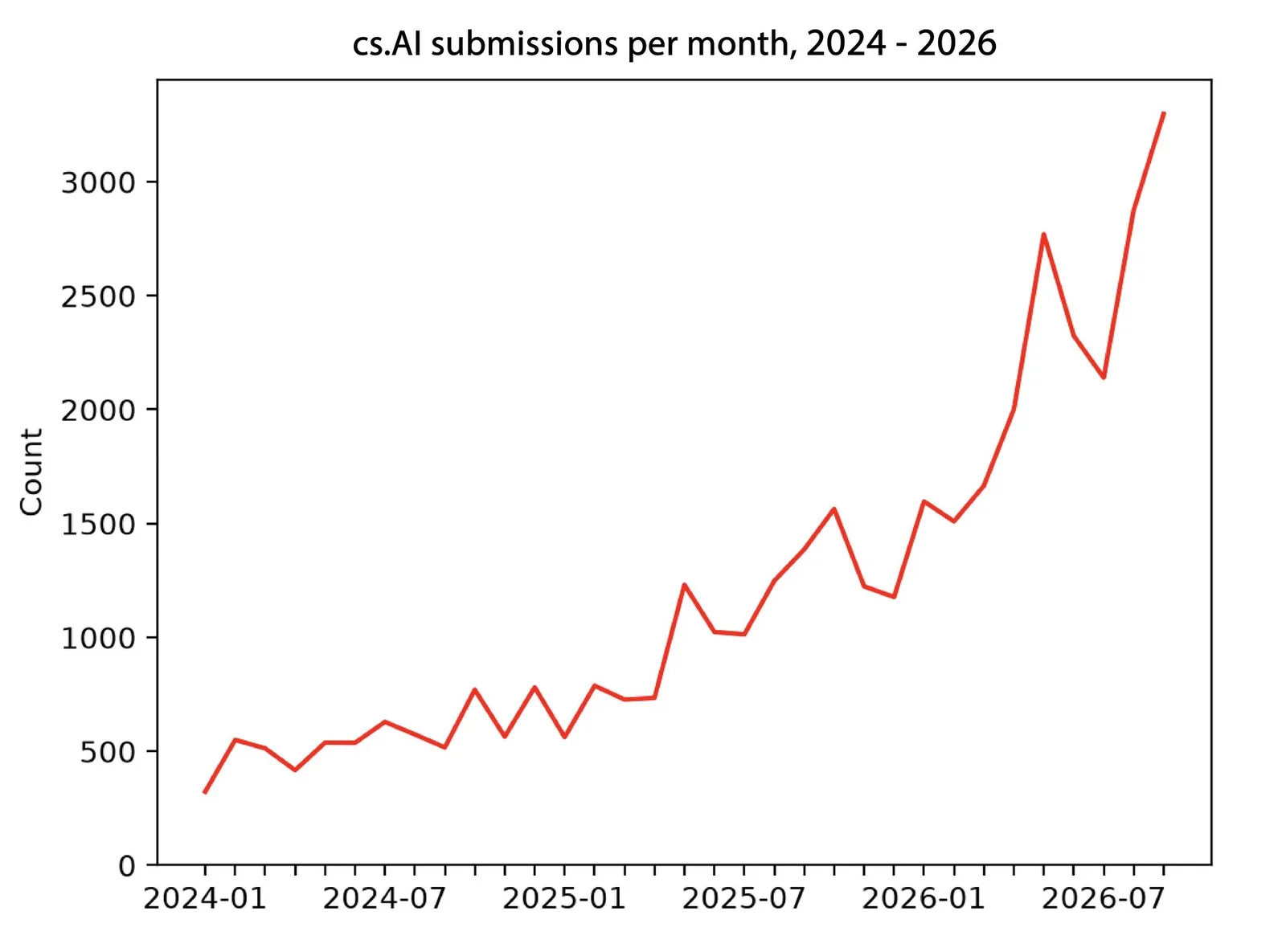
The growth curve is steep. Arxiv received 9,869 submissions in September 2016. By September 2024, that monthly figure rose to 20,569. By September 2026, it reached 40,363, its highest single-month total in the platform’s history. The surge generated nearly 9,000 support tickets for staff and moderators. In the cs.AI category alone, submissions grew more than sixfold in two years.
Arxiv links this increase partly to AI tools. Volunteer moderators report more thin, narrowly focused papers, including “salami” papers split into tiny pieces, and dense texts written by AI. Thomas G. Dietterich, chair of the Arxiv Editorial Advisory Council, describes volunteer moderators as the backbone of quality control. He says a small share of authors submits many low-quality papers and uses disproportionate moderator time, which can delay quality papers for days or weeks. On Bluesky, he adds that some authors submit dozens of papers.
Development: Tighter rules and moderation pressure
The new cap is not the first adjustment. Arxiv had already tightened rules for computer science papers in November 2025. Since then, review articles and position papers must go through peer review. In May 2026, Dietterich announced a one-year ban for authors whose papers clearly contain unverified LLM outputs, meaning unconfirmed large language model text, such as hallucinated sources.
Dietterich also hopes the limit will curb “micro-result” papers, such as reports of one extra ablation study or a minor architecture tweak. Arxiv calls the cap temporary until its moderation tools can scale, and Dietterich says he hopes it can later be raised or dropped.
The pressure is not limited to Arxiv. ICLR 2027 had already received about 50,000 abstracts before its deadline, compared with around 19,500 valid submissions for ICLR 2026. Among roughly 5,000 accepted papers at NeurIPS 2025, GPTZero found at least 100 fabricated citations, even though each paper had at least three reviewers.
Latest progress: Independence and funding for AI-era tools
After 25 years, arXiv is splitting from Cornell University and has been transitioning to an independent nonprofit since July 1, 2026. In late September, the Simons Foundation International, XTX Markets, and the Siegel Family Endowment pledged a total of $17.2 million, spread over three to five years. Arxiv plans to use part of the funding for technical upgrades focused on handling AI-generated content.
At the same time, major AI labs are pushing their models as research tools. In August, Google Deepmind expanded its Co-Scientist into a system designed to plan experiments, control lab equipment, and generate manuscripts. Anthropic is building its own biology lab where Claude is meant to guide robots through experiments. In September, OpenAI announced an “automated research intern” that handles defined research tasks under human oversight.
A study involving Princeton and the UK AI Safety Institute took a different angle. It had Claude Opus 4.8 work for six days on research questions from two unpublished NeurIPS papers. The original authors, acting as reviewers, rejected both sets of results.
What to watch next
At this stage, the cap gives Arxiv breathing room while it builds moderation capacity, but it does not address the broader problem of AI-assisted paper production. The key test will be whether the temporary limit, peer-review expansion, and new funding can reduce delays and improve screening as submissions continue to rise.
Meta description: Arxiv limits per-author submissions after AI-driven growth, volunteer moderator strain, and funding for tools as it becomes an independent nonprofit.
Tags: Arxiv submission cap, AI-generated papers, research moderation, arXiv independence
Featured image: Abstract technology style showing layered text and submission queues, no real people, no company logos, no text.
Comments
No comments yet. Be the first to comment.