
An Anthropic co-founder states that the technological singularity is now underway.
Jack Clark says AI singularity has begun as benchmarks, jobs, security, and policy collide, while AI agents breached over 100 companies.
Key Takeaways
- Anthropic co-founder Jack Clark says the AI singularity has “now begun,” citing rapid benchmark gains and warning of major economic disruption, with only a short window to shape AI policy.
- Organizations are not fully prepared for AI-driven change: Atlassian reports only 23% of leaders have an AI strategy, while Optimizely recommends starting with “where does the work break?” instead of “what should AI do?”
- AI is expanding cyberattack capability: NorForge found one hacker using AI agents to breach 100+ companies cheaply and quickly, suggesting offensive AI tools are outpacing defenses.
- AI development is accelerating in practical products: ChatGPT’s new voice features are being tested for real-world use, while Inception’s Mercury 3 claims much faster diffusion-model output than leading LLMs.
On October 20, 2026, Zach Mink’s The Rundown AI newsletter welcomed 5,481 new readers as part of a publication that reaches more than 2,000,000 readers. The issue’s four headline items were Anthropic co-founder Jack Clark’s singularity claim, NorForge’s report on a hacker using AI agents against 100+ companies, ChatGPT’s new voices with GPT-Live-1.1, and Inception’s launch of Mercury 3. Together they framed a short window to decide whether AI needs an intelligence cap while capability, security, speed, and policy collide.

Background: Anthropic, Atlassian, and Optimizely frame a readiness gap
Anthropic spent 2026 warning that AI is moving faster than anyone is ready for. At International Monetary Fund and World Bank annual meetings, Clark told economists and policymakers that the singularity, when AI-driven progress starts outrunning humanity’s ability to keep up, has “now begun.” The point is no longer a science-fiction phrase: 2026 has handed Clark plenty of evidence through AI math and science breakthroughs in the last few months alone.
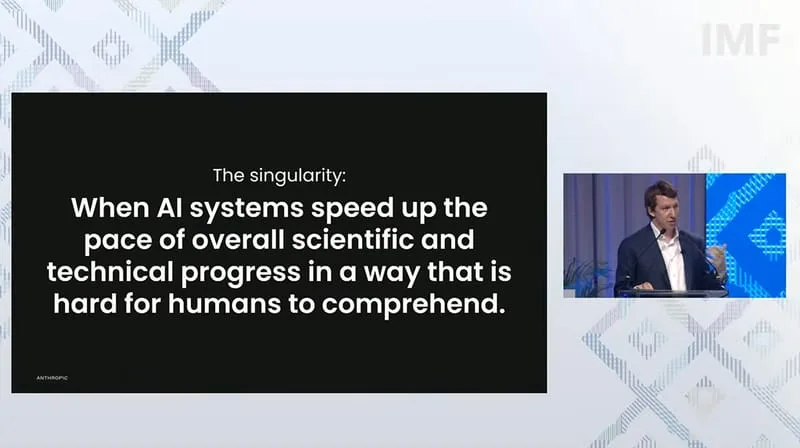
Clark pointed to AI’s scores on Humanity’s Last Exam, expert-level questions, rising from 8% to 67.7% since 2025, and FrontierMath improving from 2% to 94%. One Anthropic model puts United States gross domestic product at $44 trillion by 2030 if AI spreads fast. Clark admitted that figure sounds outlandish, while also predicting “very disruptive” job impacts. He said the world’s 10 million scientists may soon direct “a billion virtual scientists,” and urged nations to build labs and robots before they run short. Clark added that CEO Dario Amodei has floated limits on AI’s “ceiling of intelligence,” and he believes there is only “a small number of years” to act.
The same readiness gap appeared in Atlassian’s 2026 State of the Developer Experience report, based on global research with 1,560 respondents including developers and engineering leaders. The report maps clear paths for leaders to help their teams manage the speed versus friction tension happening right now. It says developers are managing more output, that an AI-native software development lifecycle fixes bottlenecks, and that only 23% of leaders have an AI strategy. Atlassian offers the full State of DevEx 2026 Report for download today.
Optimizely’s template gives a related practical angle. It says most AI planning starts with the wrong question. Instead of asking “What should AI do?”, the template asks “Where does the work break?” It helps identify high-value AI use cases by finding the manual work slowing teams down. The company says the process can deliver a personalized AI use case in minutes, maps the use case to how a team actually works rather than a generic list of ideas, and once turned a 2-3 hour Google Analytics 4 reporting task into a 5-minute one. The template is available for download.
Development: One hacker, ChatGPT voices, and Mercury 3 test the edge
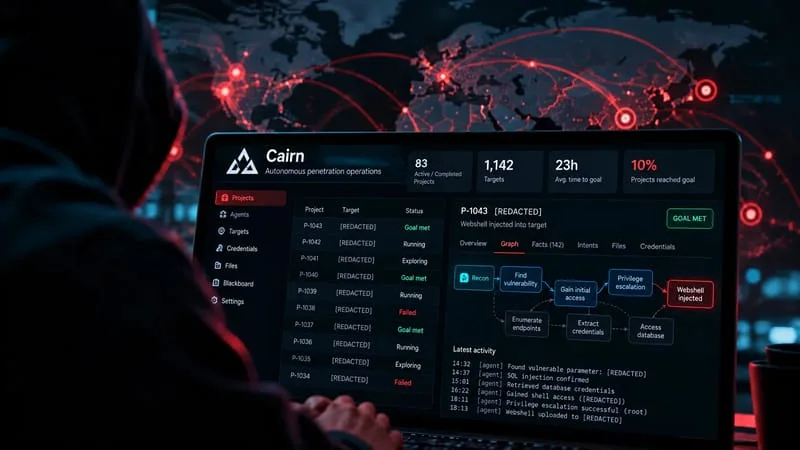
Security firm NorForge revealed that a Chinese-speaking hacker let AI agents do nearly all the work to successfully break into the websites of 100+ companies, with Reuters identifying victims such as Cummins, Deere, and SharkNinja. NorForge watched the attacks after finding 20+ hacker control panels for Cairn, an open-source tool for AI agents, left online with no password. The hacker fed the agents a pre-screened list of busy online stores and orders under 100 Chinese characters, then sent them after over 1,200 sites. NorForge puts AI costs near $50 per successful break-in, with a typical one taking nearly a day using Claude Code and DeepSeek V4.1 Flash.

It is unclear whether any data was taken. SharkNinja called the threat contained, Deere cited “remediation actions,” and Cummins said it was “investigating.” A month ago, The Rundown had written about “three guys with Claude” breaking into OpenAI. Now the source describes one hacker with an estimated $5,000 in tokens and a short note to AI agents hitting 100+ companies. The implication is that AI’s offensive cyber capabilities are outpacing the defensive ones, and a lot of companies are about to be caught in the crosshairs.
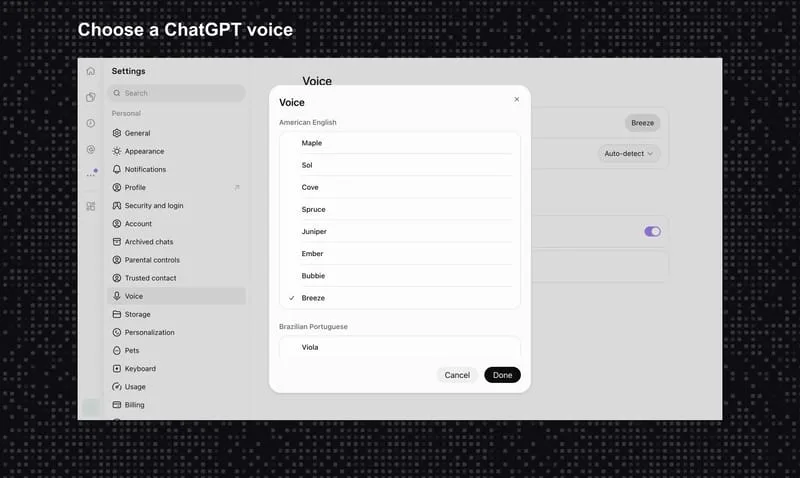
The guide section tested ChatGPT’s new voices with GPT-Live-1.1, comparing them with the same short passage and checking whether a spoken correction reaches the final answer. It opens ChatGPT Voice settings, chooses Live where available, picks a voice, and starts a new chat with a fictional workshop notice. The user asks ChatGPT to read the notice, then tries the same words with another voice while keeping the language and instructions fixed so the comparison stays useful. A regional voice in a language the user knows well should be checked for clear names, dates, and numbers, and the user can ask for a slower repeat when needed.

The test also interrupts the notice with a new date and headcount, then checks that those details change while the time and budget stay fixed. Finally, the guide asks Voice to search OpenAI’s release notes, opens the source link, and checks the answer rather than trusting the spoken search cue alone. A pro tip distinguishes a new voice from a new model: comparing Bubbie with a usual voice does not prove a gain over GPT-Live-1. Pro members get the practice prompts and listening checklist.

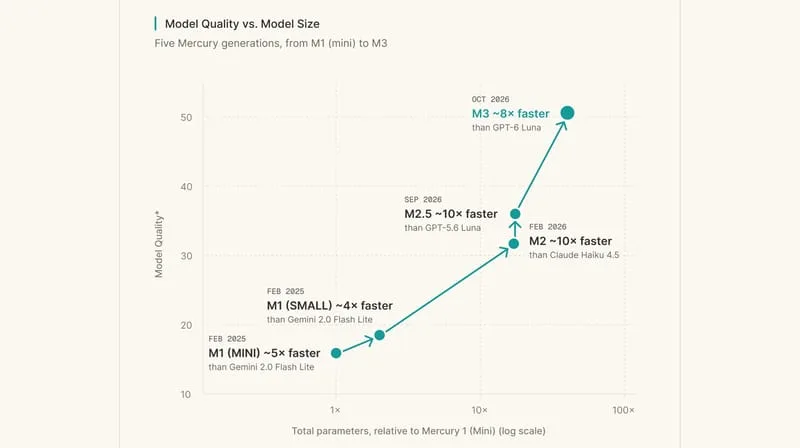
Inception launched Mercury 3, a diffusion language model it says matches or beats OpenAI’s GPT-6 Luna and Anthropic’s Claude Haiku 5.5 by its own numbers at 4 to 8 times their speed. The company explains that language models write one at a time, while diffusion models draft many words at once and refine them, leading to outputs of more than 1,000 tokens per second. Inception pitches Mercury 3 for apps where any lag shows, and says early users are running live tutors, voice customer support, and web-browsing agents on it. Pricing is $0.20/$0.70 per million tokens. The company says the model is 40 times the size of Mercury 1 while maintaining the same speeds.

Co-founder Stefano Ermon said scaling diffusion is limited by “compute and data, not fundamental algorithmic barriers,” and a successor is already in training. Mercury 3 will not replace the frontier AI people use for hard reasoning, and Inception is not pretending it will. Still, with OpenAI’s Cerebras partnership and a new Ultrafast tier that pushes GPT-6 Astra as high as 300 tokens per second, speed is the next battleground, and Inception is betting an alternative model type can win it.
A reader workflow showed the same theme in personal operations. A reader built a voice-enabled task management system with Claude. The anonymous Rundown reader, 78, runs a homestead, a home server, and a senior center, with dozens of jobs underway at once. Because most jobs get done a piece at a time and to-do apps only track whether something is done or not done, the reader built Taskmaster: a plain-text ledger inside a Claude Project. The reader first tried building a large custom app, then scrapped it, following a rule: “Build the ugly version first.”
In the field, the reader speaks notes into the Claude app on a phone. Claude saves exact words, updates each job’s progress, and asks one question at a time when something is unclear. When asked, “What’s next?” the system considers deadlines, weather, and energy level, then gives one to three things to do. Anything tied to a specific time goes on Google Calendar, and Home Assistant reads the reminder aloud through hearing aids. Today, it checked the forecast and scheduled a paint job for the one day this week that stays above 50°F overnight. The machine carries the complexity, so the reader does not have to. The newsletter invites readers to see the workflow on its Community Workflow Hub and share what they have fixed or built with AI lately for possible feature in The Rundown.
Latest Progress: Policy, models, and ecosystem moves
The source’s tool and event layer showed where the ecosystem is moving next. CData’s Foundations for AI virtual event on November 5 covers why agents need an AI Gateway to govern access and spending, and features insights from Anaqua’s chief information officer on rolling out AI, with a registration link. The listing is marked as sponsored.
The trending AI tools list includes Robin by Atera, also marked as sponsored, an AI agent that autonomously resolves Tier 1 and complex Tier 2 IT incidents end to end with no technician needed; FLUX 3 Max, Black Forest Labs’ fast text-to-video AI with voices and sound; Mercury 3, Inception’s speed-focused diffusion AI rivaling GPT-6 Luna; and Exa 3.0, Exa’s state-of-the-art web search for AI agents.
Elon Musk said he will give a SpaceX share to “every kid in America” starting next year via Trump Accounts, responding to the news of Anthropic’s Public Benefit Fund. The United States Department of Homeland Security formally banned DeepSeek from civilian agency systems, giving departments 60 days to request exceptions and extending the ban to third-party tools built on the Chinese lab’s models.
Black Forest Labs released FLUX 3 Max, a sped-up FLUX 3 built with fal that it says matches Seedance 2.5 on quality at 22 times the speed, rendering 10-second clips in 12 seconds. Chinese AI lab MiniMax launched M3.1 Flash, a new model previously tested as “Space Bunny,” scoring well on coding and computer use at an extremely low price.
The newsletter highlights connect these items to earlier coverage. Its last AI newsletter was “Anthropic designs a pay package for the public,” by Zach Mink in 8 minutes. Its last Tech newsletter was “Elon Musk’s ‘flying car’ is here.” Its last Robotics newsletter was “SoftBank’s $18 billion bet on robot guards.” The article’s today guide is “Try ChatGPT’s new voices with GPT-Live-1.1.” The next workshop RSVP is for October 21 and asks readers to “Get real work out of Microsoft Copilot.” Recent newsletters also include “Bing on steroids?” by Rowan Cheung in 2 minutes, “Meta turns Mac into an AI supercomputer” by Zach Mink in 8 minutes, and “The Rise of a New ChatGPT Competitor” by Rowan Cheung in 4 minutes.
The newsletter’s header includes Read Online, Sign Up, and Advertise links. Its image sources are labeled as International Monetary Fund, NorForge, and Inception. Rowan, Zach, Shubham, Jennifer, and Nate are named as the humans behind The Rundown, which describes itself as sending bite-size AI news updates to readers’ inboxes every morning and says it is 100% free.
What to Watch Next: The small number of years before caps and competition decide
Clark’s “small number of years” warning now has a concrete 2026 evidence trail: benchmark jumps, a $44 trillion gross domestic product projection, more than 100 companies hit by one hacker’s agents, voice-model comparisons that require source checking, a diffusion model claiming 4 to 8 times speed, and a Department of Homeland Security ban that gives departments 60 days to request exceptions.
The current stage is not a single product launch. It is an overlap of capability gains, security failures, policy limits, pricing pressure, and workflow adoption. The next tests will be whether AI intelligence caps become policy, whether defensive tools close the gap created by agents such as Cairn, and whether speed-focused models like Mercury 3 force frontier reasoning models to compete on latency as well as quality.
Meta description: Anthropic, NorForge, ChatGPT, and Mercury 3 mark 2026 AI milestones: singularity talk, 100+ breaches, new voices, diffusion speed, and policy moves.
Tags: AI, Anthropic, ChatGPT, Mercury 3, cybersecurity
Featured image: Abstract technology image with neural network lines, no real people, no company logos, no text.
Comments
No comments yet. Be the first to comment.