
The spy plot centered on Nvidia’s CEO is explored in depth
US officials allegedly linked Megaspeed's Alice Huang to China; Nvidia denied leaks; probes focus on AI chip exports and cloud loopholes.
Key Takeaways
- A New York Times report says U.S. intelligence alleges Singapore-based Megaspeed executive Alice Huang, closely linked to Nvidia CEO Jensen Huang, passed information to Beijing; Trump was briefed but the White House did not act.
- Officials reportedly did not believe Jensen Huang knew of her alleged role, and he did not receive a defensive briefing; Nvidia said their meetings were routine and involved no national-security-relevant information.
- Megaspeed is already under U.S. scrutiny for allegedly routing at least $4.8B in Nvidia equipment to China while remaining an Nvidia cloud partner; China rejected the spy allegations as baseless.
- The alleged spying has not been publicly proven, but the more concrete policy question is whether it accelerates closing the Southeast Asia compute-rental loophole that gives Chinese AI labs access to Nvidia-powered cloud resources.
Meta description: A New York Times report says U.S. intelligence found an alleged Chinese asset close to Nvidia CEO Jensen Huang, with Megaspeed and $4.8B in Nvidia gear at the center.

Tags: Nvidia, Jensen Huang, Megaspeed, AI chips, U.S.-China

The U.S.-China contest over advanced AI chips has run for years, with Washington steadily tightening which Nvidia hardware can reach Beijing. A New York Times report now adds an intelligence dimension: U.S. officials concluded that Alice Huang, an executive at Singapore-based data center firm Megaspeed, was allegedly passing intelligence to Beijing while maintaining close ties to Nvidia CEO Jensen Huang, and President Trump was briefed on the matter about a year ago. The White House chose not to act, according to the report.

What U.S. Officials Alleged
The report does not establish what Ms. Huang allegedly passed to Beijing or what value it carried. Officials worried she could offer insight into Trump's view on chip sales to China, and into Nvidia itself. At the time Trump was briefed, officials did not believe Jensen Huang knew of her alleged role, and he never received a defensive briefing — the kind typically given to U.S. citizens targeted by spies.

Megaspeed was already under U.S. probe for steering Nvidia chips to China. The firm bought at least $4.8B in Nvidia gear through a sister company and remains an Nvidia cloud partner.

The Companies Respond
Nvidia characterized Jensen Huang's meetings with Ms. Huang as routine, saying customers receive ordinary business information and "zero information relevant to national security." Megaspeed said outside counsel is investigating and that it is cooperating with the U.S. China called the claims "groundless smears and slanders."

Why the Loophole Matters
Nothing in the report has been publicly proven, including whether Ms. Huang passed anything to China. The more concrete fallout may land on the loophole that lets firms like Megaspeed rent Nvidia-powered computing from Southeast Asia to Chinese AI labs — an opening Trump reopened but may now close. That channel sits directly on the fault line between export controls and the cloud access that determines how much compute Chinese AI developers can reach.
Elsewhere in AI This Week
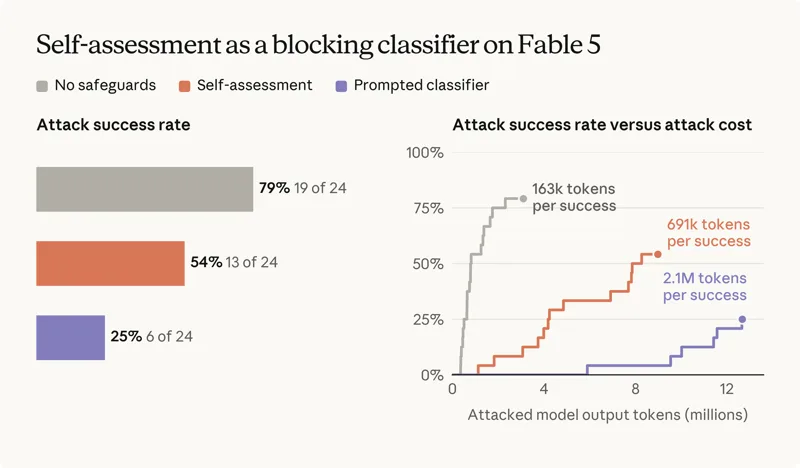
Anthropic introduced "self-assessment," a technique in which Claude reviews the chat after each reply and flags potential misuse. The system has been active since June. Claude assigns each conversation a quick safety verdict — whether it is harmful, what kind of harm, and how urgent — to prioritize cases for human review. On Claude Fable 5, it catches 78% of potentially harmful conversations flagged by a stronger classifier, and 94% of high-priority ones, at a 1% false-positive rate. It helped uncover more than 100K child-abuse flags from a single API customer, reported to authorities, plus an automated romance-scam operation run through Claude Code. Anthropic concedes the technique is weak as a lone blocker, cutting attack success in red-team tests only from 79% to 54%, though it made each successful attack cost roughly 4x more.

Cohere announced a Series E targeting up to $5B to scale its models and infrastructure, reporting 165% year-over-year ARR growth and a 20-fold customer expansion to 300. Anthropic is reportedly SpaceX's largest single customer, accounting for 34.5% of its Q3 revenue via AI compute contracts, with spending reaching $3.1B per month from December. Meta debuted Style Sketch, an AI app that builds virtual wardrobes from Instagram or uploaded images, suggests outfit combinations, and generates virtual try-ons. Harvey acquired Aida, an AI sales startup founded by Glean and Patreon executives, to help build firm-specific ontologies that make internal knowledge more useful to AI agents. OpenAI CEO Sam Altman said on the Cheeky Pint podcast that the company will point its robotics program toward data centers, and that self-replicating data centers — with AI-controlled robots running fabs and building solar panels — are now within grasp.
What to Watch
The immediate question is whether the Megaspeed disclosure accelerates closing the Southeast Asia compute-rental route to Chinese labs, or whether the absence of public proof keeps policy where it is. Nvidia's cloud partnerships and the defensive-briefing question around Jensen Huang are the next markers to track.

Comments
No comments yet. Be the first to comment.