
TechCrunch Disrupt 2026 Unveils Full Breakout Session Agenda to Answer Your Questions
TechCrunch Disrupt 2026 breakout sessions focus on AI agents, inference economics, physical AI, fundraising, and growth through expert Q&As.
Key Takeaways
- TechCrunch Disrupt 2026 will be held October 13–15 in San Francisco, drawing more than 10,000 founders, investors, operators, and tech leaders.
- The full breakout agenda emphasizes AI agents, inference economics, and physical AI, offering 50-minute expert-led sessions with audience Q&A.
- Sessions cover practical topics such as running work with AI agents, building trustworthy AI, fundraising strategy, AI-era growth, and post-exit investor moves.
- Breakout rooms have limited capacity and first-come, first-served entry, making early scheduling essential for high-value sessions.
TechCrunch Disrupt 2026 will run October 13–15 at Moscone West in San Francisco, gathering more than 10,000 founders, investors, operators, and tech leaders. Alongside its industry stages, the event's breakout sessions offer 50-minute, expert-led conversations with audience Q&A, capped by limited room capacity and first-come, first-served entry. The agenda, released in full, shows how heavily this year's programming leans into AI agents, inference economics, and physical AI.
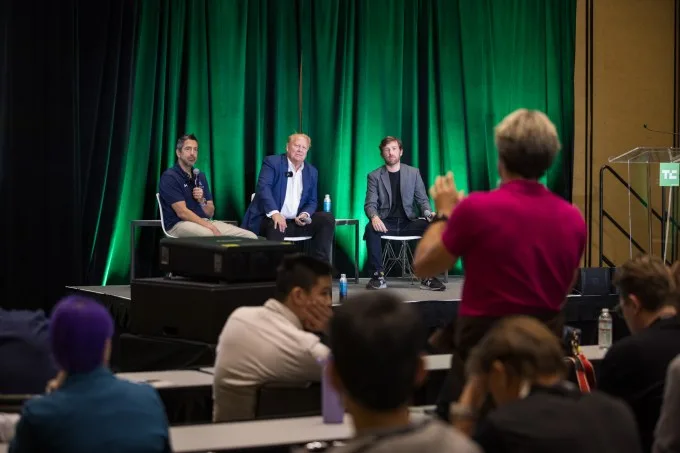
What the breakout format offers
Each 50-minute breakout combines expert insight with open Q&A, giving attendees room to challenge assumptions and leave with practical ideas. Sessions are built for founders and operators confronting current questions: how to build with AI agents, where value accrues as AI shifts from training to inference, what physical AI actually means, how to run a better fundraiser, and how AI changes company and team growth.
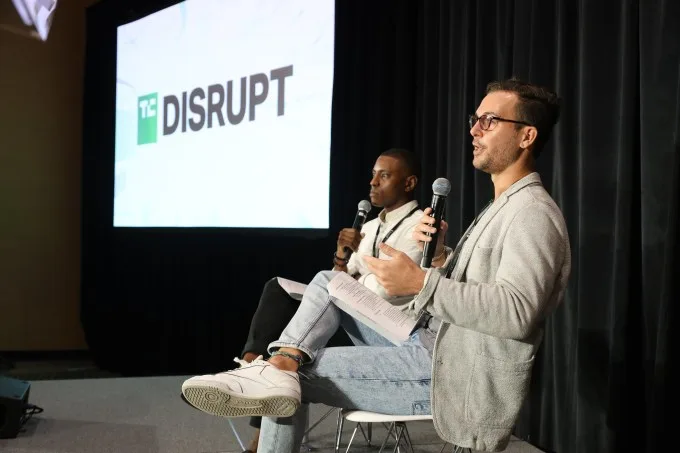
The full session lineup
What Is Physical AI, Anyway? — Susan Schofer, Partner and Chief Science Officer at SOSV HAX, and Duncan Turner, General Partner and Managing Director at SOSV HAX, sponsored by SOSV. The pair examine what qualifies as physical AI, why it demands a different playbook, and what investors seek in companies defining the category.
Outnumbered Either Way: How an Engineer and an Architect Run Their Jobs on Agents — Steve Androulakis and Sachin Malhotra, Members of Technical Staff at Anthropic, demonstrate running multiple Claude agents in parallel, delegating real engineering work, reviewing output, recovering from agent errors, and integrating agents into daily work.
How to build AI we can trust — Robbie Goldfarb, Co-founder of Forum AI, explores turning expert human judgment into scalable evaluations, drawing on experience in misinformation, online safety, and foundation-model labs.
The Inference Economy: Why AI's Next Trillion Dollars Won't Look Like Its First — Hagay Lupesko, SVP of AI Cloud at Cerebras Systems, and Rudina Seseri, Founder and Managing Partner at Glasswing Ventures, discuss defensibility when models are commoditized, latency as part of the product, and implications for infrastructure and startup economics.
Building Then vs Now — Dr. Rumman Chowdhury, CEO and Co-founder of Humane Intelligence; Payal Kadakia, Founder of ClassPass; Cassie Kozyrkov, Founder of Kozyr; and Holly Ransom, CEO of Emergent, sponsored by Signify Business Cash World Elite Mastercard by Wells Fargo. Panelists weigh how founders can use AI for faster decisions while recognizing where bias and human judgment still matter.
Best Practices for Running a Successful Fundraise: From Preparation to Investor Engagement — speakers to be announced, sponsored by Fidelity Private Shares. The session covers investor targeting, relationship building, outreach, momentum, cap tables, data rooms, and due diligence.
From Founder to Investor: The Next Act – What Happens After You Win? — Bruce K Lee, CEO and Founder of Keebeck Wealth Management, and Abhi Tiwari, Co-founder and General Partner at Blank Ventures, discuss shifting from raising capital to allocating it and why post-exit strategy deserves early thought.
Breaking Into Space: The AI Builder's Opportunity — Dr. Brian Cameron, Interim Chief Technology Officer at The Aerospace Corporation; Bosco Lai, CEO of Little Place Labs; and Shawn Sloan, Corporate Fellow for Artificial Intelligence at The Aerospace Corporation, sponsored by The Aerospace Corporation. The panel maps AI capabilities such as large data streams, autonomous decisions, and real-time processing onto space applications.
Fundraising Mistakes That Will Kill Your Round, and How to Avoid Them — Dr. Irena King, Founder and CEO of Surgicure Technologies; Dr. Richard Munassi, Accelerator Managing Director and Chief Strategy Officer at Tampa Bay Wave; Ashley Paston, Partner at General Catalyst; and Emily Zhen, Principal at HealthQuest Capital, sponsored by Tampa Bay Wave.
Building a Growth Engine in the AI Era: Lessons from a Bootstrapped Unicorn — Patrick Burke, Managing Director at Hostinger, sponsored by Hostinger. Burke covers identifying underpriced distribution channels, shortening market-signal-to-launch loops, faster experimentation, and agentic marketing workflows.
Physical AI Isn't a Model Problem. It's an Execution Problem. — Ethan Batraski, Partner at Venrock; Ivan Poupyrev, Founder and CEO of Archetype AI; and Ian Rountree, General Partner at Cantos, examine the execution layer linking perception, decision, action, and verification.
Talent as the Operating System: How High-Performance Teams Scale in the AI Era — Nomi Khedawala, Senior Technical Program Manager at Reddit, discusses alignment across teams, spotting breakdowns early, and systems supporting accountability at scale.
Pricing and access
Attendees can save up to $100 on a pass and get a second at 50% off. Groups of four or more save more, and recently laid-off workers can buy a $75 Expo+ Pass while supplies last.
What to watch
With breakout capacity limited and entry first come, first served, the practical value of Disrupt 2026 will hinge on how early attendees build these AI-focused sessions into their schedules before October 13.
Comments
No comments yet. Be the first to comment.