
OpenAI Reveals Russian and Iranian Influence Campaigns That Injected False Stories Into Legitimate News Outlets
OpenAI exposed Russian and Iranian networks using fake ChatGPT accounts to place false stories in legitimate media and trigger official reactions.
Key Takeaways
- OpenAI exposed Russian and Iranian influence operations using fake ChatGPT identities to plant disinformation in legitimate media rather than relying mainly on bots or social spam.
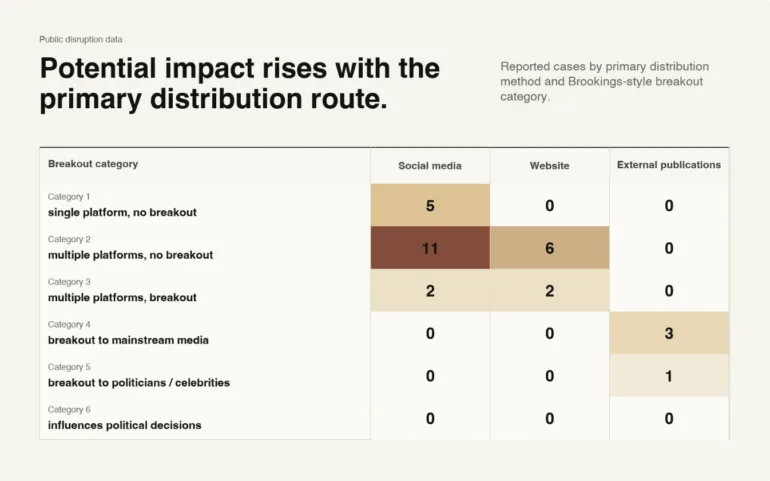
- The Russian operation, Dark Clark, targeted Latin America with fabricated audio and documents that triggered fact-checks and official denials, earning a category 5 severity rating due to political reactions.
- The Iranian operation, Bogus Bylines, used seven fake journalists to publish nearly 100 articles worldwide about the US-Iran conflict, prioritizing media placement over social media engagement.
- OpenAI banned the involved accounts, but the disclosures show a persistent threat: AI can support impersonation and localization, making propaganda harder to distinguish from normal media production.
Meta description: OpenAI exposes Dark Clark and Bogus Bylines, fake-identity ChatGPT accounts used to plant disinformation in media and trigger reactions in Latin America.
Tags: OpenAI, ChatGPT, influence operations, Dark Clark, Bogus Bylines
Featured image: Abstract technology style, no real people, no company logos, no text: a neutral digital network of lines and nodes fading between a media icon and a shield, suggesting account monitoring and influence operation disruption.
Background: Earlier ChatGPT Account Abuse Sets the Stage
OpenAI influence operations disclosures show that the company exposed a Russian and an Iranian influence operation and banned the ChatGPT accounts involved. The disclosure is significant because it shows that the threat was not limited to bots or obvious spam accounts. According to OpenAI's investigation report, the actors used ChatGPT accounts registered under fake identities to support influence work, and the activity centered on placing narratives into legitimate media rather than relying mainly on social media campaigns.
This was not OpenAI's first encounter with a Russian influence operation using ChatGPT. The company had already identified a different Russian operation that used social media and a fake think tank. That earlier case helps frame the new disclosures: the methods moved from social amplification and fictitious institutions toward a more media-facing approach that used AI accounts to make propaganda look like ordinary reporting, commentary, or institutional output.
Development: Dark Clark Moves From Media Placement to Political Reaction
The Russian operation named Dark Clark targeted Latin America. Its goal, as described in OpenAI's report, was to discredit Ukraine and destabilize local politics. The operation controlled a think tank through a fictitious persona. The company said it likely roped in local staffers without their knowledge, turning an apparent institutional presence into a channel for influence.
The timeline of harm becomes sharper when fabricated materials entered the media cycle. Dark Clark produced fabricated audio files and documents that triggered fact-checks and official denials in Ecuador and Peru. That sequence matters because the operation did not stop at publishing content. It created artifacts that newsrooms and authorities had to respond to, giving false claims a visible institutional reaction even when the reaction was intended to refute them.
OpenAI rated the operation at category 5 out of 6 on the Breakout Scale. The company said the rating reflected the fact that politicians reacted to the content. It also noted that this was the first category 5 case in two and a half years of reporting, marking a notable escalation in the severity of influence operations identified through ChatGPT account activity.
Latest Progress: Bogus Bylines and the Scale of Fake-Journalist Output
The Iranian operation named Bogus Bylines used seven fake journalists. Through those identities, the actors published nearly 100 articles about the US-Iran conflict in online outlets worldwide. The volume and the use of journalist personas show a focus on building a paper trail of seemingly independent reporting rather than one-off viral posts.
Bogus Bylines also generated social media comments, but OpenAI said they received almost no traction. That contrast is useful: the operation's main output was media placement, while social engagement was secondary and largely ineffective. The Russian and Iranian cases shared a common pattern: both used AI mainly for internal reporting tasks and to adapt propaganda into different languages.
Current Stage: OpenAI Disruption Points to a Narrower but Persistent Threat
The current phase is defined by platform disruption rather than public victory over the underlying campaigns. OpenAI banned the ChatGPT accounts involved, which removes known infrastructure from that service. But the disclosures show that influence operators can treat AI tools as production support, using fake identities to produce and localize content for legitimate media channels.
The numbers in the report give a clear picture of what was disrupted: two foreign influence operations, seven fake journalists, nearly 100 articles, fabricated audio files and documents, fact-checks and official denials in two countries, and a category 5 out of 6 severity rating tied to political reactions. For readers, the incremental value is the shift in tactics: the danger is not only AI-generated text, but AI-assisted impersonation designed to make influence operations harder to distinguish from normal media production.
Comments
No comments yet. Be the first to comment.