
Microsoft executive described AI data scraping as the greatest theft of human labor in history
News organizations suing Microsoft and OpenAI allege the companies ignored internal warnings and industry norms, repurposing Bing-crawled content and a barred 1.8-million-article NYT dataset for AI training. Publishers warn of a 'doom loop' where AI firms free-ride on news content, disrupting the industry that created the data. They ask courts to rule that copying news for AI training is not fair use, forcing a level licensing framework that could sustain both industries.
News organizations suing Microsoft and OpenAI claim the companies ignored internal warnings and industry norms, repurposing search-crawled content and third-party datasets for AI training without permission, threatening the very industry that produced the data.
Bing Data and the NYT Dataset Allegations
In their motion, the plaintiffs accused Microsoft of breaching "industry norms" by taking a dataset originally purchased for Bing and selling it as training data for OpenAI. According to the filing, news groups were never consulted and would never have consented to having content gathered under basic search engine crawling agreements repurposed for model training.
The motion also targets OpenAI directly, alleging the company "acted improperly" by acquiring a New York Times dataset containing 1.8 million articles from a third party whose agreement explicitly barred commercial use of the material. News groups claim OpenAI employees understood it "would not be appropriate" to use that data "to train a model," yet proceeded regardless.
The Wider Free-Riding Problem
For the plaintiffs, the concern extends well beyond Microsoft and OpenAI to every AI firm following their example of "free-riding" on news content. They point to Google's AI Overviews, introduced shortly after ChatGPT's launch, as a product that began absorbing even more of the traffic that once flowed to news websites.
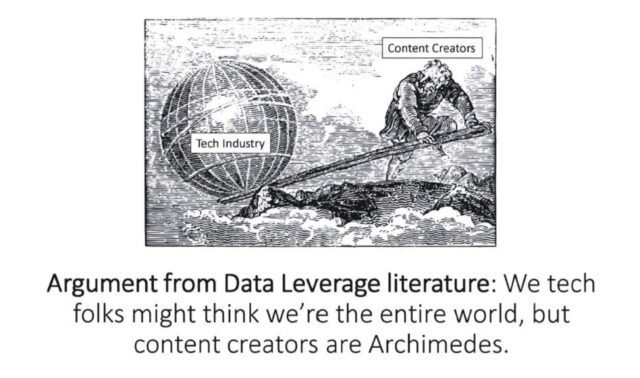
The publishers argue that without court intervention establishing a licensing requirement, both news publishers and AI companies face mutual destruction. They cited a Microsoft internal document acknowledging a "real risk" that generative AI could "significantly disrupt" the "employment of the very people who generated the data on which the foundation model was trained." That document reportedly included a cartoon illustrating how large language models risk destroying their own supply chains.
The Prisoners' Dilemma of AI Training
News groups contend AI companies are trapped in a "doom loop" they cannot escape individually. While the industry collectively would benefit from paying to sustain the creation of the creative works its technology depends on, each individual company profits more by taking content for free and letting others bear the cost.
As evidence of what they characterize as unchecked commercial ambition, the motion highlighted that OpenAI president Greg Brockman once wrote he was "deeply motivated by the gazillions" that could be earned by commercializing OpenAI's technology.
The publishers' proposed solution is a legal finding that copying news for AI training does not qualify as fair use. Such a ruling, they argue, would resolve this prisoners' dilemma by placing all AI companies — including OpenAI and Microsoft — on an even footing when it comes to licensing news content.
The story was updated with a quote from New York Daily News counsel Steven Lieberman. The courts' eventual ruling on fair use will likely shape whether AI firms and publishers can reach a sustainable licensing framework.
Comments
No comments yet. Be the first to comment.