
Only five years after its launch, the interactive chatbot platform Character.AI has filed for bankruptcy.
Character.AI, founded by former Google engineers, filed for Chapter 11 bankruptcy five years after launch. The AI chatbot platform grew rapidly but faced lawsuits, regulatory scrutiny, child-safety concerns, and scaling costs. After Google licensed its models and founders departed, leadership changed and the company expanded into video and social features. Its assets, valued between $50 million and $100 million, are now in a court-supervised sale; Disney agreed to buy certain assets for $20 million. If no viable bid emerges, the platform may wind down.
Key Takeaways
- Character.AI, a popular AI chatbot platform founded in 2021, filed for Chapter 11 bankruptcy after five years, citing lawsuits and difficulty scaling and monetizing despite strong user engagement.
- The startup grew rapidly to a $150M unicorn valuation, a Google $2.7B model licensing deal, and 20M monthly active users, but high usage also increased AI costs and regulatory scrutiny.
- It faced severe safety and legal pressure, including a lawsuit tied to a teen’s death and a Texas child-safety investigation, leading to settlements, safety changes, and a ban on minors.
- The company appointed new leadership, expanded into video and social features, and entered a court-supervised sale process to maximize value for stakeholders.
- Disney agreed to buy some assets for $20M plus a non-exclusive perpetual license, but without a successful bid, Character.AI may be wound down.
Character.AI, the chatbot startup that lets people build fictional and custom AI characters, has filed for Chapter 11 bankruptcy, a court-supervised process used to sell or restructure a company. The filing comes only five years after its founding, following a slew of lawsuits and struggles to scale a popular platform that, according to the analytics firm Sensor Tower, was one of the top apps in terms of time spent. The company said in a court document that it had assets and liabilities between $50 million and $100 million.
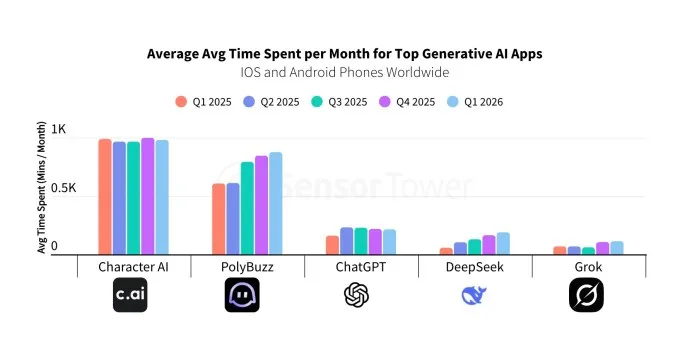
From foundation models to a 20 million user platform
Character.AI was founded in late 2021 by former Google engineers Noam Shazeer, a co-author of the landmark Transformer paper, and Daniel De Freitas. It initially focused on training foundation models and developing a chatbot service that allowed users to create custom characters and chat with them. By September 2022, the startup reached a unicorn valuation with a $150 million fundraise on the back of high demand. The company said users had exchanged more than 2 billion messages with its bots in 5 months, and active users averaged more than 2 hours on the platform daily. In May 2023, its apps attracted more than 1.7 million installs in their first week after launch.
That early growth gave the company a high-profile position in consumer AI, but it also set the stage for later scrutiny as the audience expanded. The traction continued even after Google struck a $2.7 billion deal in August 2024 to license Character.AI’s models, with Shazeer and De Freitas returning to the search giant. At that time, the startup’s general counsel, Dominic Perella, stepped in as interim CEO, and the company moved away from training foundation models to focus on growth. By October of that year, Character.AI recorded 20 million monthly active users.
Safety lawsuits, leadership change and product expansion
The startup later faced severe legal pressure. It was sued following the suicide of a 14-year-old Florida boy whose mother said he became obsessed with a chatbot on the platform. Soon after, Texas launched an investigation to assess whether the platform conformed to child privacy and safety laws. Character.AI settled some of these lawsuits, added more safety features and banned minors from its platform.
In June of last year, the company appointed Karandeep Singh Anand, a former Brex and Meta executive, as CEO. It expanded its products to add AI video generation and social feeds, then tried to introduce new ways to spur user engagement through interactive storytelling formats and microdramas. The company was trying to diversify beyond text chat while still facing the same cost and safety pressures.
Court-supervised sale, Disney assets and what comes next
CEO Colin Adams said Character.AI had taken meaningful steps over the past year to sustain and improve its business in the face of significant legal, regulatory and operational headwinds. After reviewing alternatives, the board determined that a court-supervised sale process provided the best opportunity to maximize value for all stakeholders. The company has also agreed to sell some of its assets to Disney for $20 million, as well as a non-exclusive perpetual license for its technology, meaning a permanent license that does not prevent other parties from using it. Disney will provide transition services via former Character.AI employees who joined the entertainment giant the previous month alongside former CEO Karandeep Singh Anand.
Adams said the company would continue operating during the sale process, which is expected to close in late November or early December. However, he noted that there is not yet a bid for the company’s assets or a buyer. The company hopes the sale process will yield an actionable proposal that allows continued operations; if no bid is available, the platform will be wound down.
The case also shows consumer-facing AI products are really hard to scale and monetize. PitchBook said Character.AI had raised over $193 million across multiple rounds from investors including Lightspeed, SV angels, Greycroft and a16z. But high engagement can be a double-edged sword: AI costs rise the more people use the app, increasing the pressure to monetize users. The next milestone is whether the court-supervised sale produces a buyer willing to take over the platform.
Meta description: Character.AI files for Chapter 11 after lawsuits and scaling struggles, with assets and liabilities between $50 million and $100 million as Disney buys some assets.
Tags: Character.AI, Chapter 11, AI chatbots, Disney, Colin Adams
Featured image: abstract chat bubbles fading into a court document on a dark grid, no real people, no company logos, no text.
Comments
No comments yet. Be the first to comment.