
Qwen3.8-Omni-Flash matches Gemini Flash's multimodal performance at a lower price point
Qwen launched Qwen3.8-Omni-Flash, its first multimodal model built for AI agents, capable of processing audio and video simultaneously and independently using tools for tasks like video editing and translation. It offers a one-million-token context window and reportedly matches Gemini 3.8 Flash on multimodal benchmarks while costing far less—$0.15 per million input tokens versus Gemini's $0.75. Available via Qwen Studio, Cloud, and API, it includes open-source plugins and real-time live interaction support.
Qwen has introduced Qwen3.8-Omni-Flash, the company's first multimodal model designed specifically for AI agents. The model can process audio and video simultaneously, draw conclusions from what it sees and hears, and independently use tools to handle tasks such as editing vlogs, translating short videos, or summarizing films. Qwen also touts a context window of one million tokens and claims the model comes close to matching Gemini 3.8 Flash on audio-video tasks.
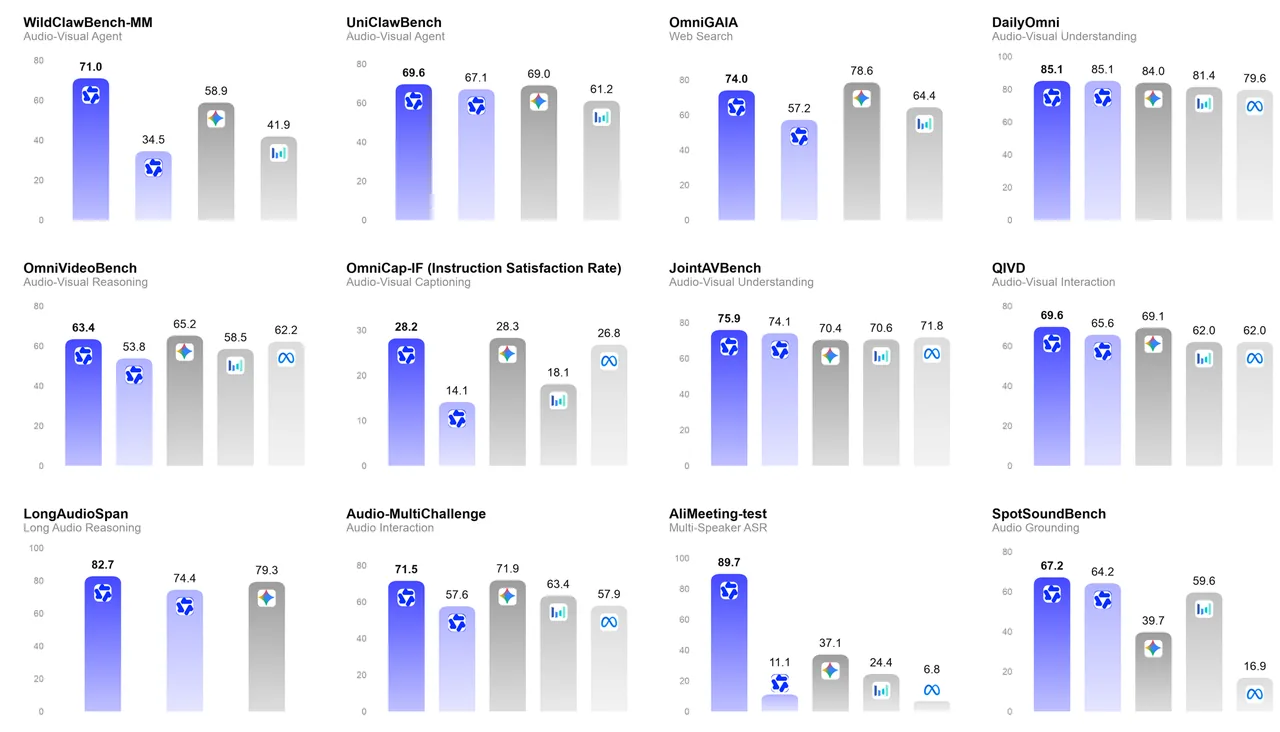
Performance Compared to Gemini
According to Qwen, Qwen 3.8 Omni Flash performs on par with Gemini Flash 3.8 in multimodal benchmarks while costing significantly less. The company positions the model as a budget-friendly alternative for developers who need native audio and video understanding without the premium pricing of competing offerings.
Aggressive Pricing
The pricing structure is a key selling point. API access costs $0.15 per million input tokens and $0.47 per million output tokens. Qwen estimates audio input at under $0.01 per hour, while 720p video with audio processed at one frame per second runs roughly $0.20, excluding response costs.
By comparison, Gemini 3.8 Flash currently charges $0.75 per million input tokens and $3.75 per million output tokens at its introductory rate — with prices set to double on January 1, 2027. That gap gives Qwen a substantial cost advantage for high-volume multimodal workloads.
Tools and Availability
The model is available through Qwen Studio, Qwen Cloud, and the API. Beyond the core model, Qwen is releasing open-source Qwen-MM-Plugins, which extend agents such as Claude Code, Gemini CLI, and Qwen Code with video editing, speaker recognition, PDF video notes, and reusable workflows.
For real-time use cases, Qwen-Live Harness enables live interaction through a camera and microphone, opening the door to streaming and conversational applications.
What to Watch
With pricing pressure intensifying in the multimodal model market, the arrival of Qwen3.8-Omni-Flash raises the stakes for established players. The open-source plugin ecosystem could accelerate adoption among developer communities, and it will be worth watching how competitors respond as Qwen's introductory rates take effect.
Comments
No comments yet. Be the first to comment.