
Runway aims to transform AI video generation into an interactive live stream that users control in real time
Runway is advancing real-time AI video generation with GWM-1, its General World Model built on Gen-4.5, allowing users to steer video interactively like a live stream. The approach promises instant feedback, lower GPU costs, and solutions to error compounding via self-trained outputs. Applications span gaming, education, robotics training, and autonomous driving simulation, positioning world models as future training grounds for robots and robotaxis.
Runway is doubling down on real-time video generation, an approach it first outlined in March with Runway Characters. The technology is built on GWM-1, the company's first "General World Model," introduced in December 2025. GWM-1 builds on Gen-4.5, generates video frame by frame, and accepts camera movements, robot commands, or audio as control inputs. Just weeks ago, Runway also unveiled Solaris, a system that uses Gen-4.5 to generate user interfaces frame by frame, responding to clicks or voice input. The company believes real-time generation could reshape how interactive media, robotics, and autonomous driving systems are built.
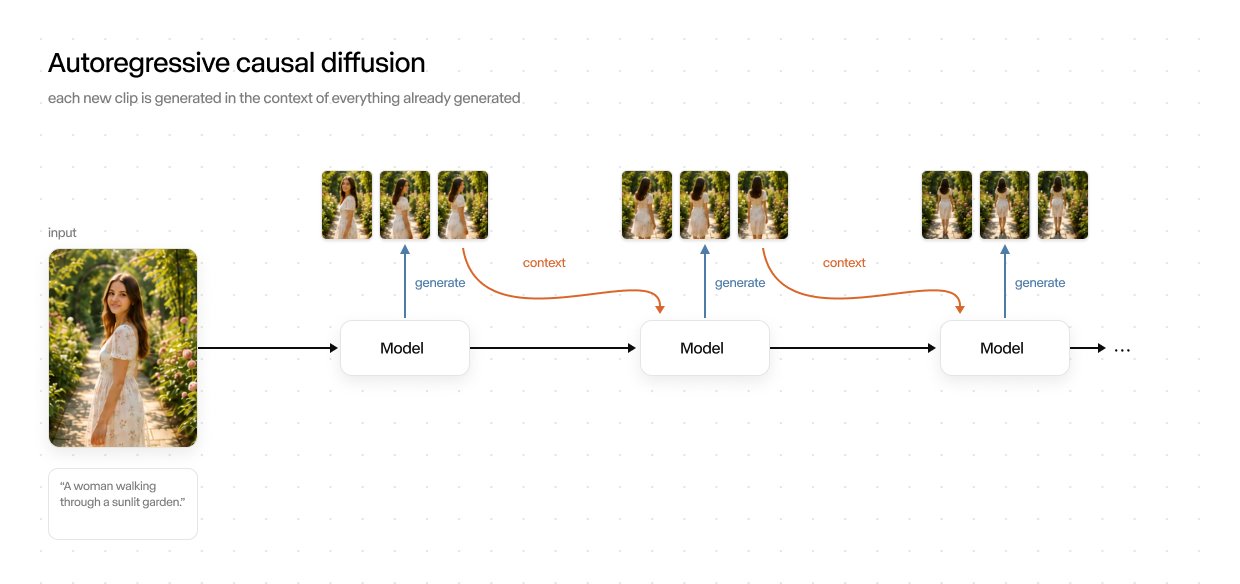
Instant feedback and lower GPU costs
Runway argues that real-time generation closes the gap between having an idea and executing it. With instant feedback, users would spend most of their time actively steering the video rather than sitting through rendering waits.
Cost is the second pillar of the argument. Faster models consume less GPU time, which makes them more economical to run. According to Runway, the cost per output at a given quality level ultimately determines which applications make economic sense. Instant generation would lower that threshold, opening the door to applications that were previously unprofitable.
There is a catch, however: the compute load shifts from training to inference. The model must generate each frame quickly enough to keep pace with playback, while running on hardware shared across multiple simultaneous sessions.
Fighting error compounding in frame-by-frame video
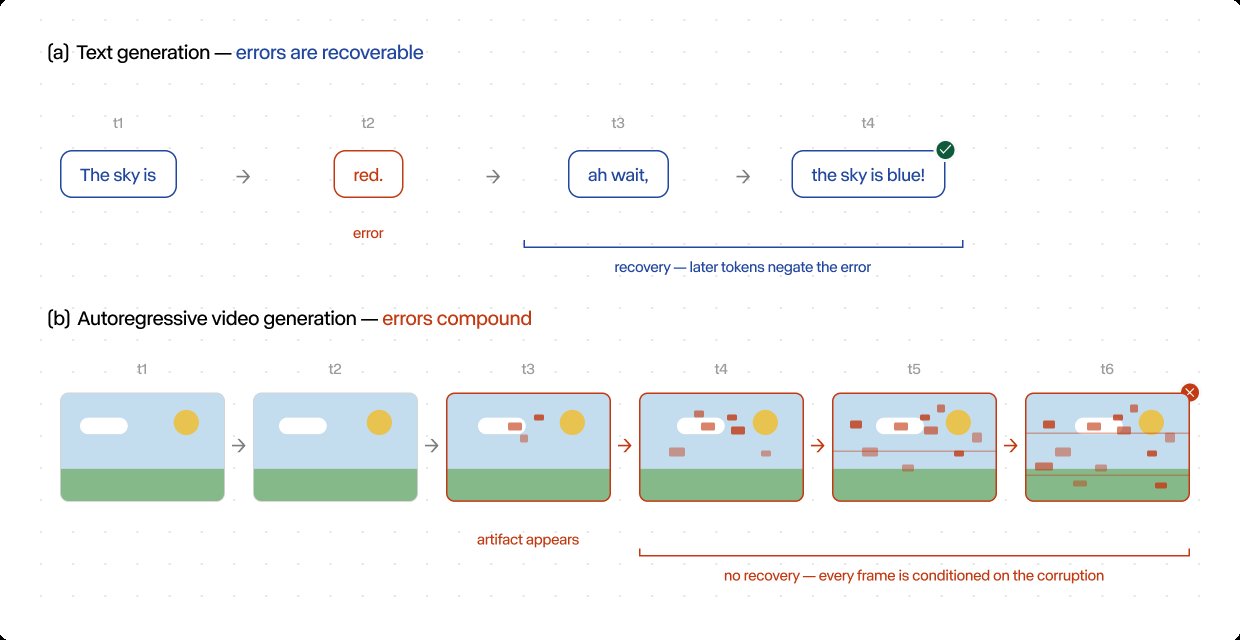
A text model can revise itself mid-sentence, but a video model builds each new frame on the one before it, meaning small visual errors can compound into major distortions over time. Runway identifies this as the central weakness of LLM-based approaches.
Its solution is to train the model on its own outputs rather than only on clean, error-free data. This teaches the model to recognize and correct its own deviations instead of amplifying them. Startup Decart took a similar route with its real-time model MirageLSD, deliberately exposing it to flawed and distorted imagery during training. Google DeepMind, meanwhile, says its world model Genie 3 keeps interactive worlds consistent for several minutes at 24 frames per second in 720p.
World models as training grounds for robots and robotaxis
Runway sees interactive applications as the biggest long-term opportunity for AI-generated media. Education, gaming, and robotics all need video that reacts as quickly as the person watching it. Evaluating how robots or autonomous vehicles behave in the real world also demands environments that generate in real time and respond instantly to edge cases. The company has already introduced GWM Robotics, a GWM-1 variant that produces synthetic training data for robots.
Waymo is pursuing a comparable strategy with its Waymo World Model, adapted from Genie 3 for road traffic. It lets the company simulate situations its fleet has never encountered, such as meeting an elephant, a tornado, or a flooded residential neighborhood. According to Waymo, the Waymo Driver covers billions of miles in virtual worlds before facing similar scenarios on public roads.
What to watch next
In March, Runway also demonstrated a research preview of a real-time model developed with Nvidia at the chipmaker's GTC conference. It runs on the Vera Rubin platform and is designed to deliver the first frame in under 100 milliseconds. Runway has not yet announced when the technology will become generally available — the timeline for turning these research demos into products remains the key question.
Meta description: Runway's GWM-1 world model enables real-time frame-by-frame video generation, tackling error compounding and opening uses in robotics and gaming.
Tags: Runway, GWM-1, real-time video generation, world models, Gen-4.5
Featured image: Abstract visualization of a streaming video waveform dissolving into pixels, deep blue and teal tones, no text or people.
Comments
No comments yet. Be the first to comment.