
A Look Inside Amazon’s One-Million-Robot Experiment
Amazon's million-robot warehouses use AI routing and touch arms, with mixed injury and hiring impacts; medical, drone, and humanoid robots advance.
Key Takeaways
- Amazon now operates over 1 million warehouse robots and plans to more than double its robotic-arm fleet in 2026, using AI traffic routing and touch-sensitive arms to improve efficiency and safety.
- The safety impact is mixed: Amazon says severe injuries and overall incidents have fallen, but new data suggests minor injuries may rise and automation could reduce future U.S. hiring by hundreds of thousands.
- The same robotics update highlights frontier developments, including heart-targeting micro-robots, drone-dropped armed ground robots, and a large hydraulic humanoid from Beijing.
- Together, these stories show robotics is expanding rapidly across warehouses, healthcare, defense, industry, and public trials, while questions about safety, employment, and real-world readiness remain unresolved.
Amazon now operates more than 1 million warehouse robots and is upgrading them with AI traffic routing and touch-sensitive arms — a combination the company says reduces severe injuries but which new data suggests also raises minor injury rates and could curb future hiring. The details emerged in a robotics newsletter dated October 15, 2026, which also covered heart-docking micro-robots from Johns Hopkins, Ukraine's drone-dropped ground robots, and a 13-foot hydraulic humanoid from Beijing's NeodraDynamics.

Background: How Amazon's Robot Fleet Reached 1M+ Units
Amazon's warehouse automation has scaled from isolated robotic arms to a fleet exceeding 1 million machines working alongside human staff. The company now expects to more than double its robotic-arm fleet in 2026. Its touch-sensitive Vulcan arm is claimed to handle 75% of the item types in its warehouses. DeepFleet, Amazon's AI routing system, directs robots through warehouse floors like a traffic controller and is said to cut robot travel time by 10%.
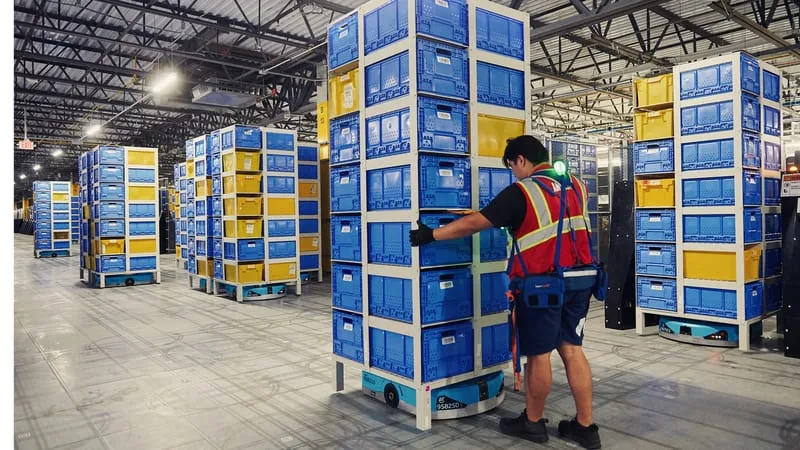
The injury picture is mixed. A study linked warehouse robotics to 40% fewer severe injuries and 77% more minor ones. Amazon separately reports its global incident rate fell 43% from 2019 to 2025. Internal documents reviewed by the New York Times projected that automation could avert more than 600,000 U.S. hires by 2033.

Johns Hopkins Builds Micro-Robots That Dock at Heart Infections
Engineers at Johns Hopkins built a pair of magnetic robots — pencil-tip wide and rice-grain long — that steer through a beating heart, latch onto an infection, and deliver antibiotics on the spot. A barbed needle module anchors at the infection site as a docking station; a drug module then clicks on, unloads its medicine, and can be swapped out for repeat doses. External electromagnetic coils steer and power both bots, so neither carries batteries or motors, and a camera-guided control system handles navigation. In testing, the drug module released a 22-microliter dose over three hours — a slow drip straight onto the target.

The robots have so far been tested only in an artificial heart with pulsing flow and in excised pig tissue. No living hearts have been tested yet. The target condition, endocarditis, is a serious heart infection that often requires weeks of IV antibiotics and sometimes surgery. The approach could offer repeated doses directly to an infected site, but safety and effectiveness in living hearts remain unassessed.
Ukraine Drops Armed Ground Robots Behind Russian Lines
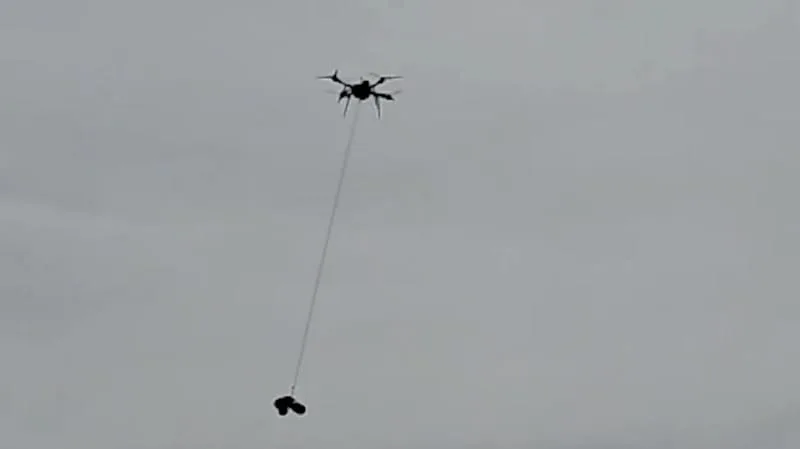
Ukraine is using heavy drones to carry armed ground machines over the front and drop them behind Russian lines, according to Business Insider. During Operation Vivaldi, heavy drones dropped explosive-laden ground robots more than 10 km behind Russian positions, a Ukrainian commander told the outlet. A second unit built and fielded its own drone-dropped robot in 10 days, according to Brave1, Ukraine's state-backed defense tech accelerator.
Only a handful of units have mastered these missions, and keeping robots linked to their operators remains a problem, Brave1 said. The machines do not fight alone: infantry, drone crews and supply teams still operate alongside them and still face deadly risk. Brave1 said the U.S. explored the broader "marsupial" robotics concept for more than three decades without combat deployment. Kyiv ordered 25,000 ground robots for the first half of 2026 — double all of 2025 — and reportedly wants robots replacing up to 30% of personnel on the hardest front sectors by year-end.
NeodraDynamics Brings a 13-Foot Hydraulic Humanoid to China International Industry Fair
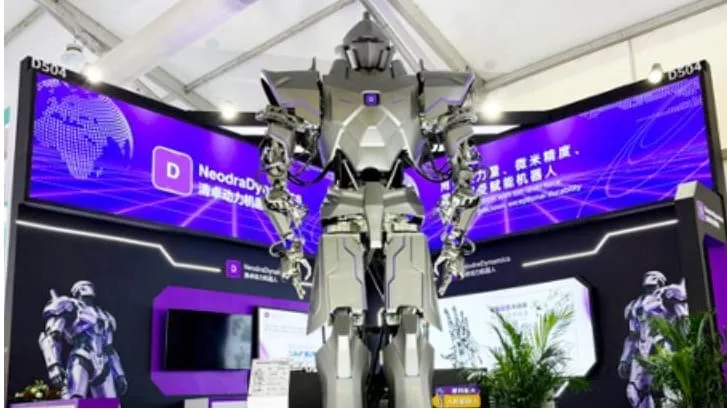
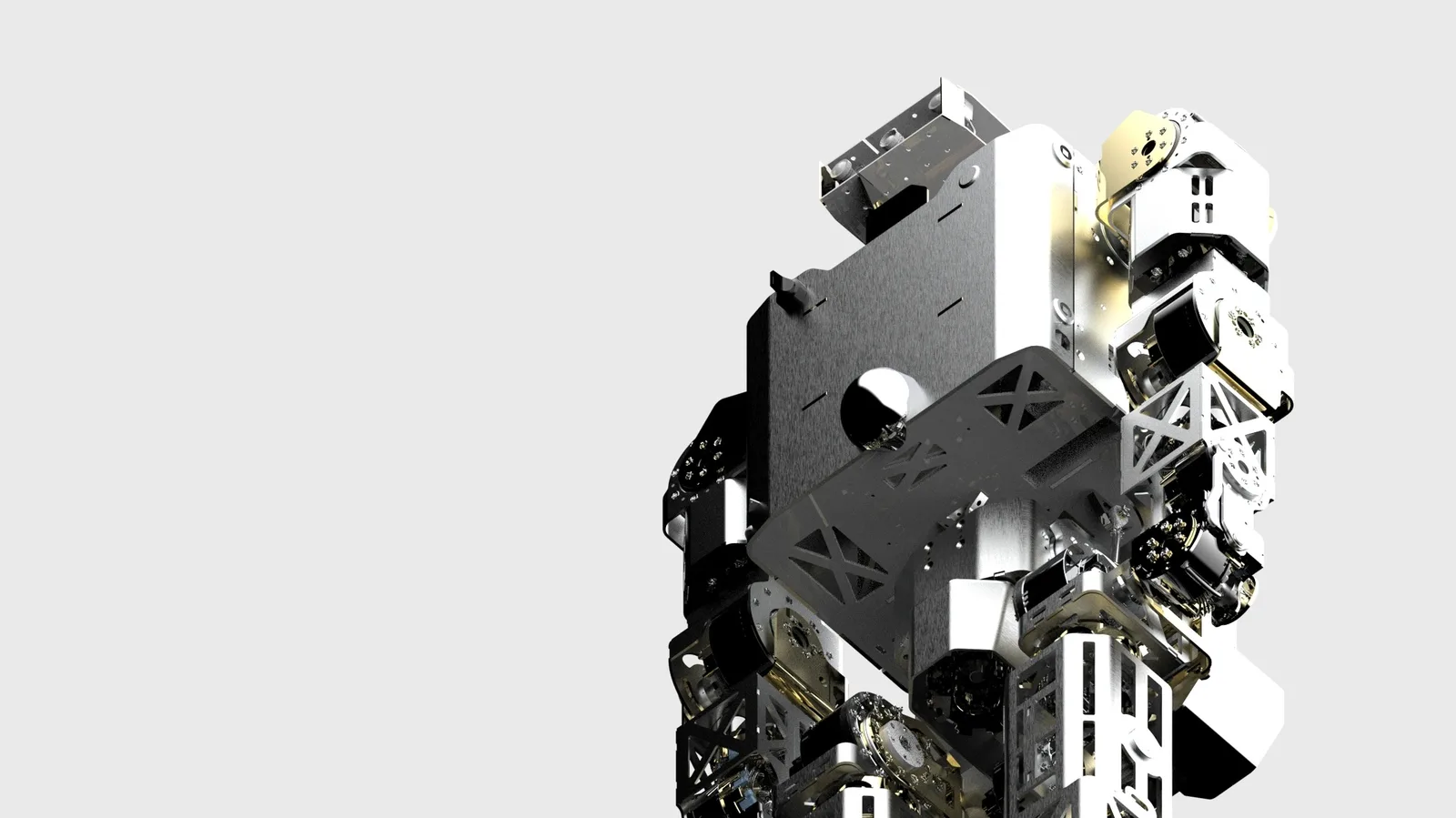
Beijing's NeodraDynamics showed Neo1 at the China International Industry Fair this week: a 13-foot, 1.2-ton humanoid with a claimed 1,102-pound payload, running on hydraulics most rivals have abandoned. The company built 39 of Neo1's 41 joints around its own digital hydraulic actuators, each weighing about 1 kg and rated for ton-level continuous thrust. Electric drives handle just two joints — the forearm rotations — where the company wants servo-level precision.

NeodraDynamics claims ±0.005 mm repeatability, but its September release listed ±0.05 mm, a 10x gap it has not explained. JD Industrial co-exhibited Neo1 and plans pilots in ports, mines and nuclear sites, though neither company has named a buyer or a price. Boston Dynamics retired its hydraulic Atlas in 2024 after more than a decade, replacing it with an all-electric model it said was stronger and headed for Hyundai's factories. NeodraDynamics is positioning Neo1 against that move, but the robot has only been showcased so far, with actual factory work yet to be seen.
Other Developments to Watch
Rivian-backed Mind Robotics hired former Ford EV chief Doug Field as president to scale its AI-powered factory robots, with Rivian as its first customer. Uber, Pony.ai and Verne began testing robotaxis in Manchester, their first UK city outside London, with safety drivers mapping streets and no passengers aboard. Salling Group, Denmark's largest retailer, is training humanoids to restock supermarket shelves overnight, targeting initial autonomous work in early 2027. Genesis AI confirmed Nvidia as a strategic investor. Austin-based ICON raised $200 million to scale robotic 3D-printing construction systems. DeepSeek has reportedly agreed to lead a seed investment of tens of millions of dollars in Winverse AI, a robotics AI startup founded by a former Tencent scientist. NHTSA is reviewing a petition alleging Tesla's Model Y and Cybercab robotaxis exceed speed limits in active school zones while using automated driving systems. Sarfraz Marediam, Uber's autonomous mobility and delivery chief, will leave in November. Cedars-Sinai launched an autonomous robotic surgery center in Los Angeles led by surgeon Andrew Hung and roboticist Michael Yip. Physical Intelligence launched a Pi API beta. German police seized a robot after it allegedly groped a teen girl in Cologne and are investigating two teenagers suspected of controlling it and livestreaming the incident.

What to Watch Next
Amazon's 2026 fleet expansion will test whether faster robot routing and touch-sensitive arms change the injury mix further — and whether the projected 600,000+ averted hires by 2033 materialize. Johns Hopkins' micro-robots need living-heart trials before their safety can be judged. Ukraine's 25,000-robot order for the first half of 2026 will show whether drone-dropped ground machines scale beyond a handful of units. And NeodraDynamics must explain its repeatability discrepancy and name a first buyer before Neo1's hydraulic bet can be evaluated against Boston Dynamics' electric pivot.
Comments
No comments yet. Be the first to comment.