
Robotics AI Advances Won’t Transform Daily Life in the Near Future
Robot demos improve, but VLAs need teleoperation data and still fail beyond training, so near-future home robots remain unlikely.
Key Takeaways
- Tesla’s Optimus and other humanoid robots are surrounded by high expectations for consumer and industrial use by 2027, but researchers warn the gap between impressive demos and general-purpose intelligence remains large.
- Optimism that language-model breakthroughs will directly make robots smart enough for everyday tasks is contested, because robotic environments are noisy, physical, and far harder to learn from than text.
- Google DeepMind’s ALOHA 2 and Gemini Robotics show real progress in learned robot policies, yet current systems still depend heavily on teleoperation data and often fail outside their narrow training tasks.
- The main bottleneck is data: there is no public, high-quality physical-demonstration dataset comparable to internet text, and human teleoperation data is costly and slow to collect.
- World models, trained on video, 3D scans, and sensor data, are emerging as a possible path forward, but the key question is whether robots can move from task-specific success to reliable physical reasoning.
Meta description: Tesla Optimus humanoid robot timeline traces Musk's 2027 promise, Google DeepMind Gemini Robotics, VLA training limits, and world-model progress.
Tags: Tesla Optimus, humanoid robots, AI, robotics, Google DeepMind
Featured image: Abstract humanoid robot and neural network lines, no real people, no logos, no text.
The Tesla Optimus humanoid robot story shows how AI may move from chatbots to physical machines. Elon Musk, Tesla's CEO, has positioned Optimus as a product that could automate factory work and eventually home tasks, with public sales predicted by the end of 2027. Researchers say the gap between demonstrations and general-purpose intelligence remains wide.
Background: Optimus promises and the AI hype cycle
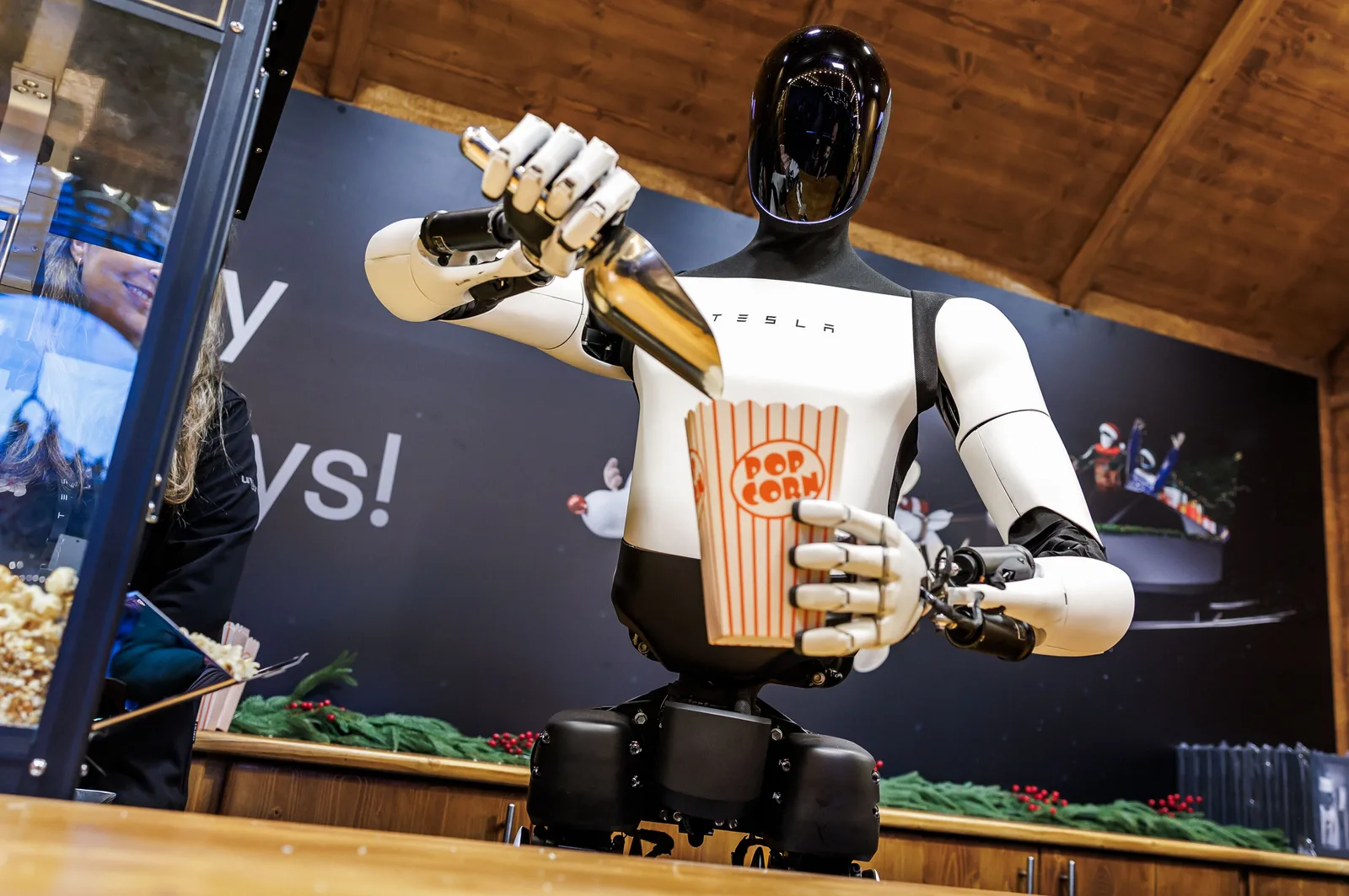
Tesla's Optimus, an AI-powered humanoid robot with a white body and black head and torso, has appeared in videos dancing, passing popcorn, vacuuming, pressing a microwave button, handing out water bottles, and struggling to iron a shirt. Musk told shareholders in July that Optimus could become Tesla's biggest product ever, and perhaps the biggest product ever, and would eventually have human and then superhuman dexterity. He has argued such robots could automate almost all human labor, from hauling sheet metal to folding laundry, for as little as $20,000 each.
Marc Andreessen, cofounder and general partner of Andreessen Horowitz, has said robotics could become the biggest industry in the history of the planet. In January, Nvidia CEO Jensen Huang said humanoid robots would match human-level ability this year. Morgan Stanley projects that robots resembling and acting like humans could reach nearly 1 billion by 2050, creating a market worth over $5 trillion.
This optimism rests on the idea that advances behind OpenAI's ChatGPT and Anthropic's Claude will help machines imitate human movement as language models imitate text. Yann LeCun, often described as one of the godfathers of AI, challenged that assumption at a January event during the World Economic Forum in Davos, Switzerland, saying none of the companies building humanoid robots has any idea how to make them smart enough to be useful. He says language AI does not handle noisy robot data.
Development: ALOHA 2, Gemini Robotics, and learned robot policies
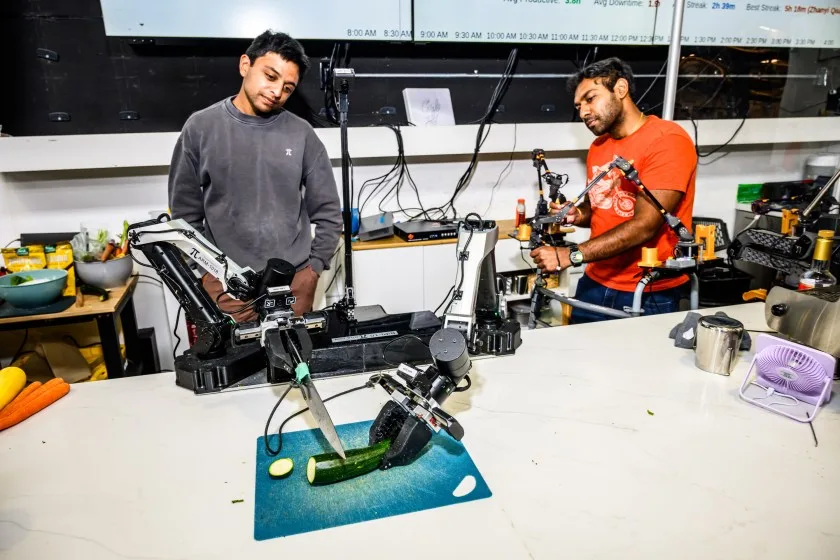
Google DeepMind's progress is visible in ALOHA 2, short for A Low-cost Open-source Hardware System for Bimanual Teleoperation. ALOHA 2 is not humanoid; it has two arms, grippers, and cameras, reflecting a view that a humanlike shape is not necessary for generalist robots. Controlled by Gemini Robotics, Google DeepMind's advanced AI robotics system, it can place bread in a Ziploc bag, grapes in a Tupperware container, secure lids, move items into a lunchbox, and zip it closed.
The significance is not the lunch but the sequence: a robot can perform several linked physical steps after training, a capability harder to demonstrate even three years ago. Modern robot policies, which determine how a robot assesses surroundings, plans movement, and executes tasks, are increasingly learned from data rather than hard-coded by engineers.
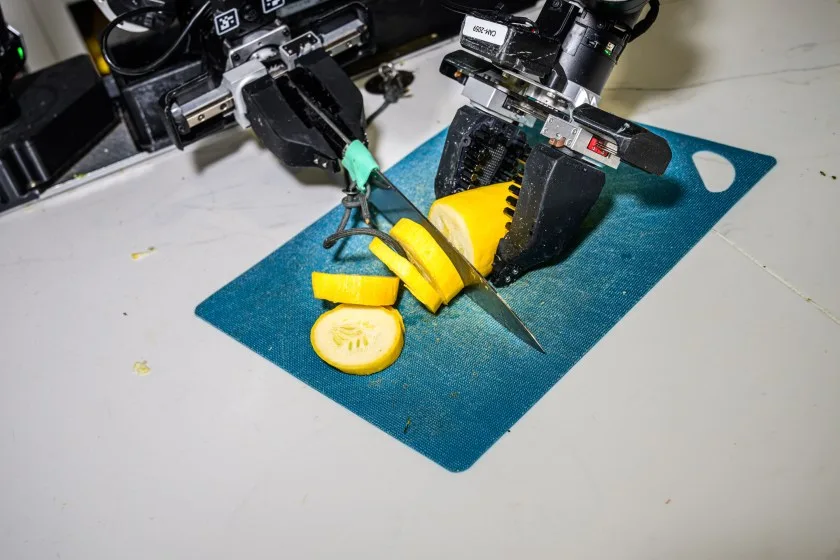
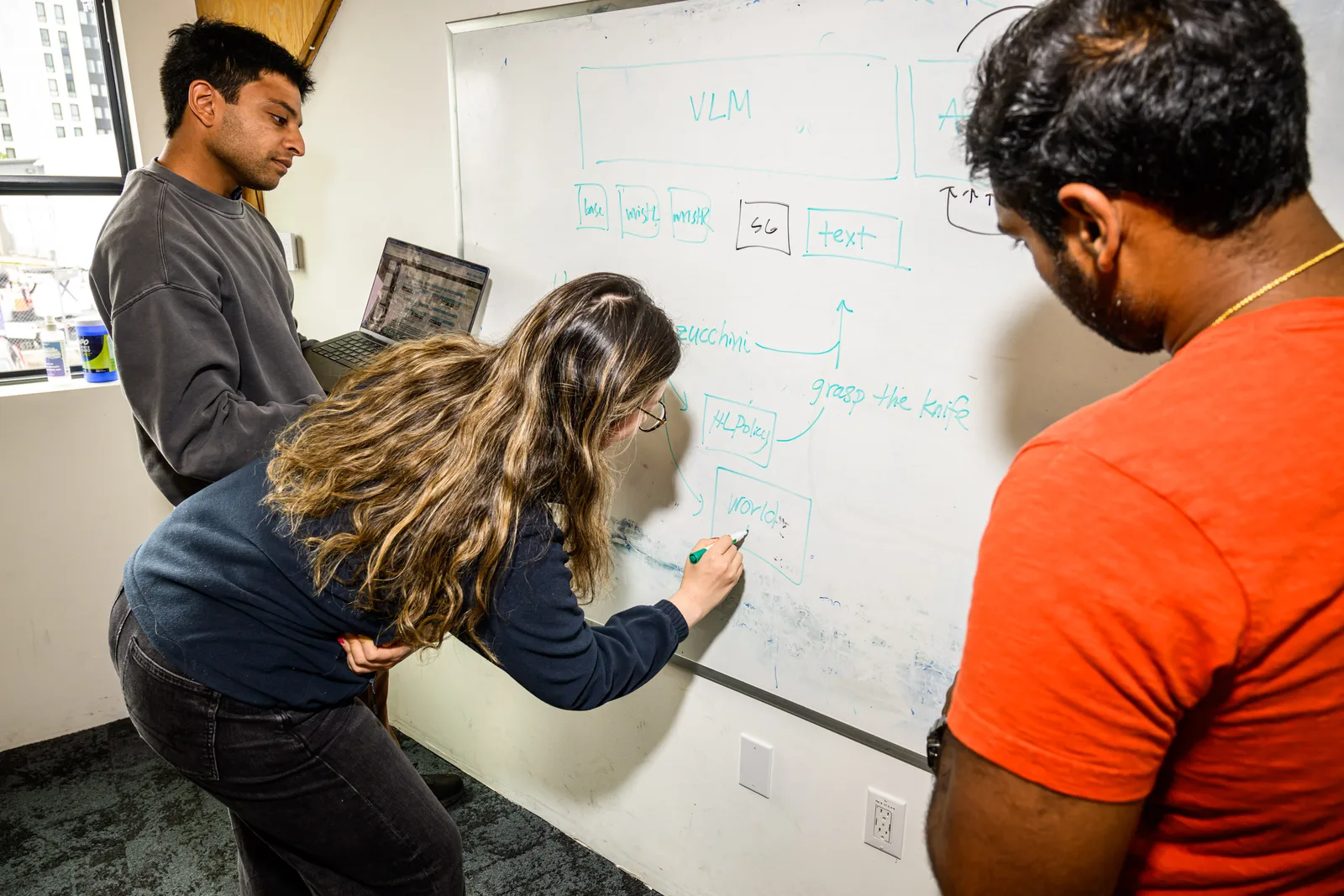
That shift began with vision-language models, or VLMs, trained on images and words. They can connect a visual scene with language, such as identifying a cloth after seeing a coffee spill. Vision-language-action models, or VLAs, add motion commands and are trained on task videos together with robot movement data collected through teleoperation. Gemini Robotics is a VLA trained on many hours of human demonstrations. It can pick up snow peas with kitchen tongs, do origami, or assemble a simple lunch, but if a task falls outside its training set, it is highly likely to fail. Edward Johns, a robotics professor at Imperial College London, says current systems can do only a few tasks.
Latest progress: More data, world models, and the road to 2027
Researchers seeking broader robot competence usually point to more training data. Google DeepMind wants to gather as much data as possible, according to Pannag Sanketi, a former robotics tech lead there now working on his own AI robotics project. The problem is that there is no public corpus of physical demonstrations comparable to internet text used to train large language models. Teleoperation data is costly and slow, human videos can be low quality, and deploying imperfect robots outside labs raises safety concerns. Sanketi favors a multi-prong data approach.
Jonathan Hurst, cofounder and chief robot officer of Agility Robotics and a robotics professor at Oregon State University, says it is easy to make a robot look like a person but much harder to make it move or behave like one. He calls the idea that data alone will solve the problem a fundamentally flawed premise. Real-world tasks have too many variables for a VLA to cover everything unless training data is nearly infinite.
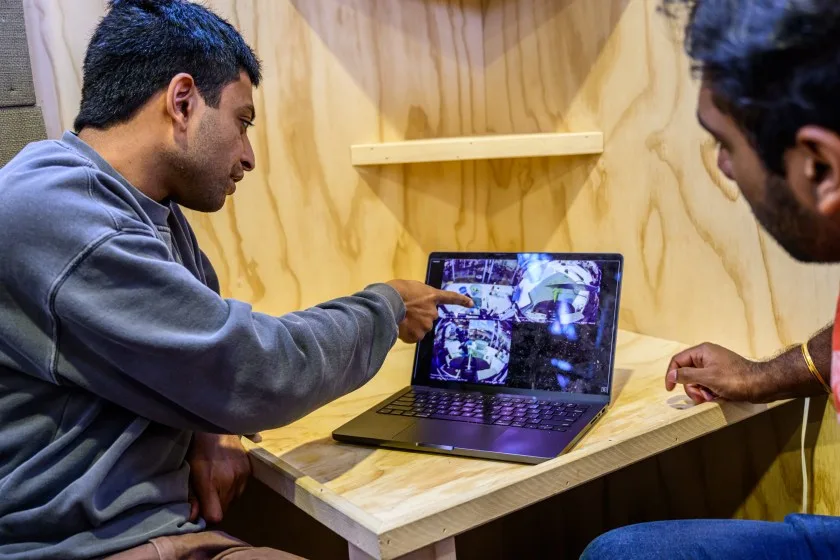
The leading alternative is a world model, an AI system trained less on text and more on video, three-dimensional scans, and sensor data. The goal is to give machines an internal model of physical reality. Nvidia and Google are pursuing this, and investor funding is flowing into startups. World Labs, cofounded by Stanford AI researcher Fei-Fei Li, raised $1 billion in February and was acquired by AMD at the end of September. If world models improve, development could become faster, cheaper, and safer by reducing real-world testing.
The current stage is uneven. Tesla Optimus points toward a possible 2027 consumer market, but Google DeepMind's ALOHA 2 and Gemini Robotics show that today's strongest demonstrations still depend on narrow training and teleoperated data. What to watch next is whether robot systems can move from task-specific success to physical reasoning, and whether world models can close the gap between humanoid hype and reliable general-purpose machines.
Comments
No comments yet. Be the first to comment.