
110 humanoids take to the dance floor
AgiBot's synchronized humanoid fleet, Figure's data-heavy robot, Microduck's viral preorders, and Unitree's 2028 outlook show robotics scaling.
Key Takeaways
- AgiBot showcased 110 full-size Expedition A3 humanoids in a Guinness-record synchronized dance, highlighting advances in fleet control, ultra-wideband positioning, and China’s growing humanoid production scale.
- Figure AI said its next-generation Figure 04 is in “full design lock,” with major investments in data, compute, and dexterous hands as it aims to make humanoid robots more like consumer hardware.
- The industry is shifting from one-off demos to competition over large-scale fleet management, data pipelines, manufacturing capacity, and real-world deployment readiness.
- Nvidia and Hugging Face’s viral $399 Microduck robot showed another path: small, affordable, hackable robots that could enter homes through gadget-like appeal rather than full-size humanoids.
- Unitree’s founder now expects a humanoid “aha” moment as early as 2028 due to AI progress, but reliability failures and real-world performance gaps remain key obstacles.
AgiBot put 110 full-size Expedition A3 humanoids through a nearly six-minute synchronized routine in Jinan, while Figure AI said its next-generation Figure 04 is in "full design lock." Both developments, reported October 26, 2026, point to the same shift: humanoid makers are now competing on fleet control, data pipelines, and manufacturing capacity rather than one-off demos.

Background: China's production base meets a coordinated fleet
AgiBot's performance is the clearest public demonstration yet of its LinkBots control system, which the company says will power future deployments. The robots jumped, flipped, formed wave patterns, and spelled out countdown numbers, all coordinated to the centimeter using ultra-wideband positioning. AgiBot said every unit on stage was a production model, not a hand-built prototype.
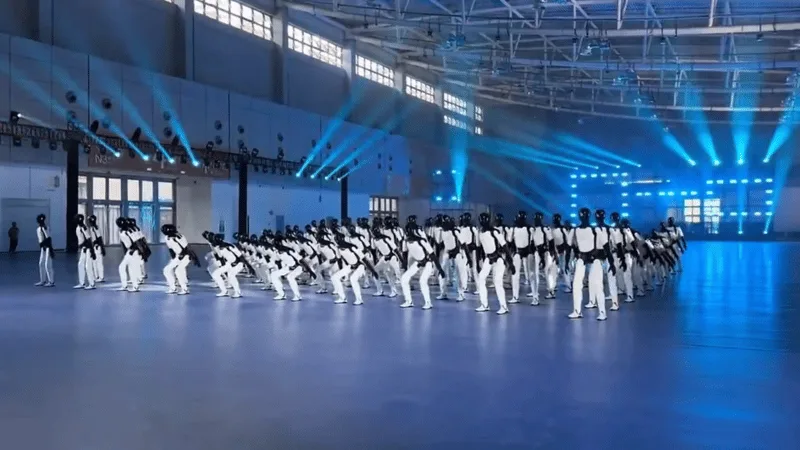
The display earned a Guinness World Records title for most humanoid robots dancing at once—a separate category from the overall record of 1,372 small bots set in 2018. The routine ran for almost six minutes.
The timing reflects China's manufacturing scale. More than 40,000 humanoids were produced in the first half of 2026 across more than 400 models, with annual output expected to reach 100,000. AgiBot plans to deploy the A3 in public services, tourism, research, and education. The next test will be how the machines perform around people in real-world settings, not on a stage.
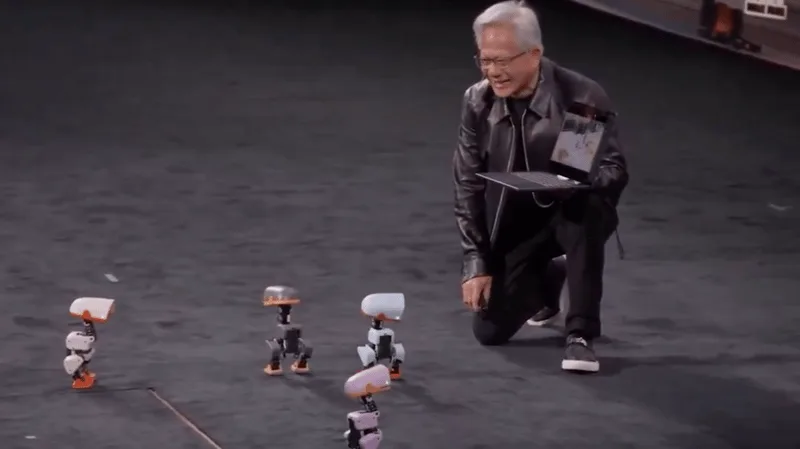
Figure bets on data and compute for its "iPhone 1"
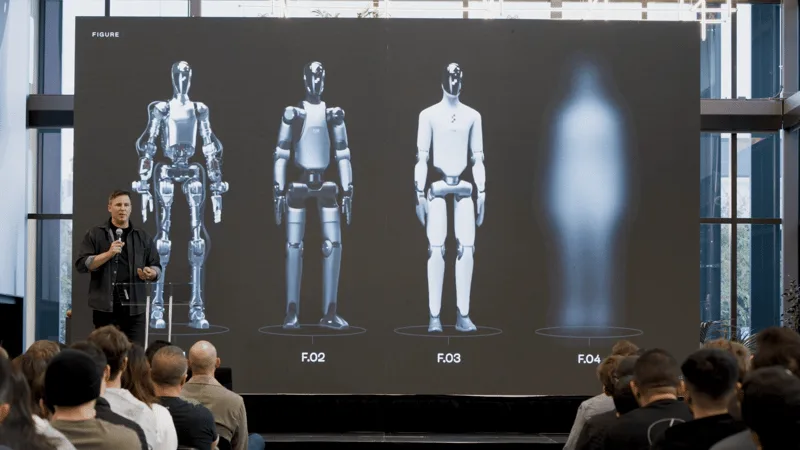
Figure AI CEO Brett Adcock shared the company's latest all-hands meeting, which Arnold Schwarzenegger kicked off, and revealed that Figure 04 is in "full design lock," with parts already shipping. He called it "the iPhone 1 of humanoids." Its hand approaches human-level dexterity and contains more actuators than the rest of the robot.
Training that hardware requires enormous data. Figure's Index app is pulling in 81 minutes of human video per second, totaling 37.5 million uploads, and the company spent roughly $8.1 million on data in a single week. Adcock said Figure will spend more on data in the next 12 months than most robotics firms have raised, backed by more than $2 billion in cash and a $3.5 billion compute deal.
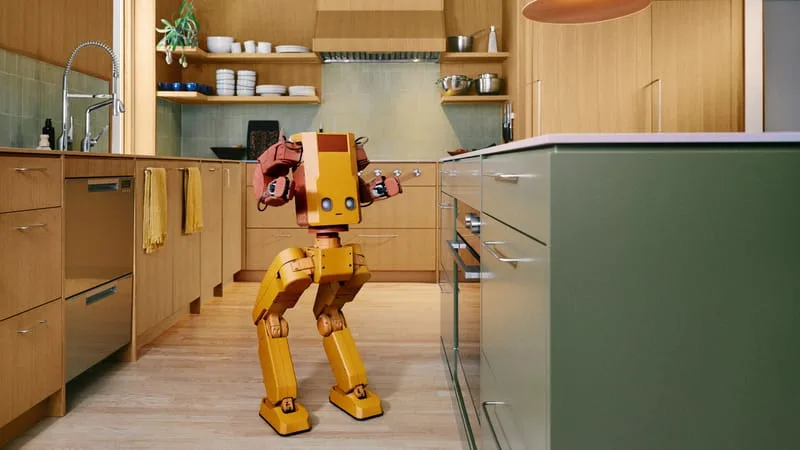
All of it feeds Helix 3.0, the model Adcock calls "baby AGI," trained on more data and compute than any previous Figure model. A larger version is due in weeks, though the company shared no benchmarks. Figure is still keeping Figure 04 under wraps and blurred it out of the public video.
Microduck turns a demo into 20,000 preorders
At GTC Berlin, Nvidia CEO Jensen Huang showed off Microduck, a $399 robot duck from Hugging Face's Pollen Robotics. The clip of the waddling robots went viral, pushing total preorders past 20,000 two months after its debut.

The 10-inch bots sat, "napped," tumbled, and attempted somersaults on Huang's commands. A few missed cues, and one wandered off before getting up. Each unit packs 15 motors, a camera, and a depth sensor, and can waddle, roller-skate on wheels, and pick up light objects with its beak. Owners can teach it new tricks through simulation learning and share them, though Pollen open-sourced only the software, not the hardware designs. Deliveries are expected by Christmas in North America and Europe in four colors: Cream, Graphite, Lavender, and Sky.

While Figure and 1X race toward full-size humanoids, Nvidia-owned Hugging Face is taking a different route into homes with small, hackable robots priced like gadgets rather than luxury goods.
Unitree moves its timeline forward by eight years
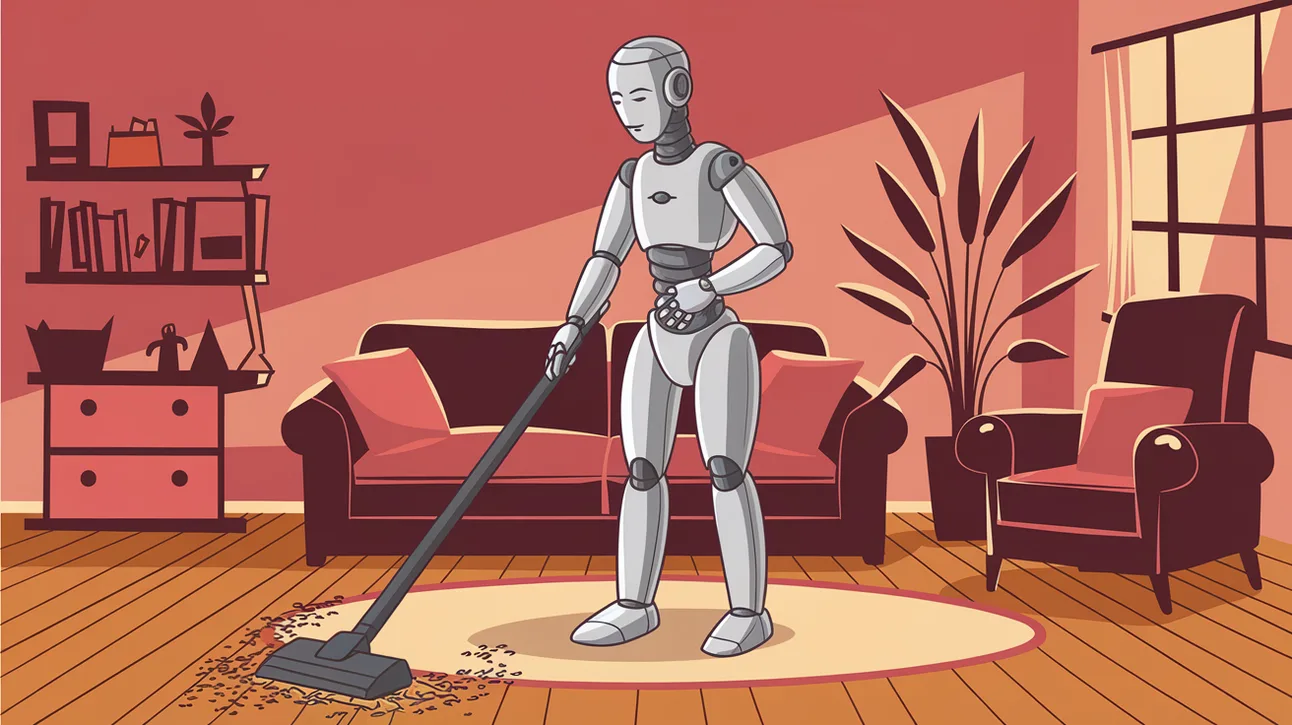
Unitree founder Wang Xingxing said humanoids' "aha" moment could arrive as soon as 2028, a reversal from his view two months earlier that mass deployment might take up to a decade, Bloomberg reported. Wang defined that moment as robots handling 80% of verbally assigned tasks in a home or factory, while acknowledging a robot still cannot reliably clean a room today.
He credited AI progress for the change, saying GPT-6-powered Unitree robots can now play Go and that frontier models are starting to improve themselves. The company works with third-party model providers for robots mostly used in research while continuing to develop its own models. It is also building a self-improvement system called "Unitree Rehearsal" and expanding capacity from tens of thousands of robots a year to potentially tens of millions.
What to watch next
The week's smaller items fill in the surrounding picture. IDC estimated that FCC restrictions on Chinese-made robots announced in July could cut America's humanoid robotics revenue by 58%, or more than $6 billion. NEURA Robotics unveiled its 20% lighter 4NE1 Gen 4 humanoid while opening a $19 million training center with TUM in Munich. Maxinsights announced $30 million in seed funding and a new MaxGlove to capture grip force and touch data. Schaeffler opened a 7,500-square-meter factory in China where six humanoids assemble components for other humanoids. ETH Zurich researchers taught Unitree's G1 to climb ladders, vault obstacles, crawl, and recover from failures using just 13.2 minutes of motion data.
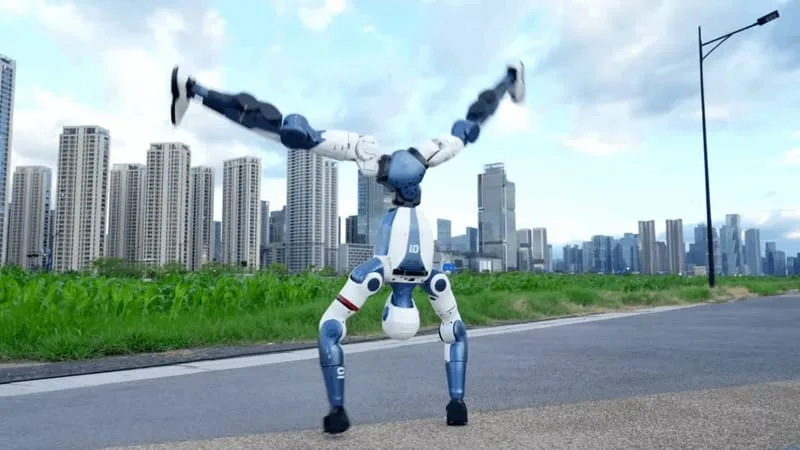
Set against those, Unitree's H2-X lost part of its leg after a failed side flip during a kung fu demo in China, a reminder that hardware reliability remains unresolved. The next two years will show whether faster timelines reflect a real inflection point or the optimism of a CEO whose company recently went public.
Comments
No comments yet. Be the first to comment.