
Will John Ternus discover Apple’s next breakthrough?
Apple's September event marked John Ternus' debut as CEO and the launch of the iPhone Duo foldable. Mark Gurman argues Ternus brings a decisive leadership style distinct from Tim Cook's collaborative approach, and plans to lead Apple from the iPhone era into the AI era. Despite skepticism about the 'intelligent personal hub' narrative, Gurman expects six AI-native devices within 18 months, including a smart home hub, camera-equipped AirPods, and smart glasses shipping in 2027.
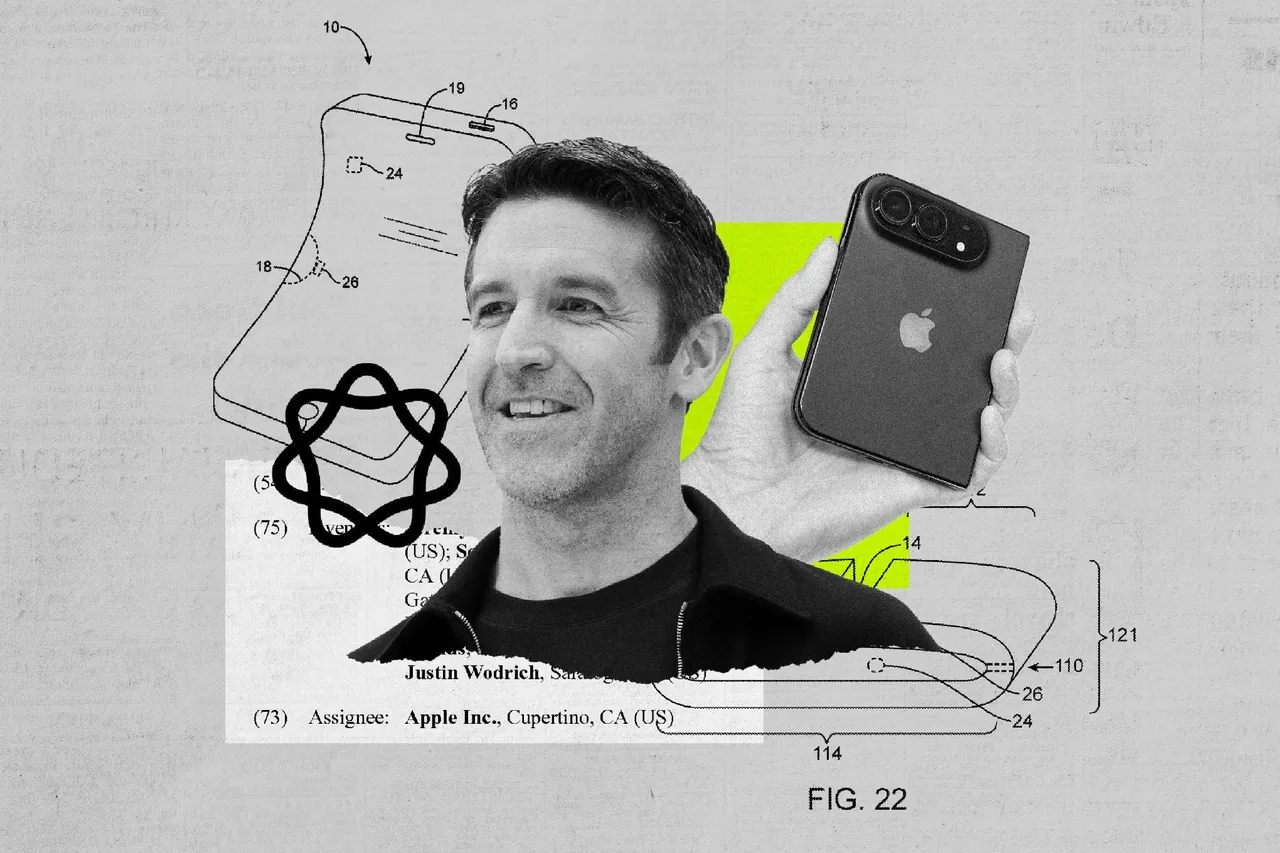
Apple's September hardware event marked a turning point: John Ternus' first major launch as CEO, barely two weeks after succeeding Tim Cook, and the debut of the iPhone Duo, the company's first foldable smartphone. In a wide-ranging conversation on Decoder, Bloomberg's chief Apple correspondent Mark Gurman argued that the staging of these two milestones together was no accident — and that the event reveals a great deal about how Apple is changing under new leadership. Gurman, who reported virtually every detail of the event ahead of time and hosts the upcoming podcast Power On, says the keynote signals Ternus' plan to guide Apple out of the iPhone era and into the AI era.
A Safe Debut, but With a Point of View
Gurman says the event itself felt largely interchangeable with a Tim Cook keynote. "It could have been Tim up there introducing it. It could have been Ternus," he noted. But one thing stood out: Ternus opened with a distinct stance on AI, leading with the concept of an "intelligent personal hub."
The deeper difference, according to Gurman, lies in management style. Under Cook, Apple operated with communal, collaborative decision-making — an executive bringing forward an idea would be met with more questions rather than a ruling. Ternus, by contrast, will make the call and state an opinion, even if people disagree with it. "He'll have a viewpoint," Gurman said. "You may hate his opinion; you may completely disagree with him, but he has a viewpoint."
That mattered because Apple has struggled to articulate an AI story since launching Apple Intelligence at WWDC in 2024. The keynote's opening 15 minutes, Gurman observed, was largely a re-narrativization of what Apple had already introduced over the past two years — no notable new AI features at a September 2026 launch event.
The Intelligent Hub Narrative Has Skeptics
Both Gurman and his interviewer were unconvinced by the "intelligent personal hub" framing, which echoes Steve Jobs' 1998 positioning of the iMac as the digital hub — a lineage Apple has recycled through iCloud in 2011 and now its intelligence platform. The critique: meaningful AI capabilities are increasingly running in the cloud. That same week, Meta launched Muse, giving users 8GB of cloud storage and 8GB of RAM, enabling AI functions the iPhone simply cannot match today.
In Gurman's view, Apple is telling the best story it can with the assets it has. "If Apple invented ChatGPT, they would've invented ChatGPT, and they would've told a good story around that," he said. Without a dedicated AI device, the company needs to prop up the iPhone as its AI product — until a true killer device arrives and the narrative shifts again. And indeed, the debut itself was played deliberately safe: no major new AI product, no smart home hub, nothing in the spatial computing space.
A Wave of AI-Native Devices Is Coming
Gurman expects roughly half a dozen AI-native Apple devices within the next year and a half. The first is a smart home hub — essentially an Apple-style Amazon Echo Show, with a square screen and an entirely new operating system built around a Siri AI concept, handling intercom, video conferencing, and proactive intelligence. It will use AI-based Face ID to recognize who is approaching and personalize the display.
Beyond that: a home security system, a second version of the hub mounted on a robotic arm (a category already popular in China and Asia), camera-equipped AirPods, and additional unannounced wearables. Most notably, Gurman remains confident that Apple's smart glasses will be introduced and shipped in 2027. "Trust me, you'll be wearing them," he said, predicting footage of the devices at the Steve Jobs Theater within 365 days.
What to Watch Next
The Apple eras are shifting. Jobs defined the company through keynote showmanship and device revolutions; Cook's tenure told a different story about operational scale and services. Whether Ternus can move Apple from its iPhone-centric identity to an AI-first one will depend less on carefully staged debuts and more on whether those AI-native devices — starting with the smart home hub expected later this year — can deliver a genuinely new narrative.
Meta description: Bloomberg's Mark Gurman breaks down John Ternus' first Apple event, the iPhone Duo foldable, and the AI-native devices coming next.
Tags: Apple, John Ternus, Mark Gurman, iPhone Duo, Apple Intelligence
Featured image: Abstract technology illustration — glowing geometric hub with connected device silhouettes in gradient blue and white, no people or logos.
Comments
No comments yet. Be the first to comment.