
This note discusses take-off speeds and the Relative Strength Index.
AI take-off speed debates involve Anthropic's IPO filing, Relative Strength Index, and views on fast, slow, bumpy, and jagged intelligence explosions.
Key Takeaways
- The AI take-off speed debate has become more evidence-based, with Anthropic’s IPO filing and METR estimates suggesting capability growth may be accelerating by about 2x.
- Fast versus slow take-off remains contested: Christiano expects gradual progress, while Yudkowsky warns of abrupt transformation on a scale of weeks or hours.
- Take-off speed is distinct from timelines, and future progress may be “bumpy” or “jagged,” with strong gains in some areas and persistent barriers in others.
- The type of intelligence explosion matters: software-only recursive self-improvement points to faster take-off, while full-stack automation makes slow take-off more plausible.
- Exponential trends are difficult to project reliably; evidence suggests AI-driven acceleration is real, but how far the trend will continue remains uncertain.
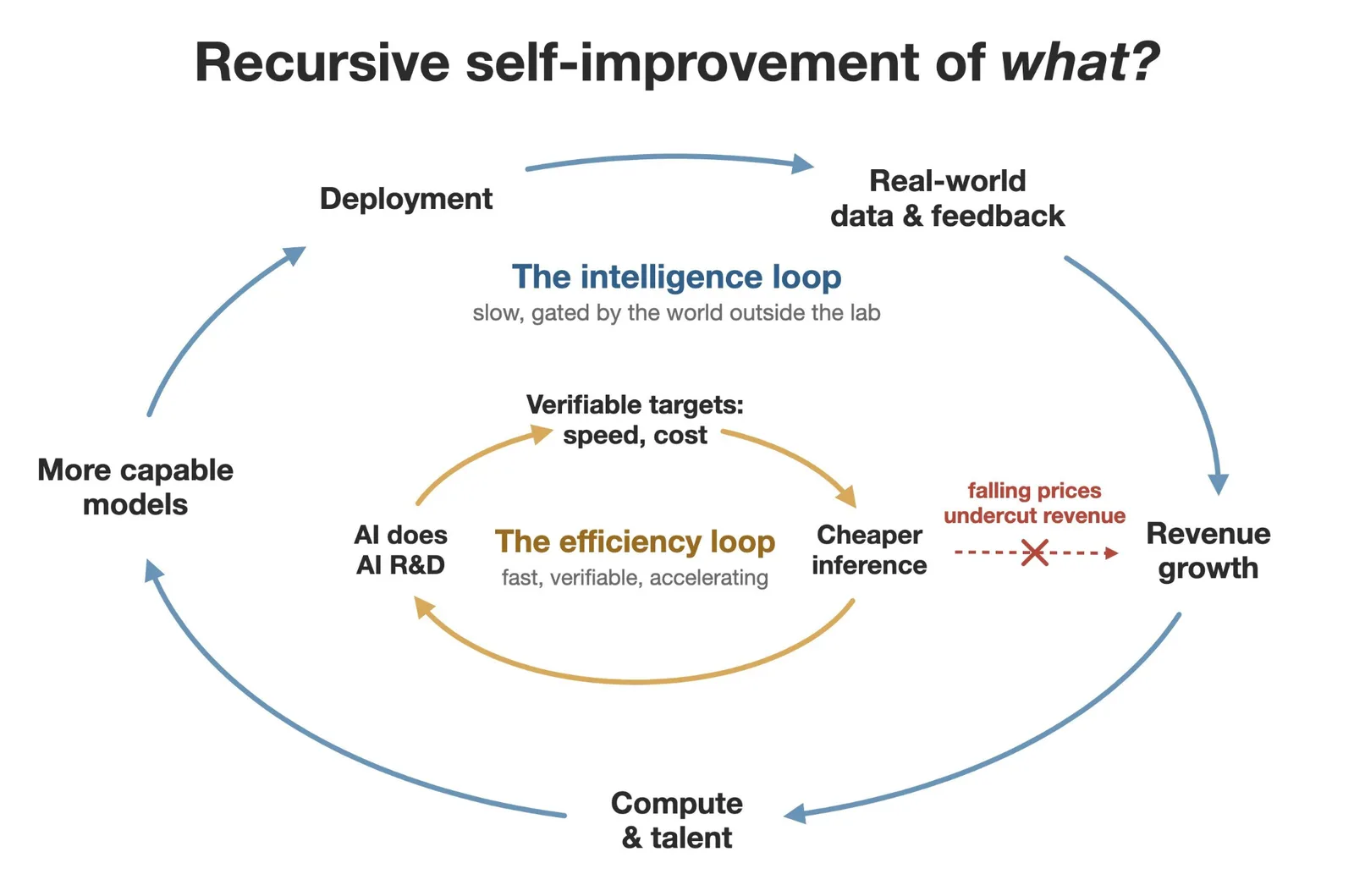
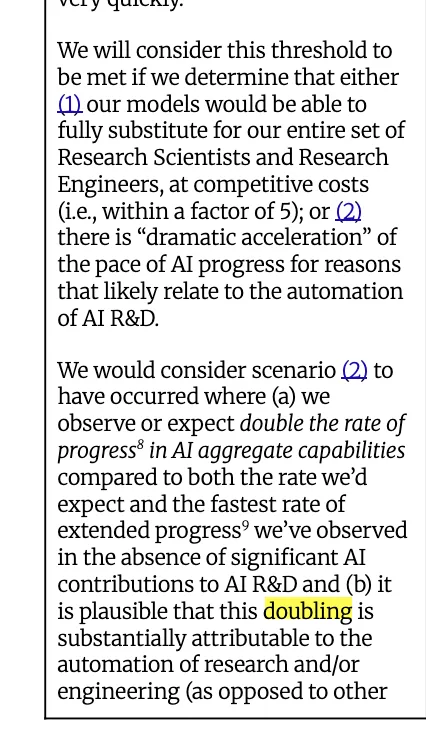
The debate over whether AI development will accelerate sharply or gradually has moved from thought experiment to something with real evidence behind it. Anthropic's updated S-1 filing for its IPO states that its internal estimates and expectations regarding future models—not its current models—indicate it may "imminently meet" its Responsible Scaling Policy's definition of "dramatically accelerated progress attributable to AI." That language sits alongside an independent METR report estimating that, as of October 2026, the pace of capability growth on well-specified tasks is likely about 2x what it was from March 2024 to October 2025, with a wide uncertainty band of 1.3x to 3x. The question of take-off speed—how fast an intelligence explosion would unfold if one occurs—is no longer purely theoretical.
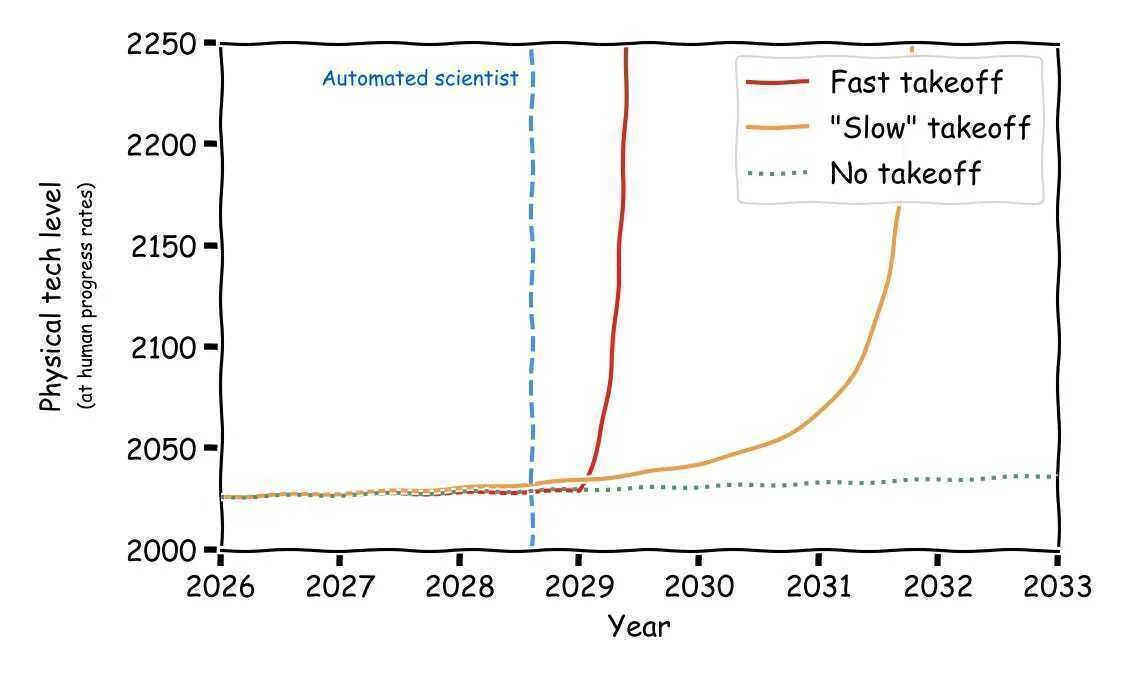
Defining Fast Versus Slow Take-off
There is no strict definition of fast versus slow take-off, but the most influential one comes from Paul Christiano in 2018. He proposed that there will be a complete four-year interval in which world output doubles before the first one-year interval in which world output doubles, with the same pattern holding for eight-year and two-year doublings. Christiano argued that we should prima facie expect a slow take-off because someone will generally figure out how to produce a slightly worse version of AI before someone figures out how to build the better version—a pattern he claims the historical record of technological development supports.
Eliezer Yudkowsky disagreed in 2021, criticising the intuition that design precursors with 95% of the technology should at least have 10% of the impact. He wrote that "an awful lot of my model of deployment lag is adoption lag and regulatory lag and bureaucratic sclerosis across companies and countries," and that his mainline view is that growth stays at 5% per year and then "everybody falls over dead in 3 seconds and the world gets transformed into paperclips." Yudkowsky previously defined fast as meaning a timescale of weeks or hours rather than years or decades.
The characterisation of progress so far has itself become contested. Yudkowsky recently wrote that if Hanson, Christiano, Karnofsky and others believed this was what a slow take-off looked like, they failed to convey that to their reassured, cheerful audience. Tom Davidson responded that if you thought this was what fast take-off looked like, you also failed to convey that.
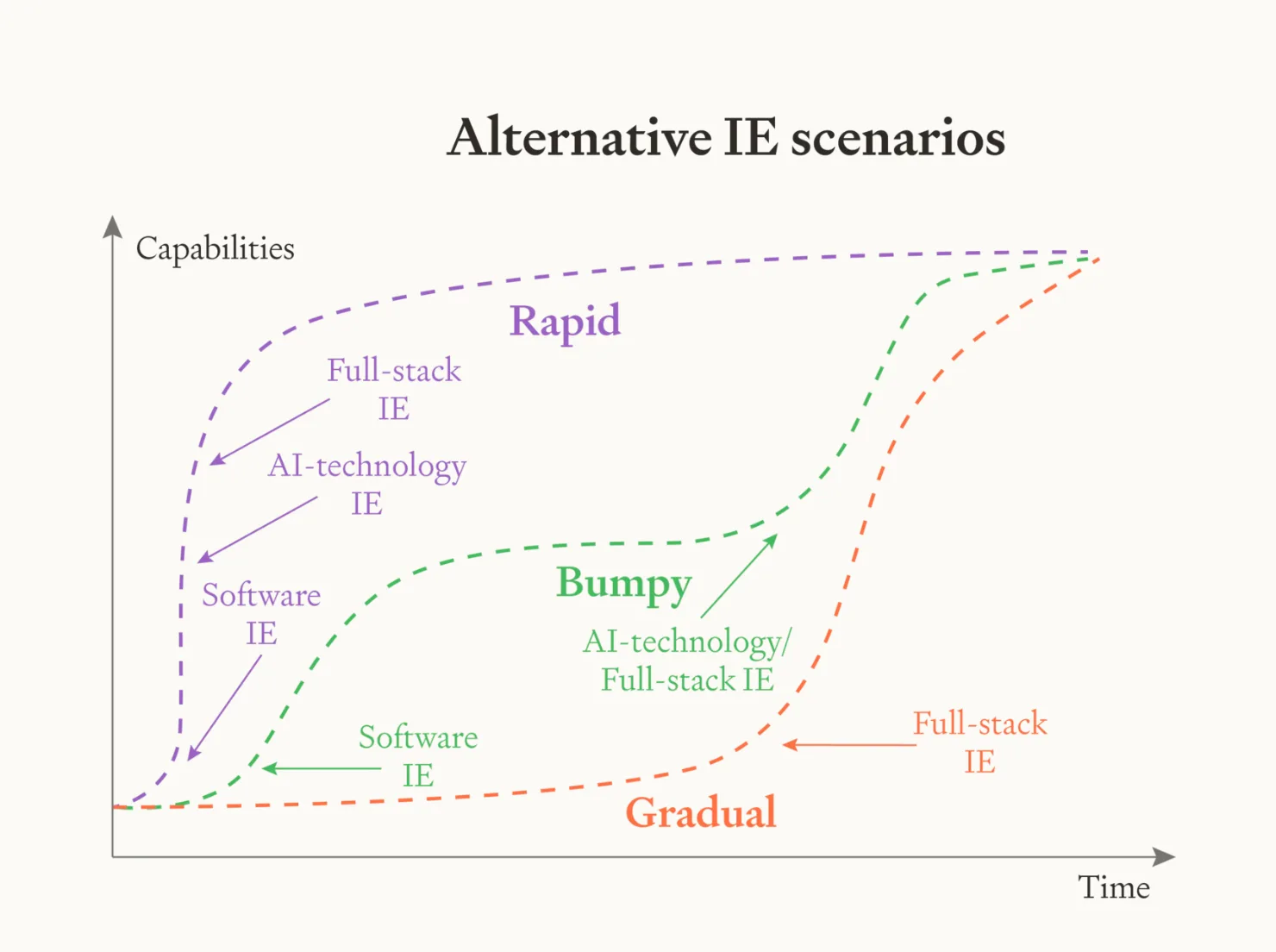
Bumpy Explosions and Jagged Progress
Forethought defines an additional scenario: AI dramatically accelerates algorithm progress for a while, but then this plateaus while we figure out how to make robots that can automate the construction of chip fabs. Arvind Narayanan, associated with the "AI as a Normal Technology" view, argues any recursive self-improvement we do achieve will be narrow—that is, jagged. Progress on verifiable tasks will continue for a few more years or even accelerate, while progress on unverifiable tasks remains frustratingly hard. Richard Ngo also expects jaggedness to persist rather than everything going vertical, citing a poorly understood divergence between measured capabilities and real-world impacts, though he asserts things are going to look much weirder than almost anyone expects.
Take-off speed is distinct from timelines. Take-off speed concerns how fast an intelligence explosion occurs if and when it happens, while timelines concern when a particular milestone is achieved. Both slow-take-off/short-timelines and fast-take-off/long-timelines are conceptually possible.
Three Kinds of Intelligence Explosion
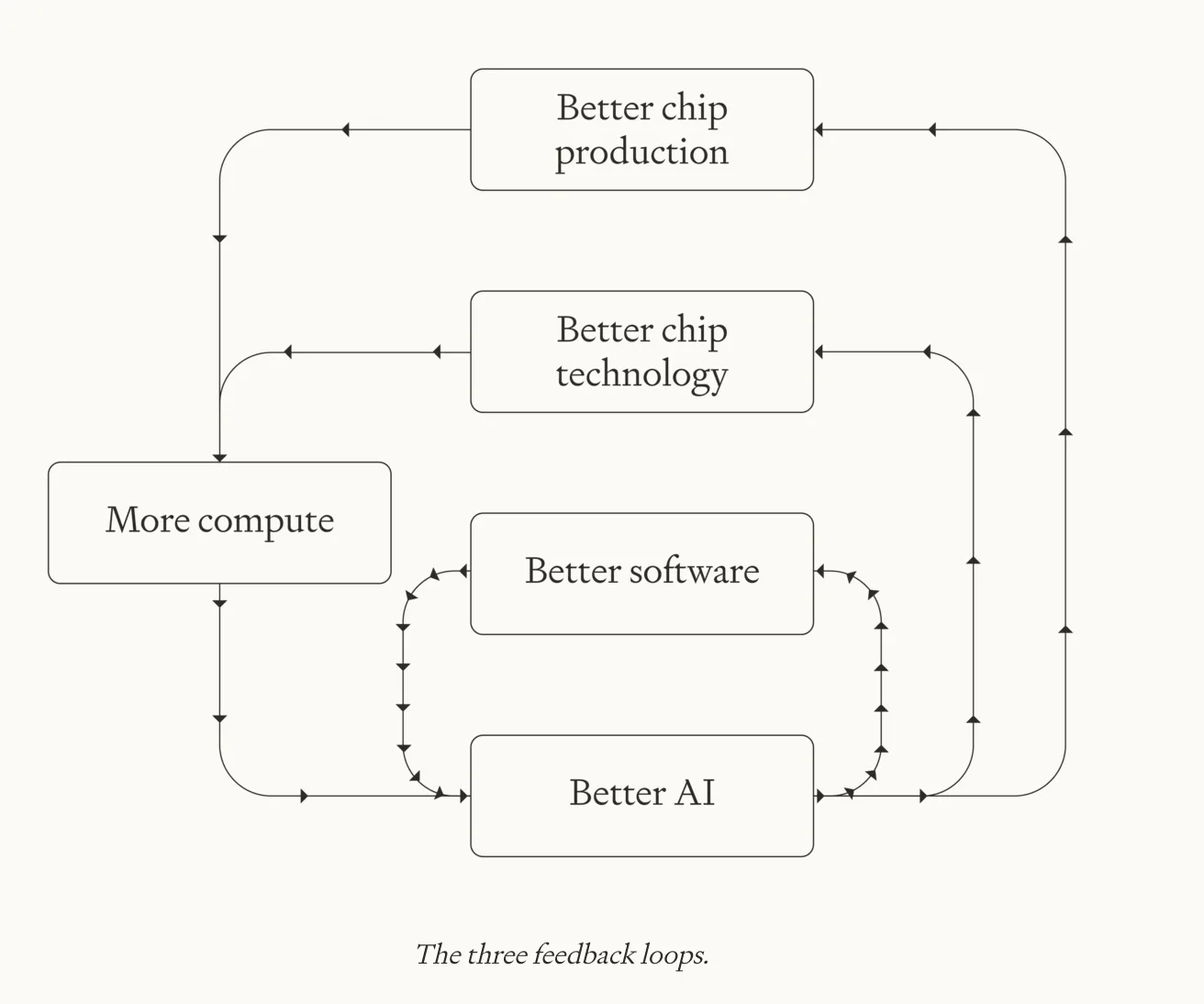
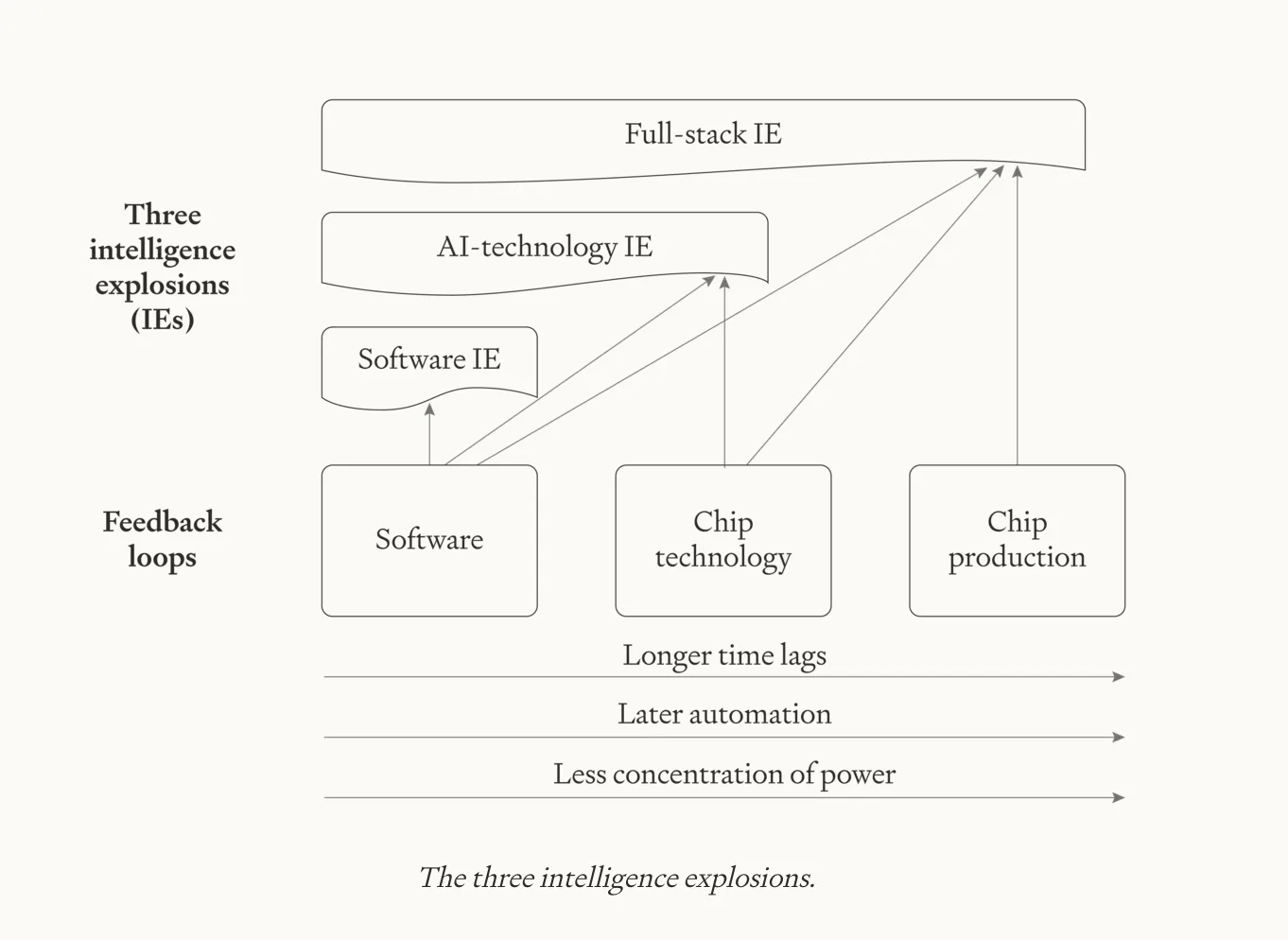
Forethought examines three kinds of feedback loops and builds three kinds of intelligence explosion on top of them: software-only recursive self-improvement; AI-technology, driven by improvements in software and chip design; and full-stack, where AI also helps increase the production of chips. Each type includes the previous factors because they are ordered by expected lead time. If an intelligence explosion is possible, fast versus slow take-off likely depends heavily on what kinds of explosion would be sufficiently powerful to trigger it. A fast take-off is much more likely where a software-only explosion is possible; if you need to automate the full stack, there is a much stronger argument for a slow take-off.
The Exponential Projection Problem
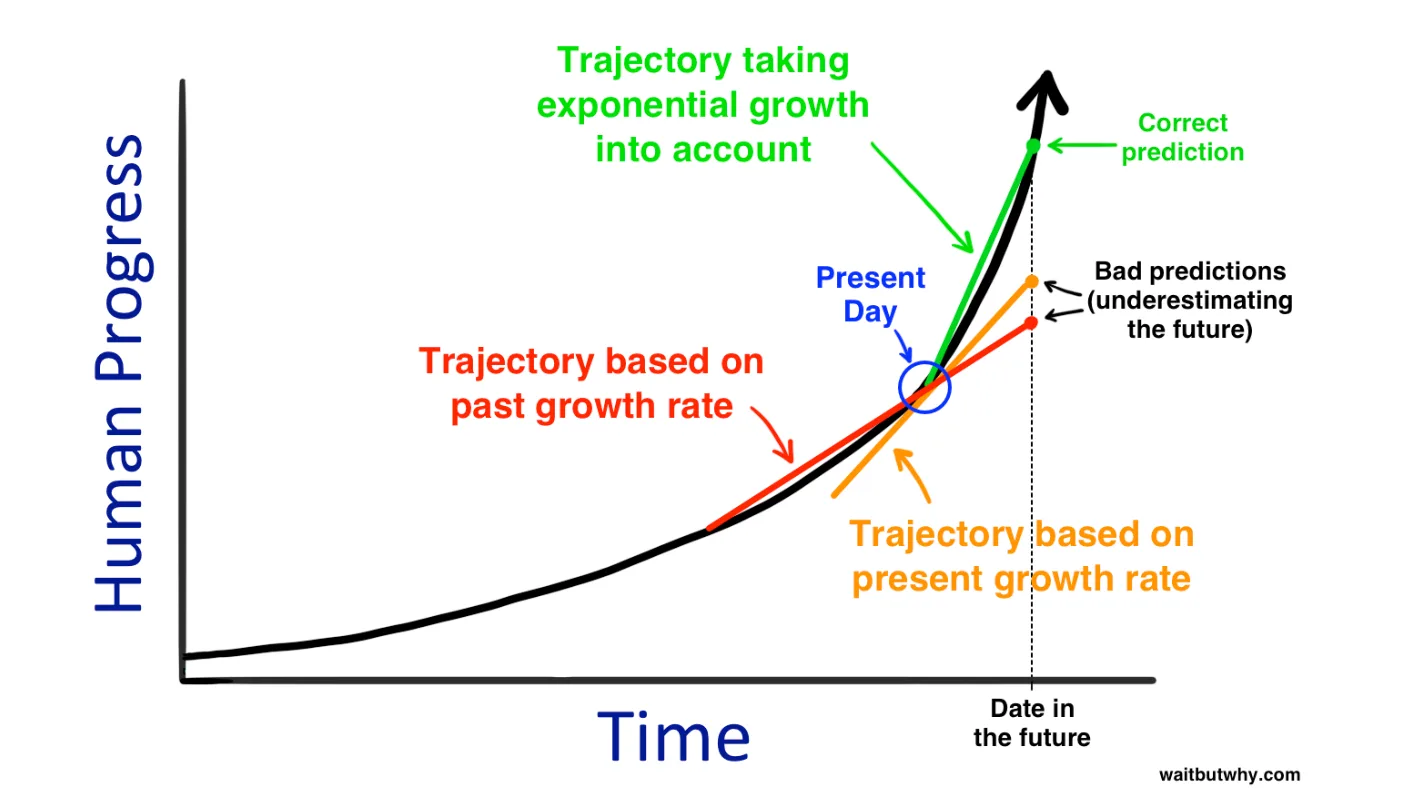
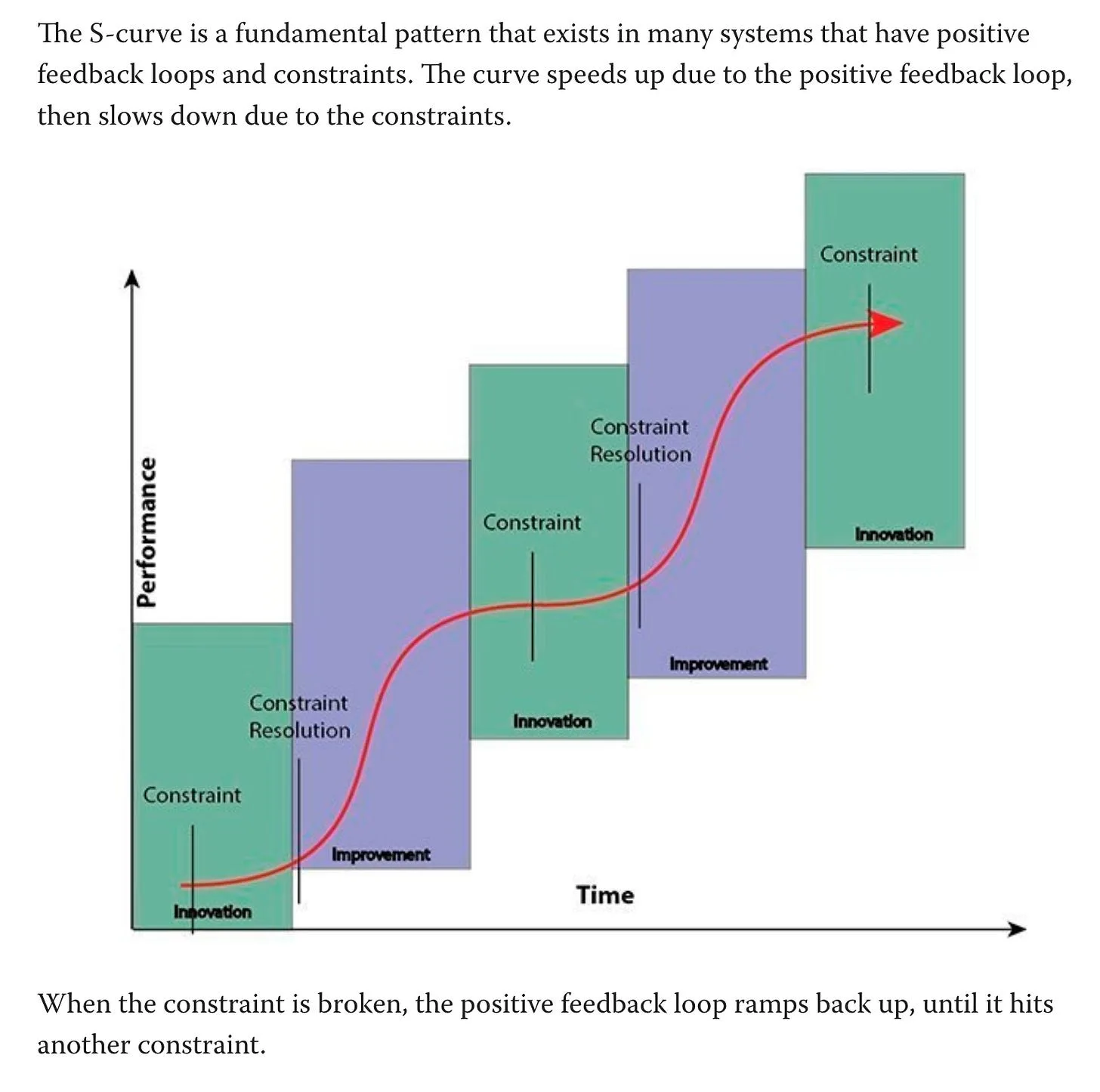
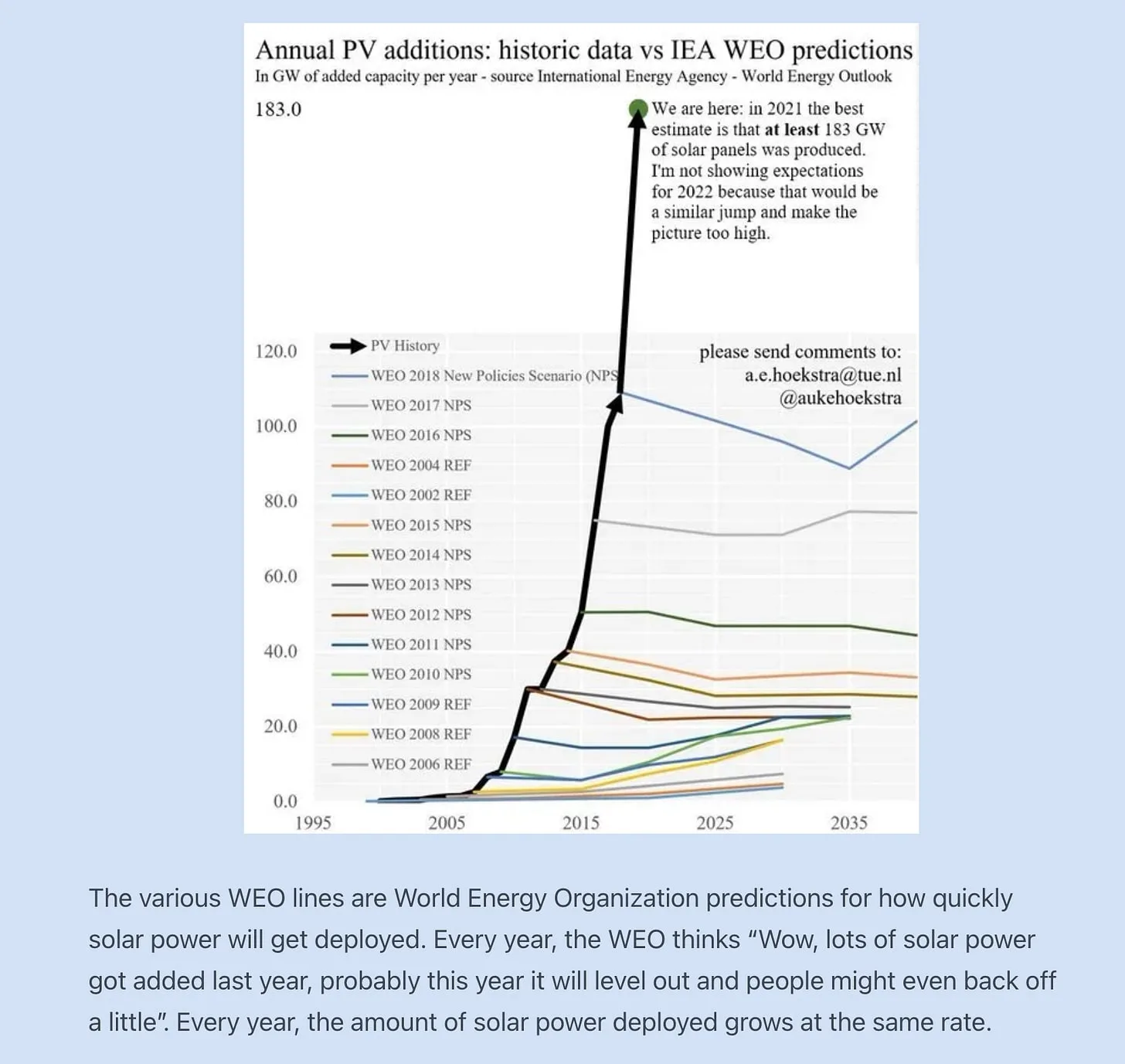
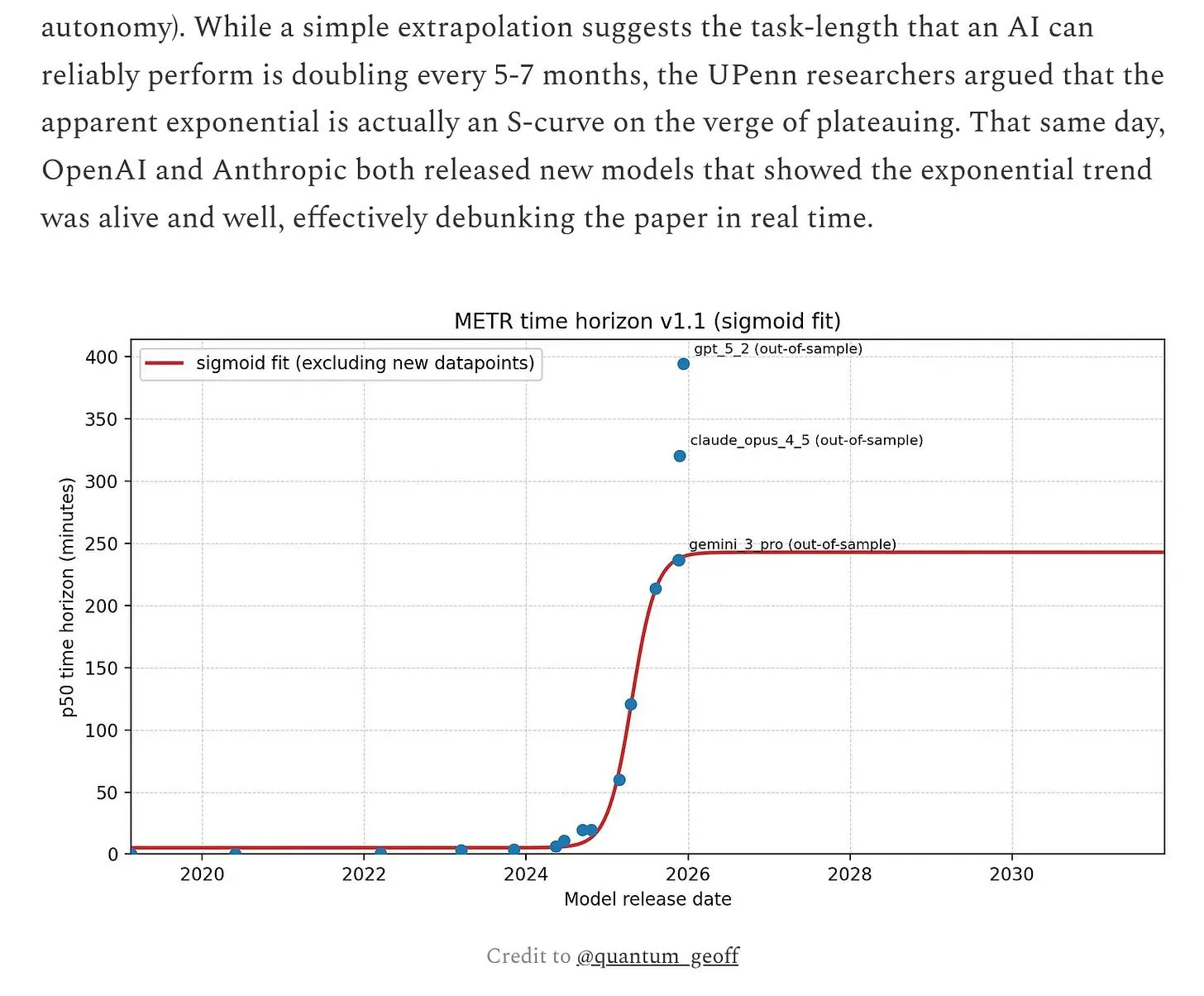
Tim Urban argues it is most intuitive for us to think linearly when we should be thinking exponentially. This forms a key crux: can we project exponential trends into the future on the basis of induction, or is this foolish given that exponentials must end at some point? Most technologies have developed as a series of s-curves, which supports the latter view. Astralcodex points out that simply knowing something is a sigmoid does not tell you where you are on the curve, citing a graph from the World Energy Organisation showing repeated incorrect predictions that exponential progress in solar power would finish, and another showing researchers incorrectly predicting that METR time horizons would cap out just as the curve zoomed upward. Connor Leahy writes that there are only two times to react to an exponential: too early or too late. Early on it may be hard to know whether it is an exponential at all, and many decisions will have to be made under uncertainty.
Evidence of Recursive Self-Improvement
Jack Clarke previously commented that it is more likely than not that full recursive self-improvement will become possible in 2027. METR reports that its analysis depends significantly on evidence Anthropic did not allow it to publish; Karthik Tadepalli reports on attempts to verify the report using public information, concluding that the acceleration is real and AI is likely the cause, but that it is less clear how far the trend should be expected to continue. Ryan Greenblatt estimates an AI software R&D speed-up of 3.8x based on his previous public comments, avoiding any risk of revealing confidential information. This results in only a 2x speed-up in benchmark progress because some score increases come from scaling compute—he estimates two-thirds of progress comes from software improvements—and because of decreasing marginal returns. A diagram of self-reported speedups likely carries significant selection effects, since employees might worry they would look bad if they reported less speed-up than others.
Apparently Sergey Brin is pushing Google to work toward recursive self-improvement to catch up to the frontier. The view inside OpenAI contains detail on where things stand with RSI. An Anthropic self-improvement report showed engineers shipping about eight times as much code, though lines of code is a crude measure; engineers estimated the true output increase at four times, and subjective estimates may not be accurate.
A P-Zero Research study into AI's research taste found that the experimental research taste of frontier models has doubled every roughly three months since December 2025, with the best model, Opus 5.5, now exceeding the expert human baseline. The study's limitations are notable: its tasks are fast and cheap to verify, which frontier labs find easiest to hill-climb; its human baseline does not include top researchers, so it may significantly underestimate the performance of the best researchers in the world; and TasteVal does not measure a model's ability to choose which problems are most fruitful to work on.
Reasons for Doubt
DeepMind's AGI to ASI lays out potential bottlenecks and fundamental limitations of AI. Toby Ord argues many people have failed to realise the implications of the shift from pre-training scaling to RL and inference-time scaling: a 100x increase in pre-training is equivalent to a 1,000x increase in inference or a 1,000,000x scale-up of RL. He suggests this effect has been masked because these factors had not been scaled, but that this is set to change with models already using significant inference-time compute and RL assigned a significant proportion of training compute. Ord also emphasises that METR was not confidently able to rule out a one-time jump rather than an increase in slope; a quick analysis using Opus suggested 1.4x is a better estimate of the new slope gradient than METR's 1.9x.
Seb Krier shared graphs indicating that a linear increase in AECI requires an exponential increase in spending. Tom Davidson points out this might be viable because linear increases in ECI provide, in his view, exponential increases in productivity, so outputs scale in the inputs. The "AI as a normal technology" view argues diffusion cycles provide a bottleneck: it takes time for model capabilities to flow through to product changes and then for people to use them, producing the data needed for the next round of capabilities improvements, and this dependency on deployment data limits the speed of potential feedback loops.
Ramez Naam's "Where's the Intelligence Explosion?" pushes back against the notion that RSI is imminent, arguing the current AI feedback loop is only 10-20% of the strength required. He interprets OpenAI internal automation data as showing real-world AI research is much harder than other benchmarks show, and notes Anthropic predicted a 40x speed-up in researcher productivity would be required to double its rate of progress due to other bottlenecks. The piece was published on 27 September 2026, before METR's independent report on AI acceleration.
What to Watch
Naively projecting these trends forward, Ajeya Cotra writes that taking it at face value that AI is now nearly doubling the rate of AI capabilities progress, and assuming acceleration from AI is smooth, implies we would reach extreme superintelligence within a year. Benjamin Todd comments that the dumbest possible way to model the intelligence explosion says you get there in about a year—but that this seems to miss the bottlenecks, diffusion lags and jaggedness that the sceptics emphasise. The live question is whether the METR-measured acceleration reflects a durable change in slope or a one-time jump, and whether the software-only feedback loop is strong enough to trigger a fast take-off before full-stack automation becomes the binding constraint.
Comments
No comments yet. Be the first to comment.