
AI Is Transforming Modern Industries Through Key Applications in Manufacturing
AI in manufacturing uses data to improve quality, reduce costs, and automate decisions across seven applications, despite adoption barriers.
Key Points Summary
- AI in manufacturing uses factory data to improve processes, automate tasks, and support better operational decisions.
- Its main applications include predictive maintenance, quality inspection, robotics, digital twins, supply chain management, product design, and energy management.
- AI can improve product quality and reduce costs by cutting downtime, waste, inspection errors, and energy use.
- Adoption faces barriers such as poor data quality, legacy machinery, high setup costs, cybersecurity risks, skills gaps, and reliability concerns.
AI in manufacturing refers to the use of artificial intelligence to improve factory processes, analyse data, automate tasks, and support better decisions. Its value is not a single machine upgrade. It turns factory data into clearer signals for quality, downtime, waste, and energy.
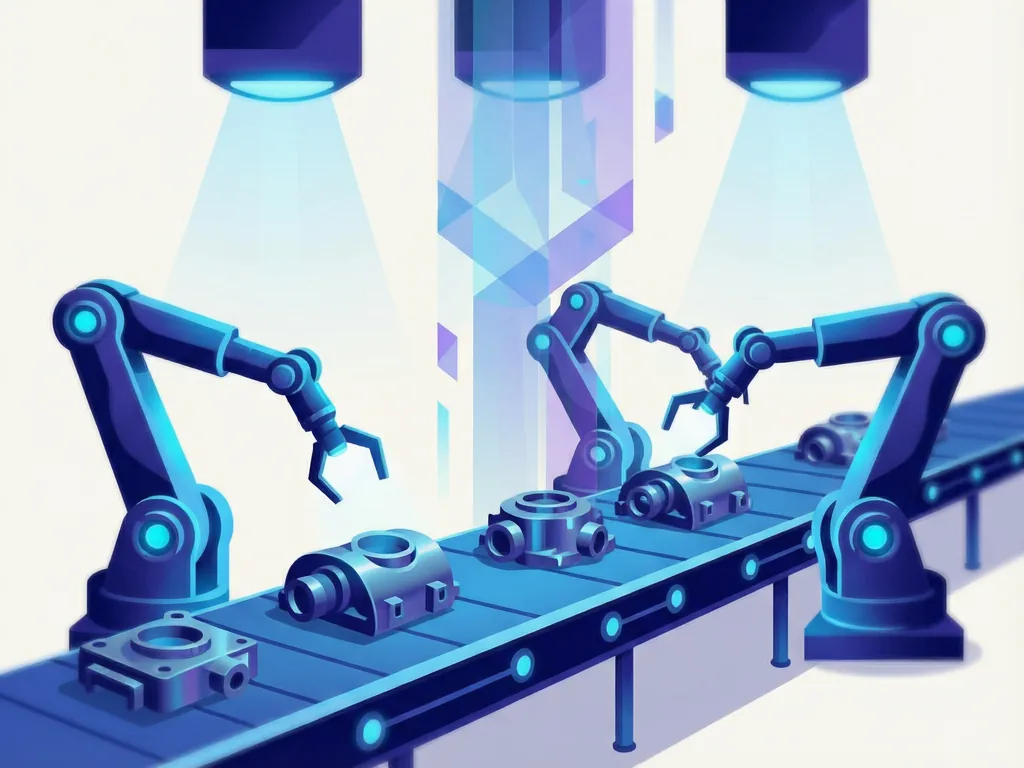
Background: From factory data to decisions
Manufacturing environments already generate production data, inspection records, and machine activity. AI uses these data flows to improve processes, automate repetitive work, and support better decisions. This makes AI a decision-support layer across factory operations.
Development process: Seven application areas
The main applications are predictive maintenance, quality inspection, robotics, digital twins, supply chain management, product design, and energy management. Predictive maintenance reduces machine downtime. Quality inspection detects defects and unusual patterns. Robotics automates physical tasks. Digital twins model factory processes. Supply chain management coordinates materials and production. Product design uses data to shape outputs. Energy management controls power use.
Quality and cost effects
AI-powered inspection systems can detect defects, identify unusual patterns, and help teams maintain consistent product standards. That supports quality because defects and variation often cause rework and unpredictable output. AI can also reduce manufacturing costs by lowering machine downtime, material waste, inspection errors, and energy use. Together, these four effects can lower overall production costs.
Challenges: Six adoption barriers
Manufacturers face poor data quality, older machinery, high setup costs, cybersecurity risks, skills gaps, and concerns about system reliability. These barriers slow adoption. Poor data weakens analysis. Older machinery makes integration harder. High costs affect approval. Cybersecurity matters when systems connect to production. Skills gaps affect supervision. Reliability concerns shape trust in AI decisions.
Current stage
AI in manufacturing is now a growing operational layer. It supports seven application areas, improves quality, and reduces costs through four levers. Its progress depends on fixing six barriers: data, legacy equipment, setup costs, security, skills, and reliability.
Comments
No comments yet. Be the first to comment.