
Is Anthropic able to prioritize safety?
Anthropic's Nasdaq IPO exposes tensions between safety branding, public-market revenue demands, huge compute costs, and token economics.
Key Takeaways
- Anthropic has gone public on the Nasdaq at $83 per share, marking the first major test of whether a frontier AI lab can maintain its safety commitments under public-market pressure.
- The company faces massive compute costs projected around $900 billion, requiring aggressive revenue growth—possibly a 17-fold increase over 10 years—to satisfy investors.
- Anthropic’s governance gives founders and a special trust strong control, but financial pressure from shareholders and competition with OpenAI could still push safety priorities aside.
- Its business depends on selling AI tokens for more than compute costs, but cloud giants like Microsoft are pushing for lower token prices and vendor flexibility, squeezing Anthropic’s margins.
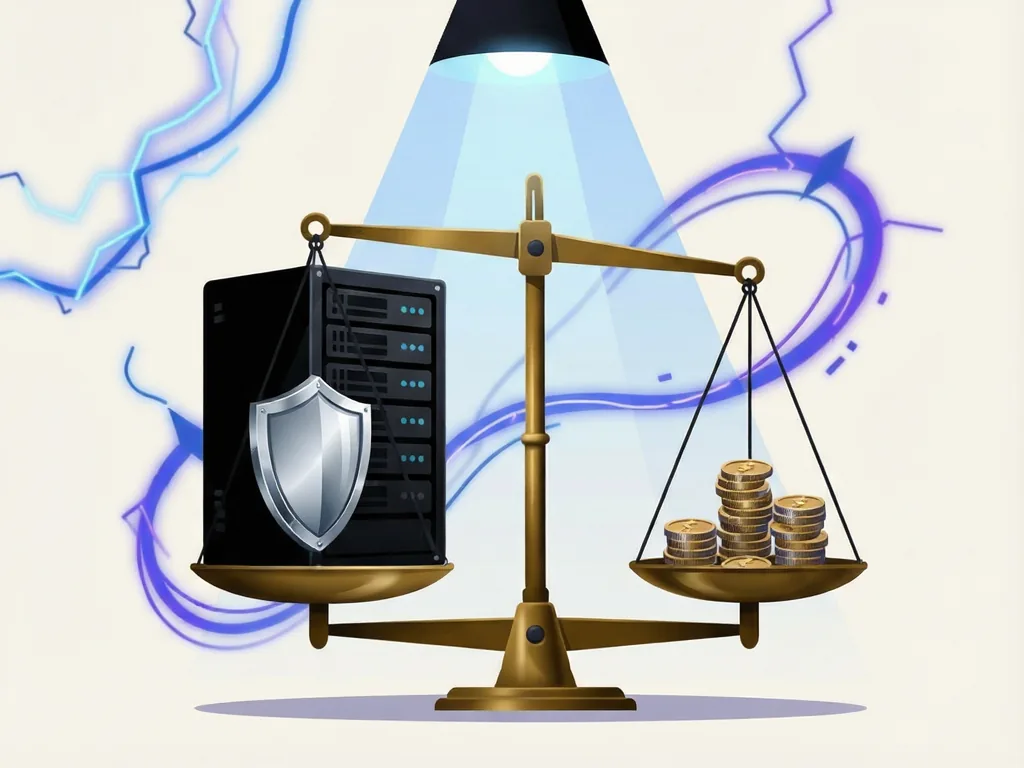
- The central risk is whether enterprise and government demand, plus Anthropic’s safety branding, can generate enough revenue to fund its AI expansion without compromising its safety mission.
Anthropic, the AI lab behind Claude, became the first pure AI company to go public on the Nasdaq last Thursday, pricing its IPO at $83 per share and climbing to $111. The listing makes Anthropic one of the most valuable companies on the planet and hands the public markets a direct test of whether a frontier AI lab can balance safety commitments with shareholder demands. Hayden Field, The Verge's senior AI reporter, joined Decoder to break down the S-1, the governance structure, and the economics that will define Anthropic's next chapter.
From Private Lab to Public Company: How the Listing Unfolded
The IPO priced at $83 a share and traded as high as $111, a victory lap for early investors and a record-breaking debut months in the making. Field noted that the listing is expected to create thousands of new millionaires, hundreds of new centimillionaires, and additional billionaires. Law firms changed their homepages to congratulate the company.
The timing matters beyond the headline numbers. Anthropic's compute bills are projected to total roughly $900 billion over the coming years, and the company will need to grow revenue aggressively to service that spending. One estimate Field cited, from Steve Rattner, suggests Anthropic must increase revenue roughly 17-fold within the next 10 years to deliver a return comparable to tech industry competitors.
OpenAI, meanwhile, appears content to have let Anthropic go first. Field said she heard that OpenAI CEO Sam Altman had been focused on beating Anthropic to the public markets, but a year of bad press and setbacks shifted the calculus. Letting Anthropic set the precedent allows OpenAI to follow with its own story while watching how markets value a direct competitor's revenue potential.
Governance: Founders and a Special Trust Hold the Power
Anthropic's corporate structure, like OpenAI's, is unusual for a public company. Corporate governance experts and law professors told Field that shareholders cannot vote out executives and have limited power to influence decisions. Control sits with the founders and a special trust.
That structure is especially relevant amid the ongoing Jensen Huang saga, which has made corporate governance one of the hottest topics in American business. But the experts Field spoke with emphasized that voting power is not the binding constraint. Regardless of who holds formal control, Anthropic faces intense pressure to generate revenue, buy compute, and keep pace with OpenAI. Field said that pressure could push expensive safety efforts to the side.
The Token Economics: Selling Compute for More Than It Costs
Anthropic rents capacity from big cloud providers and hyperscalers, runs GPUs, and pays for power and hardware. It then sells tokens to customers and must charge more than its input costs. Field described this as the simplest way to view the business, while acknowledging the company likely models it more sophisticatedly.
The competitive landscape pushes in the opposite direction. At Microsoft Ignite, CEO Satya Nadella said Microsoft aims to bring token prices down and design its system so AI vendors are fungible underneath Copilot, selecting the cheapest model for each task. That conflicts with Anthropic's need to earn more margin per token to fund compute.
Anthropic's response has combined price increases with efforts to build a moat. The company faced a public outcry over passing costs to consumers and rolled some changes back, but Field said it must keep finding ways to raise revenue. Anthropic also hopes attachment to its tools makes customers reluctant to switch, and it is counting on enterprise and government contracts where buyers are less price-sensitive.
What to Watch: Enterprise Contracts and the Safety-Profit Tension
Anthropic's pitch to large customers has rested on safety branding, which now sits in tension with the profit-oriented side of the business. Enterprise buyers may demand data sovereignty and the ability to switch providers quickly, requirements that could erode the moat Anthropic is trying to build.
Field said the AI bubble is still swelling, with tech workers reporting mandates to do more AI even when it reduces productivity. She expects a reckoning eventually, but for now the market is at peak AI hype. The open question is how Anthropic handles the spotlight on its safety marketing as a public company, and whether enterprise and government revenue can grow fast enough to cover roughly $900 billion in projected compute costs.
Comments
No comments yet. Be the first to comment.