
The Download looks inside the quest to make our minds immortal.
The article examines mind-immortality research, AI avatars, brain preservation, ethics, and a broader tech news cycle.
Key Takeaways
- The pursuit of mind immortality has shifted from philosophical speculation into funded research, startup projects, and ethical debate.
- Proposed routes include replacement brain tissue, brain preservation after death, and AI-based digital avatars built from large language models.
- A $190 million US brain-tissue program is officially for treating stroke, but is also seen as a cover for longer-term immortality ambitions.
- The core unresolved issue is identity: even if a technical “mind clone” becomes possible, it may not be clear whether it preserves the original self.
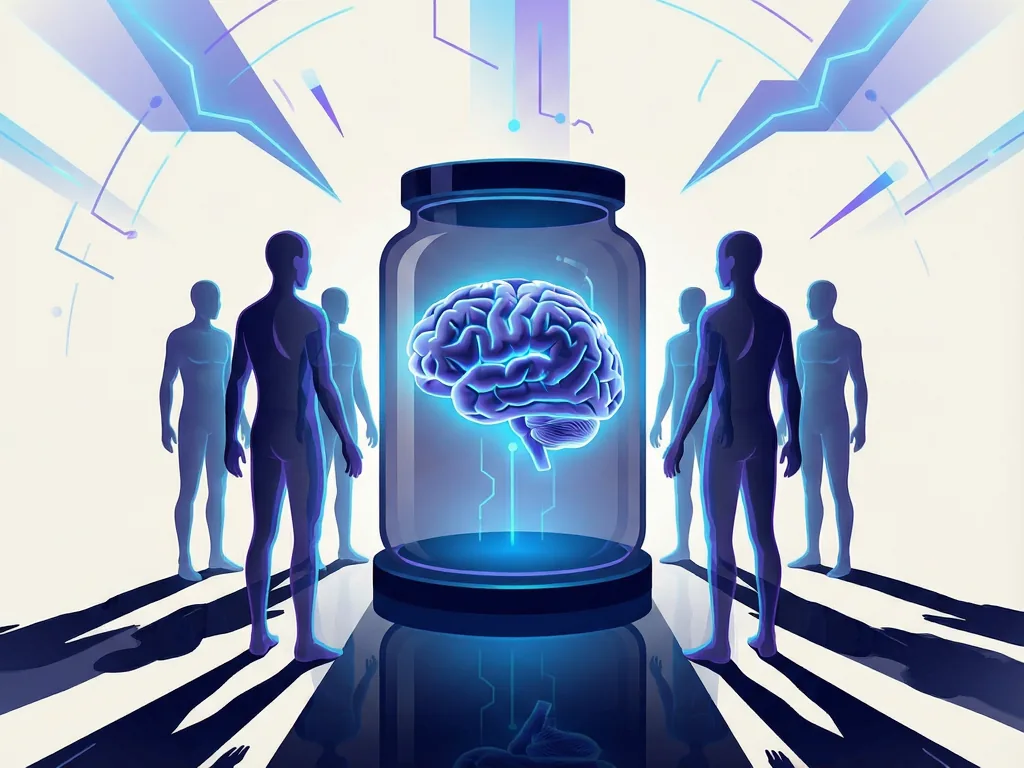
Preserving the self beyond death has moved from philosophical speculation to funded research programs, experimental startups, and a growing ethical debate. At the latest MIT Technology Review Roundtables event, senior editor for biomedicine Antonio Regalado and science editor Mary Beth Griggs examined the quest to make minds immortal—exploring head transplants, brain freezing, and conscious software avatars. Regalado came away part skeptical, part awestruck after following the money, the science, and the philosophy behind these efforts.
Background: The Many Routes to a Preserved Mind
The projects pursuing cognitive immortality span a wide range. A $190 million US government program to develop replacement brain tissue is officially framed around treating stroke, but according to Regalado, “it’s also a fig leaf for the actual ambition”: living forever.
Large language models are making it possible to build AI copies of people that act quite like the real thing. As Regalado put it, “This digital avatar might not be good enough for you, but what if it’s good enough for me?”
One company, Nectome, wants to preserve brains within 12 minutes of medically assisted death. Regalado’s assessment of the commercial pitch was blunt: “If you’re selling a hot product, this is not it.”
The philosophical questions are just as unsettled. Regalado admitted, “I’m not even sure that I have a very good claim to be myself.” He did, however, find an upside to life as a brain in a jar: “You can surf the internet. I do that pretty much 12 hours a day, anyway.”
The Wider Technology Landscape
The Roundtables discussion landed alongside a busy news cycle. Trump fired his cyber director after a wave of tech outages; Pentagon official Kirsten Davies will replace Sean Cairncross. The outages disrupted flights, banks, and security systems, fuelling fears of a wider collapse—and AI agents are expected to drive even more outages, prompting calls to monitor them in real time.
The US approved sales of nearly 900,000 AI chips to China, many going to firms the Pentagon links to China’s military. California is investigating Nvidia’s links to China, new US export rules are set to hinder Chinese AI, and Nvidia is eyeing Arm chief Rene Haas as its next CEO.
The US Senate passed a bill to fast-track energy projects, cutting red tape but weakening environmental protections. Taiwan says China is using Threads to sway next week’s elections, flagging nearly 2,700 suspected accounts to Meta. Google’s AI push is hurting its search ad business as AI answers displace ads. Apple is building its own AI agent that would browse the web, work across apps, and write code; Apple’s longtime iPhone camera chief has retired.
UN climate talks are set to call for carbon removal technologies—systems that could reverse warming but remain unproven. Global cooling needs have overtaken heating for the first time, driven by higher temperatures and a surge in air conditioning. GTA 6 became the biggest entertainment launch ever, with first-day sales estimated at a record $2.3 billion. Physicists sent a message through a wall using gravity and an old lift; unlike radio signals, gravitational fields can’t be blocked by walls.
What to Watch Next
The cognitive immortality question sits at the intersection of neuroscience, AI, and commercial ambition. The $190 million brain-tissue program, Nectome’s preservation timeline, and the rise of LLM-based avatars each raise the same unresolved issue: what exactly is being preserved, and for whom. As Regalado’s remarks suggest, the technical feasibility of a convincing mind clone may arrive before any consensus on whether the copy counts as the person.
Comments
No comments yet. Be the first to comment.