
A 16-year-old founded an AI missile startup and is targeting cost per kill.
Henrijs Dandzbergs founded Polemos Industries to build cheap, jam-resistant AI missiles, winning Y Combinator backing amid Europe's defense boom.
Key Takeaways
- A 16-year-old Latvian founder, Henrijs Dandzbergs, joined Y Combinator’s fall 2026 cohort with Polemos Industries, an AI-guided missile startup he founded solo.
- The startup received half a million dollars in backing and aims to create precision-guided missiles that are cheaper to make, easier to manufacture, portable to fire, and resistant to jamming.
- Dandzbergs’ interest in aerospace and defense hardware was shaped by an online-heavy, peripatetic childhood, advanced engineering projects, and the impact of Russia’s invasion of Ukraine on regional security.
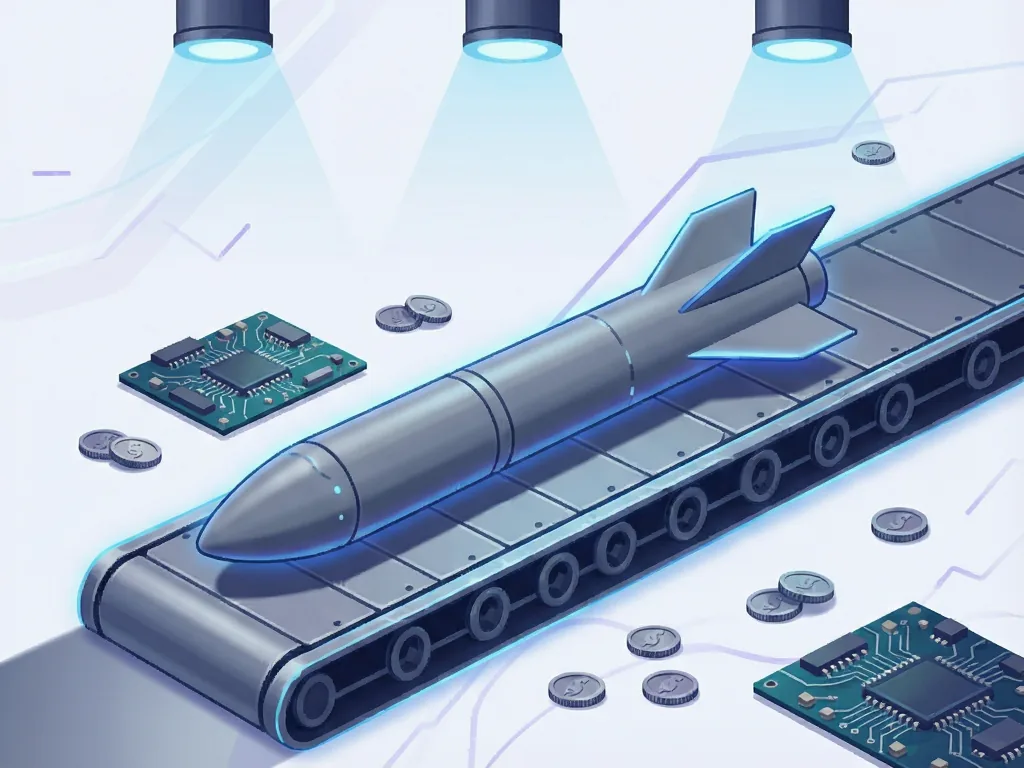
- Polemos Industries’ core thesis is framed around reducing the “cost per kill,” reflecting a broader trend of defense startups emerging in Europe due to heightened security concerns after the Ukraine war.
- The startup is still at an early stage, with its next major challenge being to turn its concept into credible prototypes and practical demonstrations of defense hardware.
Meta Description: At 16, Henrijs Dandzbergs joined Y Combinator to build Polemos Industries, an AI-guided missile startup aiming to make precision defense hardware cheaper.
Tags: Y Combinator, Polemos Industries, AI-guided missile, defense startup

A 16-year-old founder from Latvia has won half a million dollars for an AI-guided missile startup and was admitted in September to Y Combinator’s fall 2026 cohort. Polemos Industries is attempting to create a new class of precision-guided missile that can be manufactured easily and cheaply, fired from portable launchers, and resist jamming attempts. Henrijs Dandzbergs is too young to vote, drink, smoke, or drive unsupervised, but he may be the youngest solo founder in Y Combinator’s history.
A peripatetic childhood shaped by online schooling
Dandzbergs was born in Latvia, and his family moved between Latvia, Indonesia, Australia, and Spain when he was young. His father, a surfer and part owner of an insurance company, liked to go wherever he might find the raddest waves. Dandzbergs spent much of his early schooling online, and his talent for science and math appeared early.
His room came to resemble a laboratory. It contained schematics, robotics projects, Raspberry Pis, and 3D-printed components. When the pandemic struck, the family returned to Latvia. His parents enrolled him in Astra Nova, an Elon Musk-linked school built around an experimental curriculum that emphasizes lateral thinking and problem-solving rather than rote memorization.
A class taught by a NASA employee deepened his fascination with aerospace engineering. His lab creations became more elaborate: a bionic arm, a thermal control system for a model rocket, and sensors for a self-flying drone. Around the same time, Russia invaded Ukraine, and the security situation in Latvia became more visible.
The Ukraine war and a defense startup thesis
Dandzbergs has described the Ukraine conflict as a personal fixation because Latvia is close to Russia. He has also said the war forever altered the theater of war. In Latvia, military jets appeared overhead, and stray missiles were intercepted at the Russian border. As sovereignty concerns spread across Eastern European nations, new defense startups began to pop up across the region, and Dandzbergs wanted in.
He is poised and articulate, speaking about attacking hard problems, breaking things down to first principles, and applying his unusual talents to figuring out how to optimize targeted killing. He also projects unassailable confidence in his own abilities. Polemos Industries’ investor one-pager frames the startup’s guiding ambition as bringing down the “cost per kill.” The company is not only trying to make missiles cheaper, but also easier to manufacture, portable to fire, and resistant to jamming attempts.
“I think missiles are the coolest thing,” Dandzbergs tells WIRED. “A lot of people that have found success in engineering early on have had a passion for blowing stuff up.”
Y Combinator, whose alumni include Airbnb, Stripe, DoorDash, and Reddit, admitted him in September. Harj Taggar, a Y Combinator partner assigned to mentor Dandzbergs, said, “He’s a pretty exceptional person.” He added, “I’m still somewhat in disbelief that we’re talking about a 16-year-old.”
What comes after Y Combinator selection
The half million dollars and the fall 2026 cohort placement put Polemos Industries at a very early stage, but with unusually strong support for a solo founder who is still a minor. The startup’s thesis is difficult because defense hardware requires repeated testing, reliable manufacturing, and integration of AI guidance, portable launch capability, and jam resistance.
Dandzbergs’ story also reflects how the Ukraine war has accelerated defense entrepreneurship in Europe. The conflict has turned regional security anxieties into a pipeline for new companies. For Polemos Industries, the next phase is to move from an accelerator selection and an investor framing around cost per kill toward credible prototypes and practical demonstrations.
Comments
No comments yet. Be the first to comment.