
Tarun Odedra Is Building Desk One Around a Different Model for Operating Growth
Desk One embeds AI in private equity portfolio companies, but human operators remain accountable for sales, marketing and growth outcomes.
Key Takeaways
- Desk One uses AI inside private equity portfolio companies to run sales and marketing functions directly, rather than building another standalone growth tool.
- Its model combines AI-supported execution with human operators who remain accountable for commercial outcomes, not just task completion.
- Systems are built from real business context, including customers, positioning, workflows, and sales conversations, before expanding across go-to-market needs.
- Because customer-facing errors have immediate external consequences, Desk One keeps humans responsible for judgment, permissions, and final results.
- The company’s growth model is designed to scale revenue across portfolio companies faster than the human effort required to service them.
Meta description: Desk One uses AI inside private equity portfolio companies, with human operators accountable for sales and marketing outcomes and growth work.
Tags: Desk One, AI sales, private equity, growth operations, a16z Speedrun
Background: AI raised output, not distribution
When Tarun Odedra and his co-founders join a company, their starting assumption is not that another software product will fix growth. Desk One, the firm they are building, works with private equity firms and their portfolio companies to run sales and marketing functions directly.
Odedra's premise is that increasingly capable AI models have changed what small teams can execute. The pace of shipping work has become considerably higher, leaving distribution as the hardest remaining problem. This distinction shaped Desk One from the beginning.
Instead of building around one isolated sales or marketing task, Odedra chose to address growth across the broader customer-acquisition process. His team works inside each business to understand customers and existing workflows, then builds systems around that context. The goal is to leave the company with agents it owns while Desk One's operators remain accountable for commercial work.
In Odedra's view, the models are already more capable than most companies demand in practice. The difficult part is everything around them: what information a system receives, what decisions it can make, and where a person must step in. Those choices determine whether the system becomes useful.
Development: Funding, context, and a different success test
The company raised backing through a16z Speedrun and received angel investment from individuals associated with OpenAI, Anthropic, DeepMind, KKR, Citi, ElevenLabs, Brex, Scaling Europe, and Magic. Its model sits inside a broader change in how AI enters commercial work. Across software, AI is often introduced by automating single functions such as prospecting, content creation, or research.
Odedra took a different path. Desk One is organized around responsibility for a wider slice of the growth operation, with AI supporting execution and human operators remaining answerable for performance. The standard for success changes as a result. A tool can be judged by task completion; a growth operator has to answer whether the work improved commercial performance. Odedra sees that as the ultimate test of the model.
Odedra frames the demand this way: companies do not want more activity; they want responsibility for useful work and better outcomes. AI changes how the work can be delivered, but judgment and accountability remain necessary.
Before building systems, Desk One studies how a portfolio company currently sells and markets its products. Those systems need business context: customers, positioning, and what happens in actual sales conversations. Odedra says a strong underlying model becomes much less useful when it lacks the information needed to understand the company it represents.
Desk One begins with content, then expands into other go-to-market needs as it learns where it can add value inside the business. The larger model is built to serve multiple companies across a private equity portfolio, adapting execution to each company's customers, market, and commercial situation.
Current stage: External risk, founder background, and commercial evidence
Outward-facing work raises the stakes. Internal software failures can often be caught and fixed before a customer sees them, but a poorly written email, inaccurate marketing claim, or inappropriate customer response is external the moment it is sent. For that reason, Odedra keeps human responsibility inside the operating model rather than treating automation as grounds for removing it.
He emphasizes that demonstrating an agent can generate output is different from trusting it to represent a company. As work becomes more customer-facing, context, permissions, and ownership of the final result matter more.
The model is shaped by Odedra's experience across several sales environments, although Desk One creates a different operating challenge. Odedra previously worked in AlphaSense's strategic accounts organization, later founded a go-to-market company, and then ran go-to-market at another venture-backed startup. These roles exposed him to enterprise sales, founder-led growth, and the pressure of building commercial systems inside young companies. Desk One applies those lessons to a model where operators must execute and remain accountable for results.
This matters because AI has made many visible sales and marketing outputs easier to produce. The result is that companies can generate more content, conduct more research, and automate more outreach than they could a few years ago. Odedra's model asks whether those activities are grounded in real customer evidence and connected to a commercial objective.
Desk One brings together company-specific context, AI-supported execution, and human accountability across a broader portion of the growth function. The company is designed to grow revenue faster than the human effort required to service it, so the relationship between delivery quality and labor becomes particularly important. The backing gives the team room to test the model across portfolio companies. Commercial evidence will ultimately determine how far the model can travel, and the next measure of its strength will come from the results those systems produce.
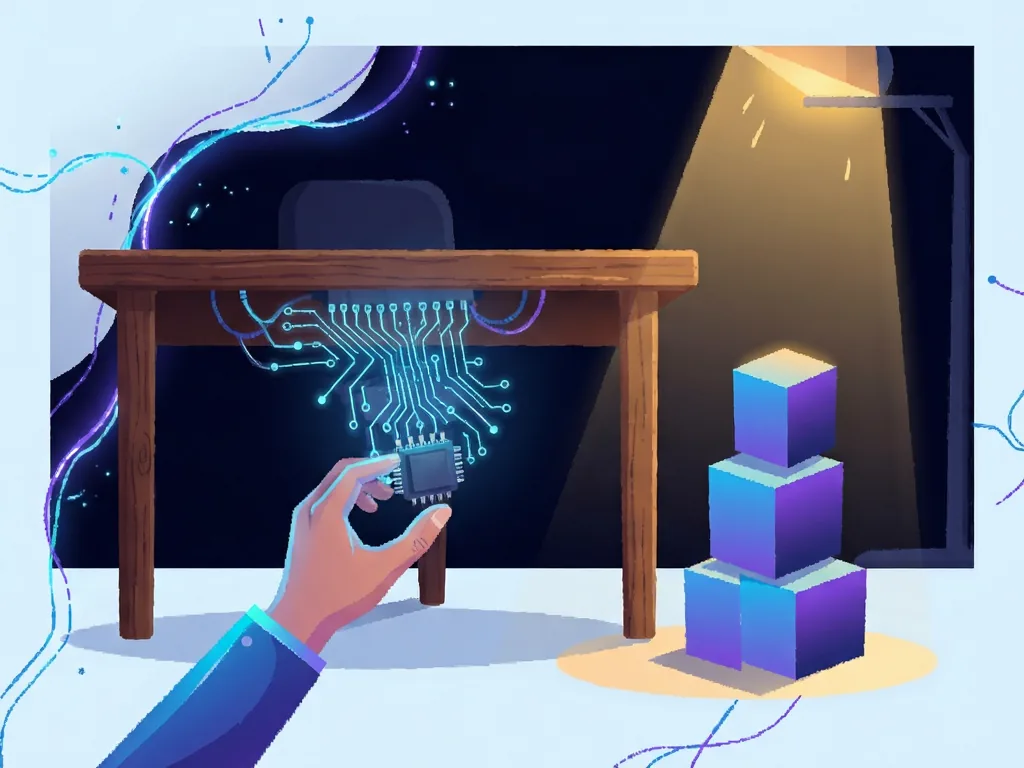
Featured image: Abstract technology style illustration of AI agents, sales workflows, and human oversight, with no real people, no company logos, and no text.
Comments
No comments yet. Be the first to comment.