
Public backlash against AI is moving toward the polls.
US voters make AI data centers a midterm issue as OpenAI rebrands campuses; Gartner notes an agent value gap and everyday Claude tools show adoption.
Key Takeaways
- AI data centers are becoming a U.S. midterm election issue as voters in multiple communities consider bans or pauses and some Democrats push for a federal freeze.
- OpenAI is reportedly preparing to rebrand data center sites as “AI compute campuses,” emphasizing local job creation, but the article suggests public distrust may not be solved by rebranding alone.
- Enterprise AI adoption is expanding, but Gartner highlights a value gap: 42% of enterprises plan to deploy AI agents by 2026, while only 22% are capturing significant value today.
- Everyday AI use is moving into practical workflows, with examples including Claude-built tools for batch photo conversion and agents assisting with complex government claims.
- Google’s Project Suncatcher satellite answered its first AI prompt from orbit, marking an early milestone in the effort to place AI data centers in space, though power and hardware constraints remain major challenges.
Meta description: Data centers become a U.S. midterm issue as OpenAI weighs AI compute campus rebranding, while Google tests orbital AI and enterprises chase value.

Tags: data centers, OpenAI, AI agents, Gartner, Project Suncatcher
Featured image: Abstract technology illustration showing a satellite, server racks, ballot boxes, and neural nodes in a cool blue timeline, no people, no logos, no text.
Background: AI infrastructure becomes a local election issue
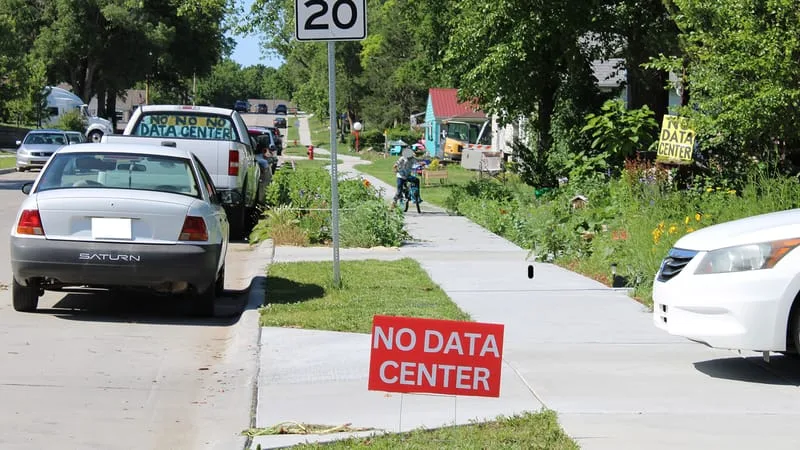
The Rundown AI newsletter, written by Zach Mink on November 2, 2026 and reporting 8,118 new readers, framed the U.S. midterm elections as a referendum on data centers. It says AI spent the last two years winning over Washington, but this week faces a tougher crowd: voters ready to hit the polls and evict the buildout from their own backyards. Roughly 20 communities are voting on bans or pauses, control of the House is up for grabs, and OpenAI is reportedly preparing a post-election push to rebrand the sites as "AI compute campuses."
For two years, AI firms with close ties to President Trump had easy treatment in Washington. That run may end if Democrats are projected to flip the House on Tuesday. Some Democrats, including House hopefuls Will Lawrence in Michigan and Rebecca Cooke in Wisconsin, want a federal freeze on new data centers.
The White House already got tech giants to voluntarily supply their own power, and the previous week President Trump floated having developers pay locals a "dividend." OpenAI is planning to pitch the campuses as local economic boosts, citing a Pike County, Ohio, project it is helping build that promises thousands of jobs. Policy chief Chris Lehane called the debate "democracy in action," and the company wants state bills giving locals a voice in new projects. AI has a real image problem with the public, and the newsletter argues that anger will not be fixed by a new name or a few community perks.
Development: Enterprise agents, everyday AI workflows, and a space test
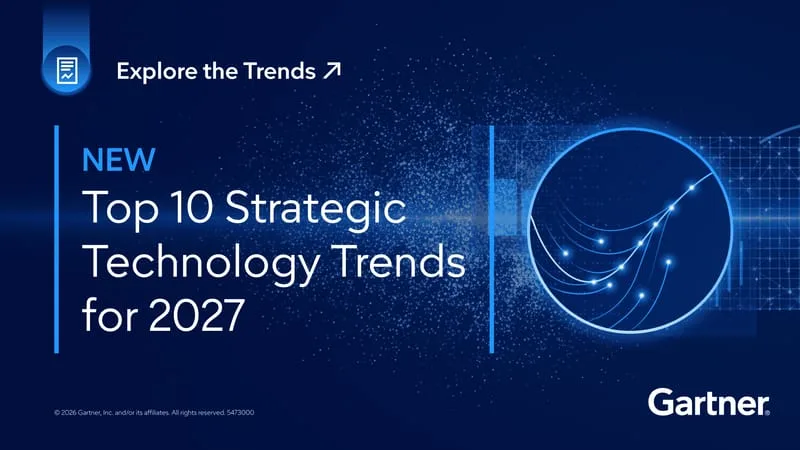
Gartner's Top Tech Trends for 2027 provide a separate timeline for enterprise AI. The trends say 42% of enterprises plan to deploy AI agents by the end of 2026, but only 22% capture significant value today. They reveal how enterprises can shift into the autonomous era and get ahead, with key themes of leveraging the nontextual AI frontier, governing the autonomous agent platform, and architecting durable agility.
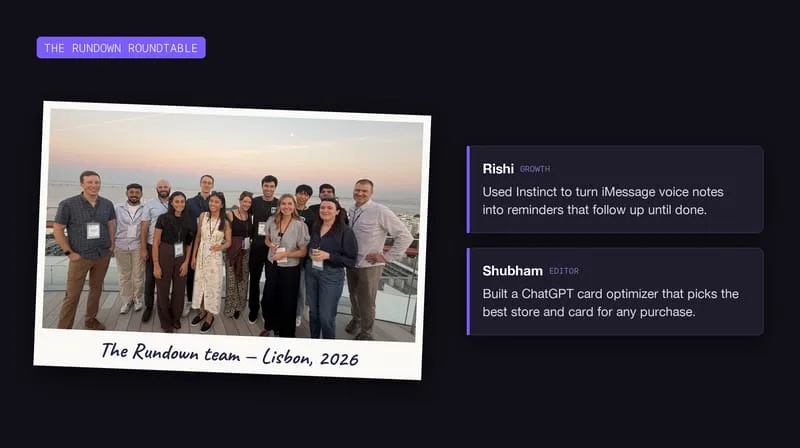
The Rundown Roundtable, a weekly feature polling members of The Rundown staff about how they use AI in work and daily lives, showed smaller-scale adoption. Nick, a video producer, said he pulls imagery from many different sources, and his editing folder often ends up with photos that may or may not work inside his editing program. For a handful of photos, manual conversion is fine, but for larger projects with dozens of images it eats time and focus. He wanted something simple and lightweight on compute power that could batch convert photos, so he asked Claude to create an app that runs on his local machine. Claude returned an app that worked exactly the way he needed, and after he asked Claude to install it on his computer, it was working within seconds. He now uses the app to batch convert photo folders before bringing them into the editor. Traditional ways exist, he says, but the Claude-built solution fits his workflow and keeps large image batches from slowing editing down.

Shubham, an editor, had about $2,000 in contributions from past jobs stuck in a government scheme for more than two years. The portal was slow, spread across several forms, and unclear about how to withdraw the money. He gave the task to Claude and Perplexity Comet. Claude worked through the rules and found the withdrawal route that kept his tax bill lowest. Comet then verified and implemented that route, ran the portal in his browser, filled in and submitted the claim forms, and let him watch the screen and check each detail before submission. Two weeks later, the $2,000 arrived. After that, Claude compared the amount received with the scheme's online statement and found a gap: interest that had not been paid out. It filed a second form for the difference, and Shubham is waiting for the payment. He says he will use the same technique to solve this for his wife too.

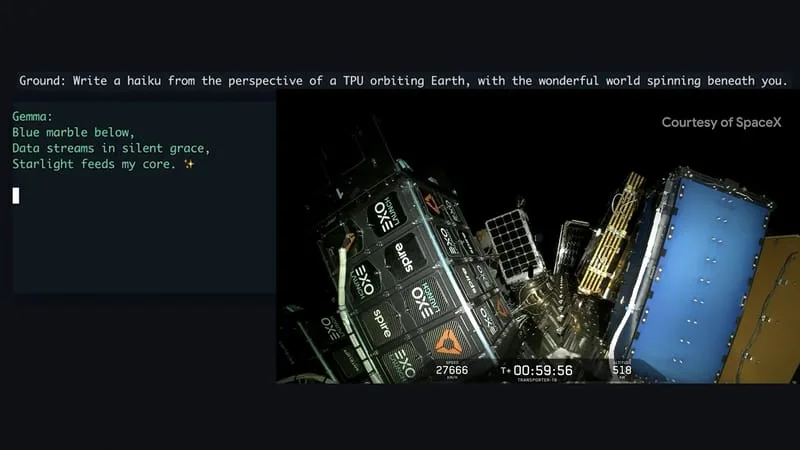
On November 2, 2026, Google announced that its Project Suncatcher satellite answered its first AI prompt from orbit, with Google's open Gemma 4 model writing a haiku in an early test of the company's moonshot goal to put AI data centers in space. The haiku was: "Blue marble below / Data streams in silent grace / Starlight feeds my core." It reached the ground while the satellite passed over Svalbard, Norway. Google CEO Sundar Pichai called it "a 'hello world' milestone," a reference to the test programmers typically run first on a new machine.

Power is still a big constraint. The craft can run just one of its four Google AI chips, known as TPUs, and only in bursts of roughly 20 minutes. Two more powerful satellites launching in 2027 will test the laser links a fleet needs to split one AI job, if the chips first survive radiation and heat tests.
Latest: Editable artwork, search analytics, and product shifts
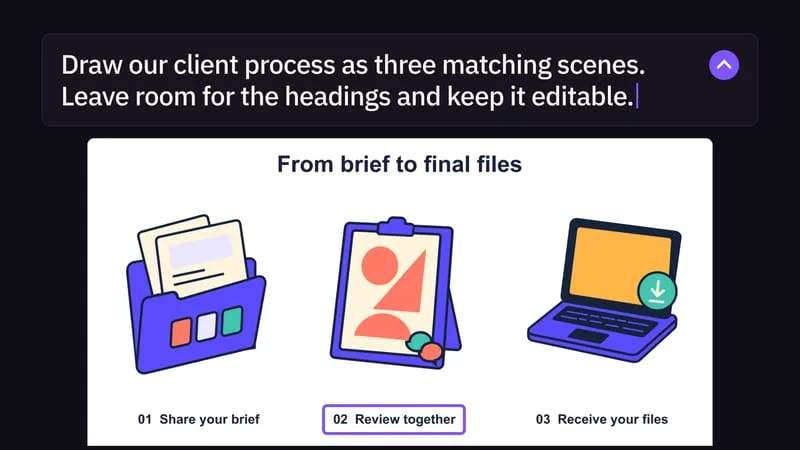
The newsletter's guide shows how to make AI artwork you can actually edit. In QuiverAI, a user selects Arrow 2, checks that the plan includes Scalable Vector Graphics export, and installs Inkscape for the final text and color changes. The guide's brief is pasted to draw a folder, review board, and laptop in one matching style, with space left for the title and headings in a three-part graphic for a client proposal. Arrow is asked to refine one scene by replacing one badge with speech bubbles, while the user compares the result with the original and checks that the other scenes stay intact.
The Scalable Vector Graphics file is downloaded and opened in Inkscape. The user adds headings, then changes the middle label and one screen color directly. The guide says to save the editable master and export a high-resolution Portable Network Graphics file, reopen both files, and check the words, colors, and dimensions before sharing. Its pro tip is to keep text that may change in separate text boxes, so a heading or client wording can be updated without spending another generation on the artwork. The full guide, materials, and files are offered through The Rundown University.
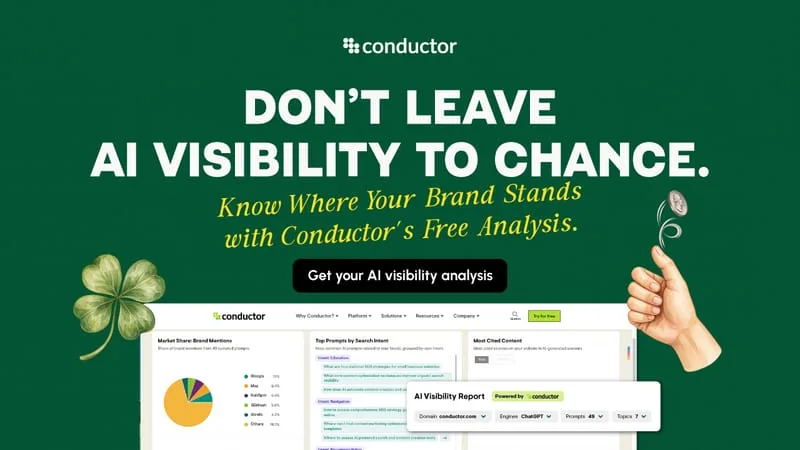
Conductor's free AEO Analysis report is positioned as a way to trade chance for certainty. It compares mentions with competitors, shows which content gets cited, explains funnel visibility with top prompts by search intent, measures content performance based on total AI citations, and reveals brand sentiment by showing how AI perceives the brand. The newsletter said 500+ brands are already winning AI search with Conductor.
Quick hits included reader John Fertic, who runs a photography business and built a three-layer AI workflow to help with daily operations, business improvement, and watching for outside changes that might affect him. It is for small business owners who do not want to monitor every source or handle every issue themselves. The layers are an Operations Core with dashboard, estimates, schedules, reminders, project records, and other business state; a Work orchestrator with specialist AI agents; and a signal and triage system that watches platform alerts, vendor updates, local-search changes, newsletters, calendars, and marketing sources.
Work decides whether a signal actually matters and routes it to the right specialist. The WordPress and Google Business Profile specialists are connected directly to those systems through MCP/API connectors, so they can compare the incoming signal against the current state of the actual site or profile. The system brings him in only when a real decision is needed. He says the main benefit is that he does not have to personally track every source or jump into every issue. The newsletter points readers to its Community Workflow Hub.
Trending AI tools listed Swamp Club, a sponsored listing that turns agent workflows into reusable behaviors that hit any API, keep secrets in vaults, and log every run in any harness. They also listed Phonic-1, a state-of-the-art voice model that swaps between 50+ languages mid-call; Super-Agent, DeepSeek's prototype open-source coding agent; and Brush, Canva's new vision-language model that edits designs via text. Atlassian's webinar on the State of the Developer Experience in 2026 features insights from industry experts on moving beyond AI adoption to operationalization.
Corporate and regulatory changes also appeared. Cisco president Jeetu Patel revealed that he put a 27-year-old ex-founder who was "buried away in the organization doing something unstrategic" in charge of trying to rewrite the company's legacy code, giving him unlimited tokens and orders to "go nuts." Elon Musk's SpaceX said it will start invisibly watermarking text that Grok generates for developers via API on November 7, citing EU AI Act regulations. OpenAI rolled out new changes to usage limits on its platforms, scrapping a planned cut and instead doubling rates for certain plans, with plans to move Plus, Pro, and Business tiers to a single token meter covering both Chat and Codex in December. Anthropic renamed its consumer plans, with Max 5x becoming "Max" and Max 20x becoming "Ultra" at the same prices, while also removing the 5-hour usage limit for verified Ultra accounts.
Current Stage: The buildout faces a harder public test
AI infrastructure is no longer only a national policy story. It is a ballot-box story, an enterprise-value story, a product-planning story, and a space-moonshot story. A Democratic House could make life a lot harder for AI giants trying to scale their infrastructure bets against local opposition, while a rebrand to "AI compute campuses" may not change the public fight. Google's satellite haiku may be heartwarming, but the newsletter says it still won't win over a public increasingly fed up with data centers of any kind. Moving them to orbit could eventually be a compromise that sidesteps some of the issues driving that anger, making Project Suncatcher a moonshot project to keep an eye on.
The newsletter closed by crediting Rowan, Zach, Shubham, Jennifer, and Nate as the humans behind The Rundown. Its subscription pitch said readers get bite-size AI news updates straight to their inbox every morning with The Rundown AI newsletter, called it 100% free, and said it has more than 3,500,000 readers. Recent editions listed included "Inside the spy plot around Nvidia's CEO" by Zach Mink, 8 minutes; "Bing on steroids?" by Rowan Cheung, 2 minutes; "Google's Gemini 4 Carbon tops the charts (for now)" by Zach Mink, 8 minutes; and "The Rise of a New ChatGPT Competitor" by Rowan Cheung, 4 minutes. The last Tech newsletter was "Binance hit by crypto's biggest heist ever," and the last Robotics newsletter was "The self-driving future's giant shovel."
Comments
No comments yet. Be the first to comment.