
You Can Now Own a Tesla Cybercab, in a Way
The Rundown covers Tesla Cybercab preorders, Foundation payroll woes, Serve's open robot API, and robot dog sightings in November 2026 robotics news.
Key Points
- Tesla opened private preorders for the Cybercab at $29,990, but buyers face a $299 monthly operating fee, geofenced autonomous driving, and no manual control on public roads.
- Serve Robotics is opening its sidewalk delivery fleet to outside developers through a new API and developer portal, shifting from operator to infrastructure layer for local delivery.
- Foundation Future Industries missed October payroll while pursuing a $3 billion valuation, military humanoid contracts, and ties to Eric Trump, highlighting financial and operational strain.
- A robot dog walking a real dog in San Francisco added to robotics headlines, showing autonomous machines entering everyday public spaces, though the clip leaned more viral than technically breakthrough.
- Tesla plans to end Cybertruck production in 2027 and use that capacity for Cybercabs, giving the robotaxi a clearer production path while keeping its usable area limited to service zones.
Meta Description: Tesla Cybercab private preorders, Foundation payroll issues, Serve API, robot dog walk, and robotics news in The Rundown on November 16, 2026.

Tags: Tesla Cybercab, Serve Robotics, Foundation Future Industries, robot dogs, robotics news
Featured image: abstract technology style scene with a two-seat autonomous car, sidewalk delivery robots, and a four-legged robot dog, no real people, no company logos, no text
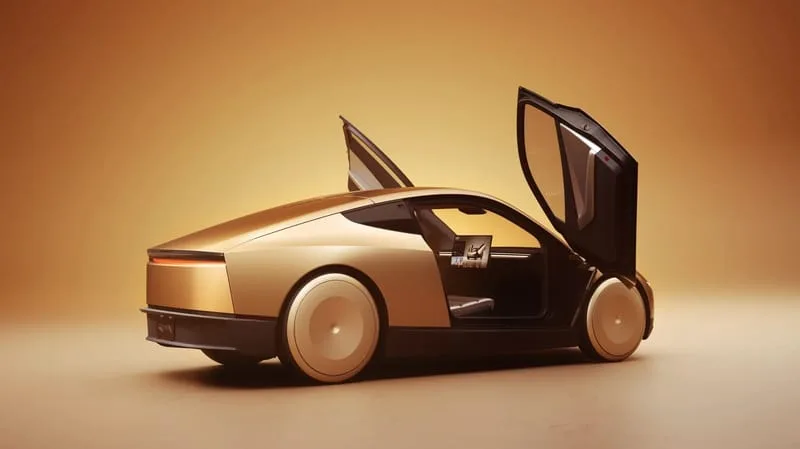
The Tesla Cybercab became the centerpiece of The Rundown robotics briefing dated November 16, 2026, written by Jennifer Mossalgue. The $29,990 two-seat robotaxi opened pre-orders for select private buyers, but a $299 monthly operating fee, geofenced autonomy, and a December 2026 delivery estimate made the launch a test of whether customers will own a car they cannot manually drive on public roads.
2024 to August 2026: Earlier events that frame the current robotics news
In 2024, fintech startup Synapse collapsed, stranding thousands of customers without access to their deposits. Sankaet Pathak had previously led Synapse and is now CEO and founder of Foundation Future Industries, the San Francisco-based humanoid robotics startup in the November 16, 2026 briefing.
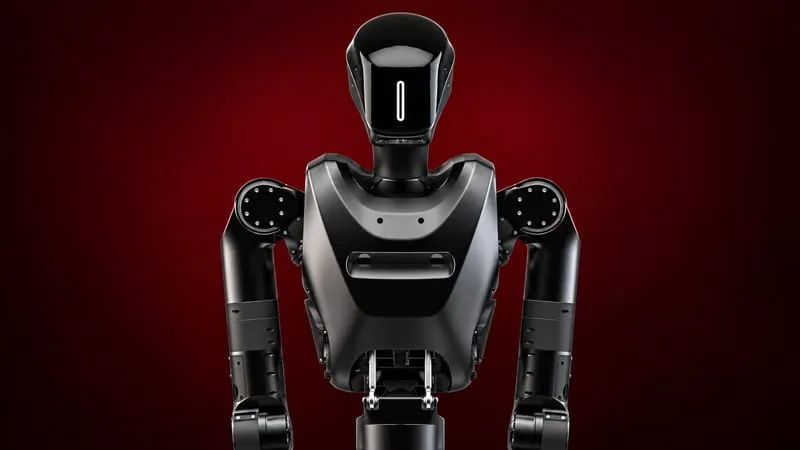
In 2025, Pathak borrowed $4.6 million from company coffers at Foundation, the same year he bought a luxury home in Sausalito, California. Pathak is the company's sole board member and majority owner. The startup's widely publicized $24 million in military contracts were not directly won by Foundation but trace back to its acquisition of Boardwalk Robotics.
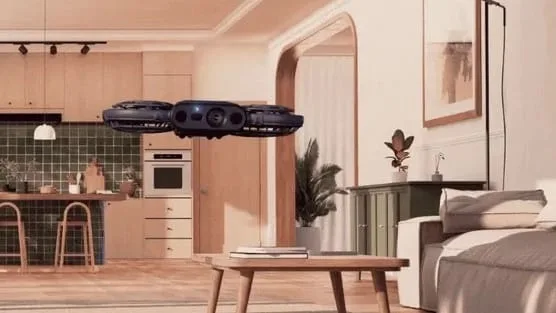
Early 2025 also included an earlier robot dog walking a real dog in Chengdu, a precedent that makes the San Francisco sighting in this briefing less novel.
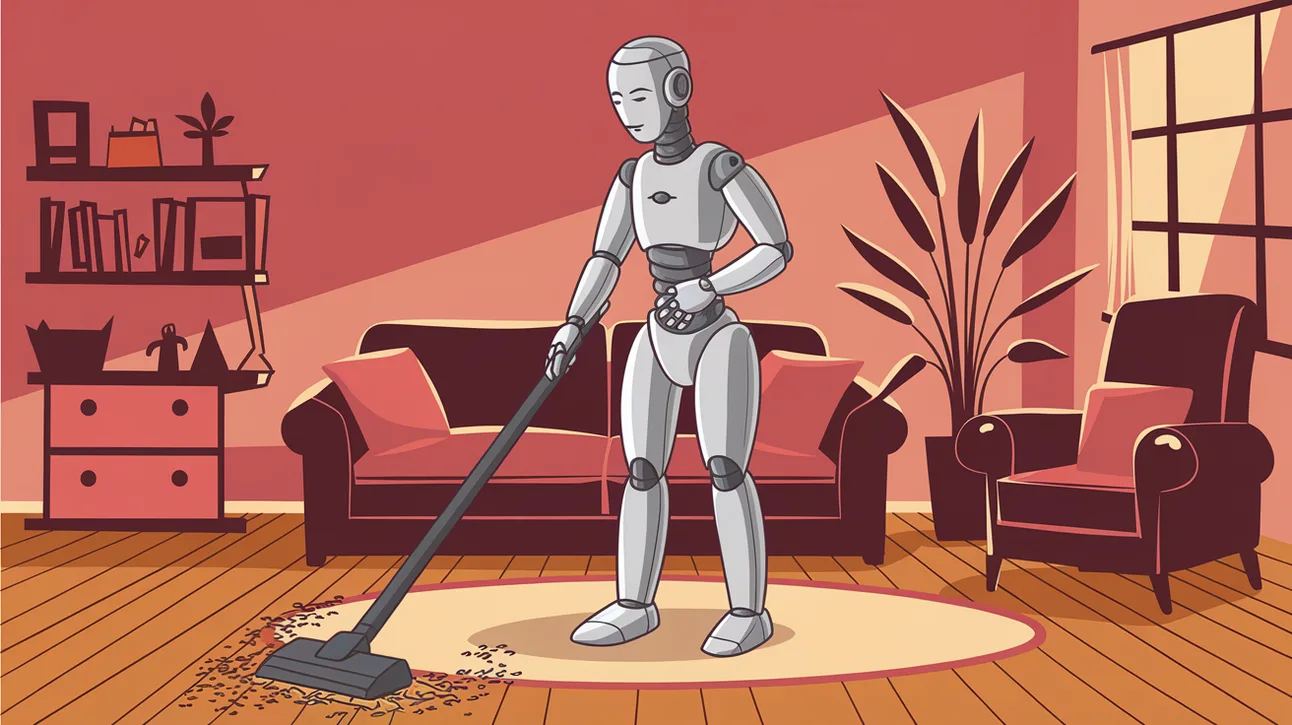
In August, Serve Robotics said it would not renew its Uber Eats deal in 2027, the same month it disclosed that Uber had fully divested. Serve's Physical AI Services had opened its robot technology to outside builders, and the new developer portal followed six days after that opening.
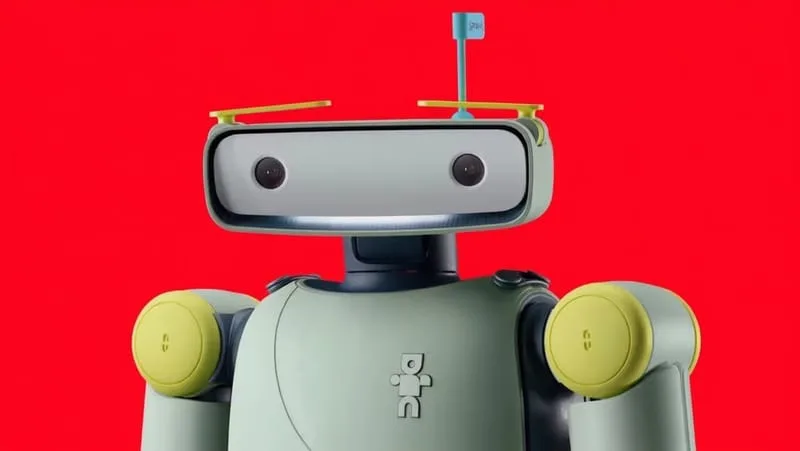
October 2026: Foundation Future Industries misses payroll
Foundation Future Industries missed its October 30 payroll, leaving workers unpaid as of November 14, according to CNBC. The startup, which wants to turn humanoids into military machines, counts Eric Trump as an investor and chief strategy adviser.

Pathak is reportedly chasing hundreds of millions in funding at a $3 billion valuation. Foundation is also in early talks to supply up to 1,000 robots to Israel's military, per the Financial Times. The contrast between weapons-ready humanoid pitches and unpaid human employees was the core issue in this item.
November 16, 2026: Cybercab preorders, Serve developer access, and a robot dog walk
The Cybercab is a two-seater with no steering wheel and no pedals, but it has a very short list of places it can drive. Owners pay $299 monthly to operate the car. Musk called that fee "too high" and said it should be about $115, which is the combined cost of Full Self-Driving and connectivity on other Teslas.
Cybercab drives unsupervised only inside Tesla's Robotaxi service zones. It can operate only within designated pockets of five Texas cities and three Florida cities. Deliveries are estimated for December 2026. According to a Marques Brownlee post, buyers must take delivery in one of a handful of Texas cities.
The required subscription costs $3,588 for 12 months at the advertised rate, almost 12% of the sticker price annually, before insurance and charging. This makes the launch a test of whether early adopters will buy a car they own but cannot manually drive on public roads, take wherever they want, or use to earn robotaxi fares, at least for now.
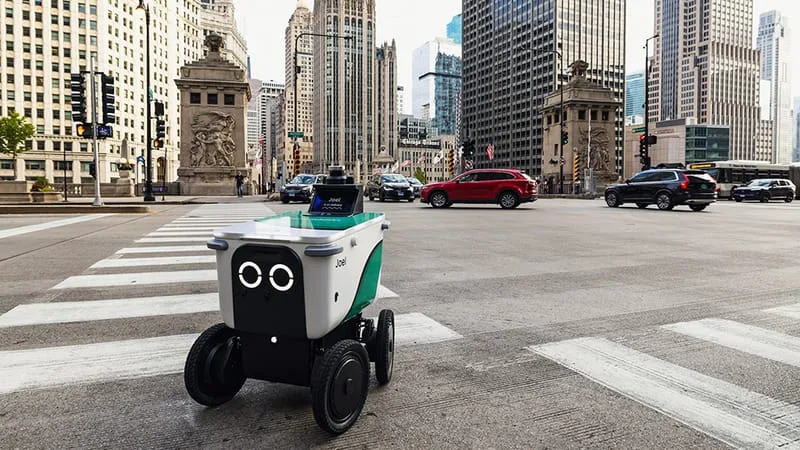
Serve Robotics is opening its 2,000-robot sidewalk fleet to anyone who can write a few lines of code. Developers, small merchants, and AI agents can now order a delivery robot directly, without Uber Eats or DoorDash in between. The new AV Delivery Developer Portal pairs a public API with a sandbox of simulated robots, allowing developers to request deliveries and track robots through drop-off. Serve handles dispatch, routing, navigation, and remote supervision.
Live robots require Serve's approval, and deliveries stay inside active service zones and hours. The cargo holds about 4 pizza boxes and drinks. Serve says its bots have completed hundreds of thousands of deliveries across more than 150 neighborhoods in 20 US cities.
Competitor scale was also reported: Starship Technologies reports more than 11 million deliveries and more than 3,000 robots; Coco Robotics has deployed more than 1,000 robots; and DoorDash is expanding its own road-capable Dot robot. The API moves Serve from running delivery bots toward running the delivery layer other businesses build upon.
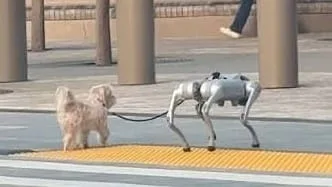
Journalist Stephanie Lin filmed a four-legged robot walking a tiny dog along a San Francisco sidewalk in Mission Bay. The robot led the way as the pup trotted alongside, seemingly unfazed. Lin told Storyful: "This is probably a soon-to-be-familiar sight, given the close proximity to Silicon Valley."
The walker appears to be a Unitree robot dog, possibly the Go2. Whether it was navigating autonomously or remotely controlled remains unclear. The item is more a viral stunt than a robotics breakthrough, especially after the Chengdu sighting in early 2025, but it still shows robots moving from research labs to dog-walking duty. The briefing framed it as another sign that man's best friend is getting automated and noted that someone still needs to teach the robots to pick up the poop.
December 2026 to 2027: Tesla production shifts and Serve platform changes
Tesla plans to end Cybertruck production in 2027 and use the freed capacity to build Cybercabs, after the pickup's sales fell far short of projections. That change gives Cybercab deliveries a production path, but the car's usable range remains limited to geofenced Robotaxi service pockets.
Serve's decision not to renew its Uber Eats deal in 2027 also sets a platform timeline. The company is shifting from a delivery operator to an infrastructure provider for outside developers, merchants, and AI agents.
Other developments reported on November 16, 2026
At UN talks in Geneva, 128 nations are debating rules for AI killer robots. Most back tighter restrictions, while the US, Russia, and Israel resist a new treaty.
Nvidia robotics engineer Darrell Dai resigned following CEO Jensen Huang's departure, citing disappointment with the board's handling of his exit. The briefing's previous AI newsletter headline was "Jensen Huang weighs a comeback at Nvidia."
Ukraine defense startup UFORCE raised $700 million at a $6 billion valuation, six times what it was worth in March, to build more combat-tested drones in Ukraine and abroad.
J.P. Morgan predicts the US will produce 300,000 to 400,000 humanoids by 2030 and 1.5 million by 2035, according to Reuters.
Chinese robotics company LimX Dynamics demoed a group of humanoids performing dance routines, with the company claiming millisecond-level precision.
Colorado State University created flexible, slug-like robots that can connect using claws to form larger machines capable of climbing and carrying objects.
Researchers demonstrated drones working together to tie cables around objects midair, allowing them to lift, transport, and release items without grippers.
May Mobility plans to deploy more than 10,000 Volkswagen ID. Buzz robotaxis worldwide by 2031, with US road testing starting in 2027 and commercial deliveries in 2028.
Uber launched Zoox's steering-wheel-free robotaxis in Las Vegas, allowing riders to book fully autonomous rides through the Uber app at no extra cost.
Newsletter context and related updates
The November 16, 2026 briefing addressed robotics enthusiasts and included the headline addendum Robot dogs now walk actual dogs. It also included navigation options for Read Online, Sign Up, and Advertise, and image credits for Tesla, Foundation Future, Serve Robotics, and Instagram / Stephanie Lin.
The briefing pointed readers to prior newsletters: "Jensen Huang weighs a comeback at Nvidia" in AI, "Microsoft's Outlook outage hits day two" in Tech, and "Amazon turns Ring cameras into robots" in Robotics. It also highlighted today's AI tool guide, "Turn a messy plan into a shared board," and invited readers to RSVP to the next workshop on November 17, "Connect Claude, ChatGPT to Everything."
The editorial team signed off as Rowan, Zach, Shubham, Jennifer, and Nate. Recent newsletters listed "Amazon turns Ring cameras into robots" by Jennifer Mossalgue, 6 minutes; "Humanoid maker Figure eyes $1.5 billion" by Rowan Cheung, 5 minutes; "Amazon builds its home robot team" by Jennifer Mossalgue, 6 minutes; and "Clone Robotics unveils synthetic human prototype" by Rowan Cheung, 5 minutes.
The publisher described The Rundown AI newsletter as reaching more than 3,500,000 readers with bite-size AI news updates straight to their inboxes every morning and said the newsletter is 100% free.
What to watch next
The next checkpoints are December 2026 Cybercab delivery estimates, 2027 Cybertruck production changes, Serve's 2027 end of its Uber Eats relationship, and whether Foundation's October 30 payroll issue develops into a funding or military contract outcome. For the broader robotics field, the 2030 and 2035 humanoid production forecast, the 2027 to 2031 May Mobility timeline, and any follow-up on robot dog autonomy will show which of these items move from announcement to operation.
Comments
No comments yet. Be the first to comment.