
The Download: Pelosi’s successor targets AI while data centers face power struggles
Wiener wins Pelosi seat, pushing AI safety, while data centers face electricity-driven backlash and other tech headlines.
Key Takeaways
- California state senator Scott Wiener won Nancy Pelosi’s open San Francisco congressional seat, bringing an advanced-AI safety advocate to Washington with potential influence over federal AI policy.
- Wiener warned that rapidly advancing AI, especially risks involving recursive self-improvement, could lead to disaster without deliberate slowing and regulation, though he is only cautiously optimistic about Congress’s ability to act.
- A separate report from Ashburn, Virginia, suggests the backlash against data centers may be driven less by culture-war narratives than by electricity demand, grid strain, and opposition to onsite power generation.
- The article also highlights major tech and policy stories, including scrutiny of Nvidia CEO Jensen Huang, AI and cybersecurity incidents abroad, FDA warnings on GLP-1 drugs, and growing public resistance to surveillance technology.
Scott Wiener, the California state senator who wrote legislation aimed at curbing the risks of advanced AI, has won a tight congressional race for Nancy Pelosi’s open San Francisco seat. The victory, declared within the past week, puts a vocal AI-safety advocate in a position to shape federal AI policy.
Wiener spoke with MIT Technology Review’s Grace Huckins only a few hours after the race was called. In a 20-minute conversation, he used the phrase “recursive self-improvement” half a dozen times and said, “We need to slow this down, because it’s moving very quickly, and we could sleepwalk into a disaster.” He described himself as only “cautiously optimistic” about Congress’s ability to rein in AI.
Background: From Sacramento to Washington
Wiener built his reputation in the California legislature, where he authored legislation targeting the risks of advanced AI. That record now travels with him to Washington, where federal lawmakers have struggled to agree on how to govern the technology. His win in a tight race for Pelosi’s open seat gives him a national platform and a vote on any federal AI bill that moves.
The Electricity Fault Line Behind Data Center Backlash
In a separate dispatch, James O’Donnell reported from Ashburn, Virginia—part of Data Center Alley, the world’s largest data center hub—as voters went to the polls across the US last week. Ashburn is arguably where the national backlash against data centers first began to take shape.
Big Tech has framed the data center uproar as a culture war over progress. But a few days in Ashburn convinced O’Donnell that the real fault line may be electricity: drawing power from the grid versus generating it onsite provokes different forms of blowback. The industry can improve its image, he argued, but it cannot escape the consequences of its enormous appetite for electricity.
Other Stories Worth Tracking
- The FBI is investigating Nvidia CEO Jensen Huang’s affair, though Trump said he does not think Huang needs to worry (AP News). Huang hired a PR firm known for handling sex scandals last year (Wired). The allegations will likely spur new chip export restrictions (Reuters) and raise questions about Huang’s lobbying on China (Verge), threatening the fate of the economy (WP).
- France has accused Iran of hacking its supermarket fridges; prosecutors are investigating the leaders of an Iranian cyber unit (NPR). Hackers are shifting to manipulating physical equipment (Axios).
- The Iran war has triggered a drop in global emissions, driven mainly by energy supply constraints (New Scientist), though the decline will likely prove temporary (Gizmodo).
- The FDA has ordered GLP-1 drugs to carry warnings about blindness, saying the drugs may increase the risk of vision loss (NBC News).
- Australia is mulling criminal penalties for rogue AI after an AI agent hacked government systems (BBC).
- The Pentagon is planning to patrol the Moon, with the project’s first five satellites possibly launching in 2029 (Ars Technica).
- Two US cities, York, Maine, and League City, Texas, have voted to ban Flock surveillance cameras (Vox).
- Constant surveillance is changing how children grow up, with tracking apps fueling anxiety and undermining resilience (Atlantic).
- A tiny RNA molecule could explain how life began, according to researchers who believe life emerged from self-copying molecules (Quanta).
- A sci-fi novel has won the Booker Prize for the first time: The End of Everything took the honor (Gizmodo).
Quote of the Day
“Nvidia is not an ordinary company and Jensen is not an ordinary CEO; he is Nvidia, clearly sets the long-term strategy and direction, and pulls most of the company’s strings himself.” —Stacy Rasgon, an analyst at Bernstein, told Reuters why it will be so difficult to replace Jensen Huang as Nvidia CEO.
China’s High-Tech Marine Ranches
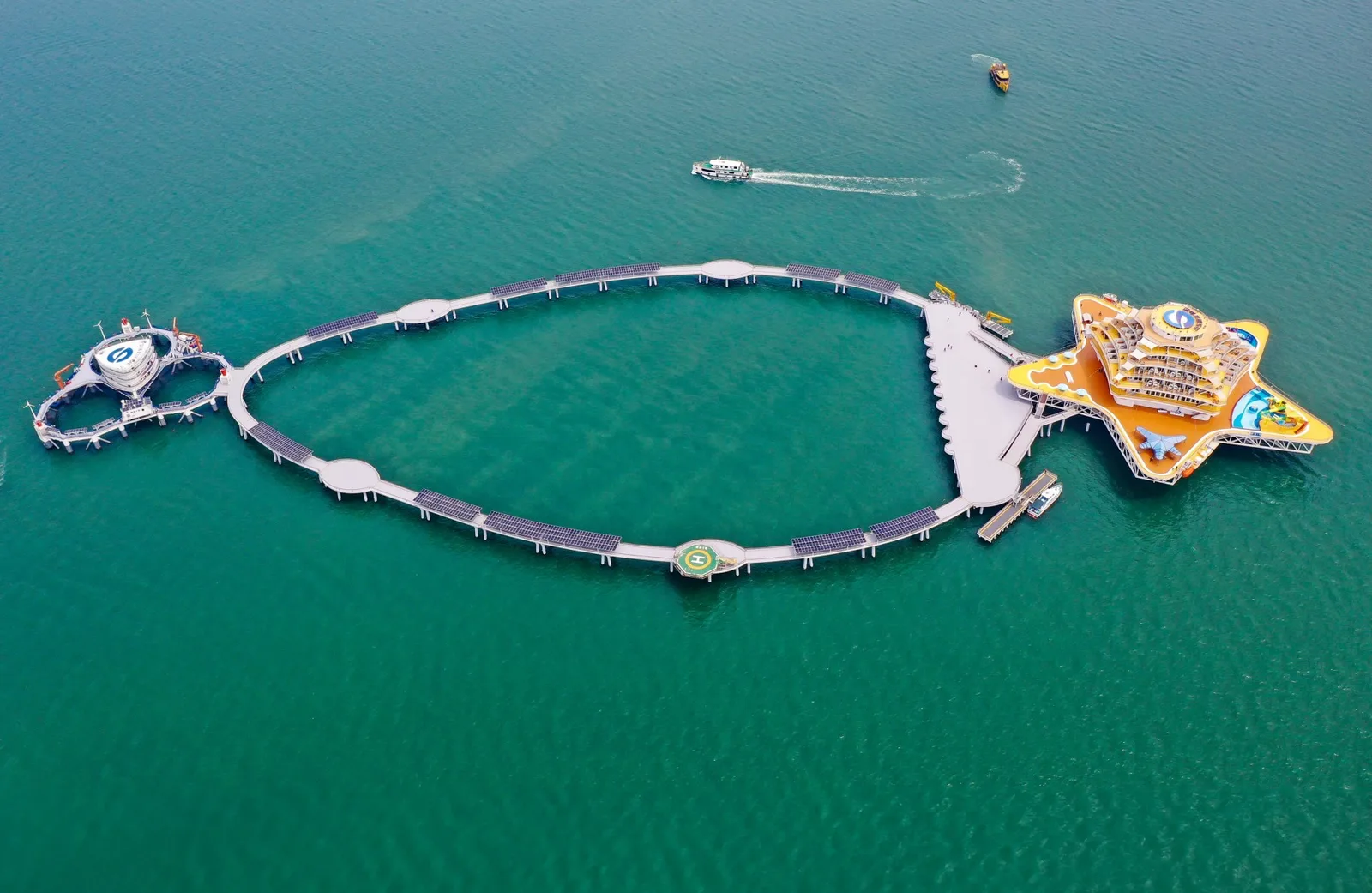
A short ferry ride from the Chinese port city of Yantai sits Genghai No. 1, an offshore complex that combines a tourist attraction with an industrial fish farm, including a seven-story visitor center shaped like a cartoon starfish. Its main purpose is to breed fish and release them into the ocean. Genghai is part of China’s marine ranching program: since 2015, the country has built 169 demonstration ranches and released at least 167 billion juvenile fish and shellfish. The approach has also proved controversial.
What to Watch Next
Wiener’s arrival in Congress gives AI-safety legislation a new champion, but his own “cautiously optimistic” framing suggests the fight over federal rules is only beginning. Meanwhile, the electricity debate in Ashburn signals that data center politics will be fought as much over power supply as over culture.
Comments
No comments yet. Be the first to comment.