
Huang's already difficult week has become even worse.
Nvidia's Huang scandal grows with $7.5 billion China chip sales and a $190 billion loss; Uber launches parking; aviation drops floppy disks by 2028.
Key Takeaways
- Nvidia CEO Jensen Huang faces a major scandal linking his long relationship with suspected spy Alice Huang to more than $7.5 billion in chip sales to China, triggering an FBI probe, a shareholder lawsuit, and a roughly $190 billion market-value drop.
- Huang’s position is structurally exposed because Nvidia has never had another CEO, his stake lacks extra voting power, and his fate rests with a board already investigating him amid growing congressional scrutiny.
- Uber is turning its SpotHero acquisition into Uber Parking in 15 U.S. cities, using upfront pricing and rewards to serve commuters while also preparing parking spots as waiting zones for autonomous vehicles.
- The FAA has begun replacing 1980s-era floppy-disk-based controller systems with a unified digital display called E-IDS across 435 sites by 2028, though it still faces staffing shortages, aging hardware, and modernization risks.
- A SpaceX-alumni startup, Vital Lyfe, unveiled a $749 portable desalination unit aimed at sailors, campers, off-grid users, and disaster-prep buyers, though its real-world performance and membrane life remain unverified.
Meta description: Nvidia's Jensen Huang faces a spy scandal tied to $7.5B in China chip sales, Uber launches in-app parking in 15 cities, and the FAA retires floppy disks by 2028.

Tags: Nvidia, Jensen Huang, Uber, FAA, Vital Lyfe
Lead
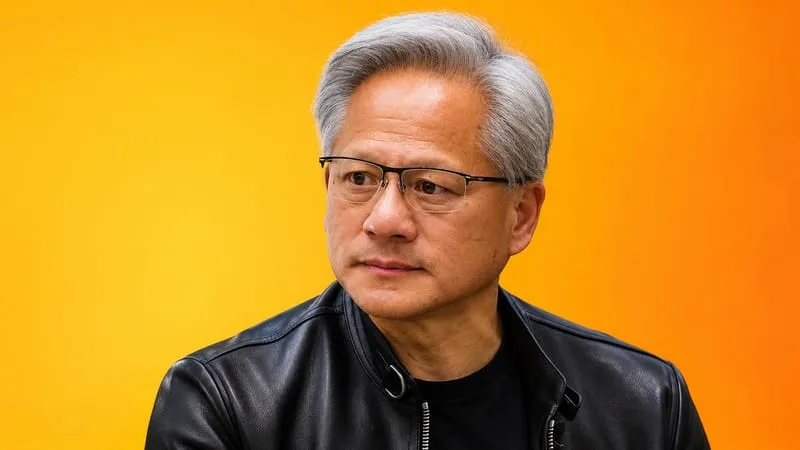
Nvidia CEO Jensen Huang is at the center of a scandal that The Information reports links his years-long relationship with Alice Huang, a suspected spy, to more than $7.5 billion in Nvidia chip sales into China. The revelation lands alongside an FBI probe confirmed by Trump, a shareholder class action, and a $190 billion wipeout in Nvidia's market value. In the same news cycle, Uber turned its $617 million SpotHero acquisition into an in-app parking service across 15 U.S. cities, the FAA began replacing 1980s-era floppy-disk controller systems, and a SpaceX-alum startup launched a $749 portable desalination unit.
Background: How the Huang Scandal Escalated
The allegations against Huang did not surface in isolation. Trump said Huang told him he had "no idea" Alice Huang was a spy, while The New York Times reported that Trump was briefed on the intelligence earlier this year. The Information's reporting now ties the relationship to $7.5 billion or more in Nvidia chip sales moving into China.
The financial reaction was immediate. Nvidia closed Monday down 4.27% at $178.67, erasing roughly $190 billion in market value. Five minutes after the closing bell, a proposed class action accused Nvidia and Huang of securities fraud for concealing his ties to a suspected spy. On Capitol Hill, Senator Chris Coons called for a national security probe, and House Democratic leader Hakeem Jeffries backed adding the Senate's China chip limits to the final defense bill.
Why Huang's Position Is Structurally Exposed
Huang, 63, has run Nvidia for all 33 years of its existence, and the company has never had another CEO. Its single share class means his roughly 3.5% stake carries no extra votes, leaving his fate with a board that is already investigating him. In January, Democrats take both chambers, along with subpoena power that could put him under oath.
Uber Turns SpotHero Into an In-App Parking Business
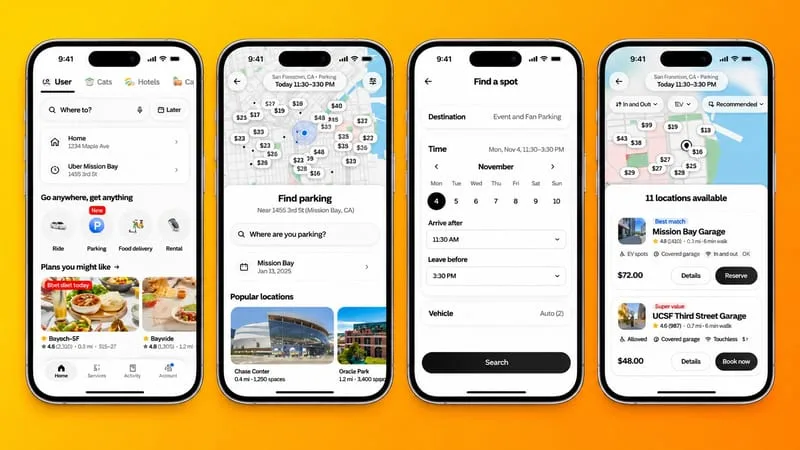
Uber is converting its $617 million SpotHero acquisition into Uber Parking, a service rolling out in 15 U.S. cities including NYC, LA, Chicago, and San Francisco. Users gain access to SpotHero's 13,000+ locations across 400+ cities, with upfront pricing and filters for garage versus surface lot and self-park versus valet; some facilities support QR-code entry or license-plate recognition. Uber One members — 55 million+ as of September 30 — earn 10% back in credits for rides and Uber Eats.

The strategic layer goes beyond parking revenue. Uber plans to turn the spots into waiting zones for the dozens of autonomous vehicle companies it partners with, cutting deadheading, or miles driven with no paying passenger. Uber president Andrew Macdonald said in August that "nobody's going to own a car" in 15 to 20 years. Until then, CEO Dara Khosrowshahi told analysts on the Q3 call that commuting is one of Uber's largest categories, and parking lets Uber earn from commuters even when they drive themselves.

The FAA Retires Floppy Disks Across 435 Sites
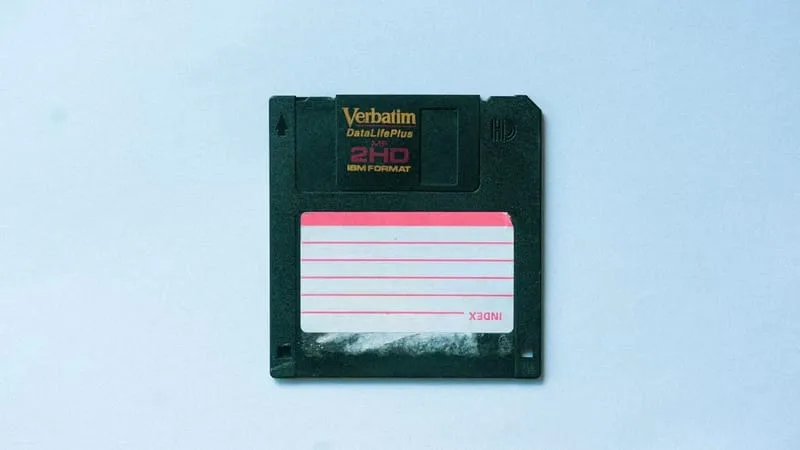
U.S. air traffic control is finally moving off floppy disks. The FAA has started replacing its 1980s-era controller display systems and plans to cover 435 sites by the end of 2028. The replacement, E-IDS, is a single digital display consolidating weather, alerts, airspace restrictions, and pilot reports on one screen, replacing legacy systems across 400+ facilities. The switch starts in Atlantic City, Nashville, and Greater Rochester airports, plus data hubs in Atlanta and Salt Lake City.

Defense contractor Leidos won a roughly $292 million contract in 2020 to build E-IDS. After delays and a rising cost estimate, the FAA brought development in-house. The agency is also replacing copper communications lines, old voice switches, paper flight strips, radios, and displays. Floppies may be the smallest problem on the list: the FAA still runs decades-old Compaq computers using parts bought from eBay and is several thousand air traffic controllers short. In September, the GAO warned that the push to finish modernization by 2028 risks prioritizing speed over cost and operational continuity.

Vital Lyfe Shrinks Desalination to a $749 Box
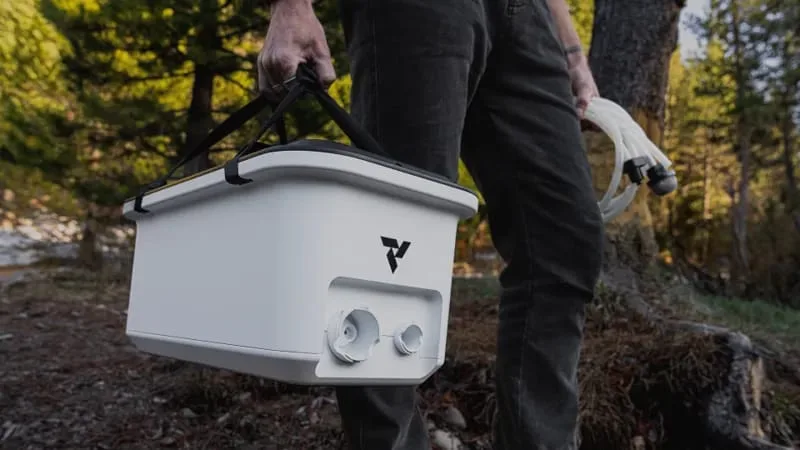
A startup founded by former SpaceX engineers is shrinking desalination from billion-dollar coastal plants to a portable $749 unit. Vital Lyfe's device uses a membrane to strip salt and contaminants from water, producing 22.7 liters per hour from seawater and 45.5 liters per hour from freshwater, according to Fast Company. The unit weighs about 25 pounds and needs no through-hull fitting. Conventional marine watermakers cost thousands and usually require a professional install. Vital Lyfe says filters swap out in under 30 seconds, addressing what it calls the trickiest part of running a small desalination system.
The first buyers it is targeting are sailors, campers, off-grid users, and disaster-prep shoppers, with humanitarian deployments also under consideration. Vital Lyfe raised $24 million in seed and debt financing last December. Its CEO points to Palau, where diesel-powered desalination units built into shipping containers now sit abandoned because they were too hard to maintain. The unit's membrane life and field performance have not been independently verified.
Other Developments to Watch
The DOJ sued Lyft for $53 million, alleging the company and its drivers routinely refuse riders with service dogs and stowable wheelchairs. Fox completed its $22 billion acquisition of Roku, gaining access to over 100 million households. SpaceX is asking Starbase for a tax break on a $24 billion gas plant and data center, just as voters backed limits on data-center development in 40 of 41 local ballot measures. France blamed Iranian-linked hackers for a cyberattack that hit supermarket refrigerators. Tesla will officially end Cybertruck production in 2027, refund many deposits, and shift factory resources toward Cybercab robotaxis. Fervo Energy said it now has nearly $12 billion in contracted revenue, including a 396 MW plant for Google. California voters rejected a proposed one-time 5% wealth tax on billionaires, 53% to 47%.
What to Watch Next
The Huang scandal's next inflection point is January, when Democrats take both chambers and gain subpoena power. Nvidia's board investigation, the FBI probe, and the class action will determine whether the CEO of 33 years faces formal accountability. Uber's parking rollout will be measured by whether it can convert commuters into recurring users before robotaxi economics reshape the category. The FAA's 2028 deadline faces a GAO warning that speed may trump cost and continuity. And Vital Lyfe's unverified field performance will decide whether a $749 box can displace container-scale desalination in places like Palau.
Comments
No comments yet. Be the first to comment.