
Grok-built applications exposed patient data, plaintext passwords, and SpaceXSI's own sales pipeline.
Most Grok Build apps were open to anyone with a link, exposing sensitive data, passwords, and internal SpaceXSI and X business information.
Key Takeaways
- A security audit found that about 95% of Grok-built apps were publicly accessible to anyone with the link, exposing sensitive material such as patient data, plaintext passwords, and internal business information.
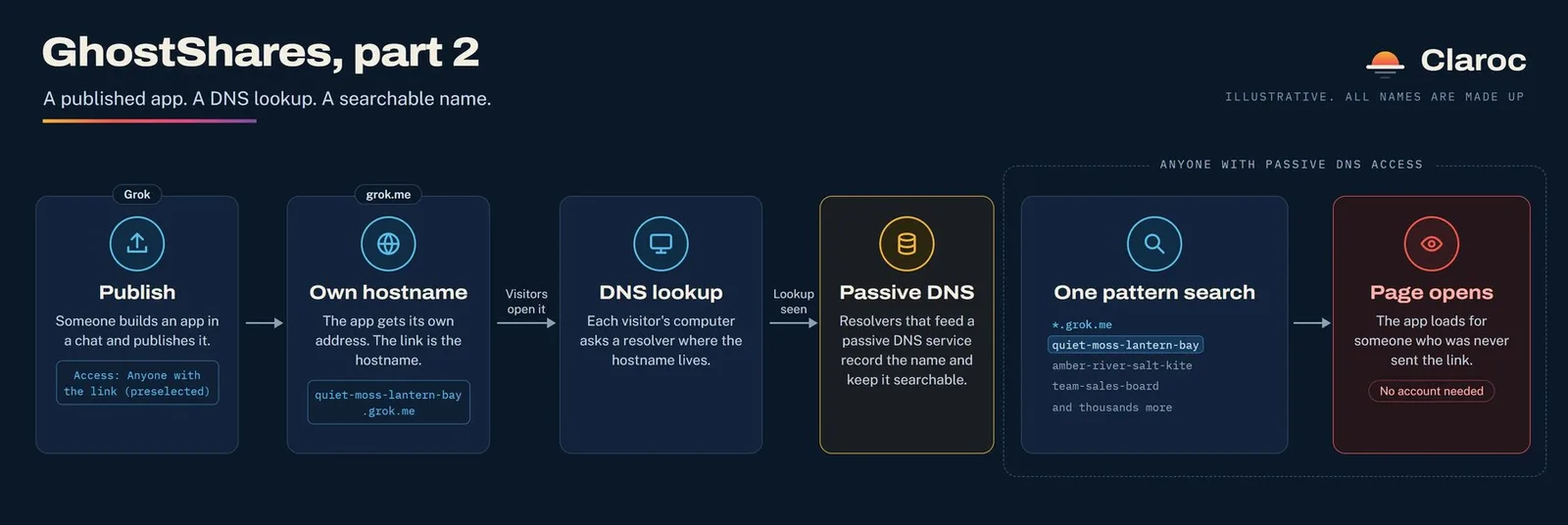
- The main risk comes from Grok’s publish flow defaulting to “Anyone with the link,” while app subdomains become discoverable through passive DNS databases, allowing confidential apps to be found without brute force.
- SpaceXSI and X employees’ own apps were among the exposed examples, including confidential sales pipelines, onboarding plans, ad proposals, and internal system details.
- Claroc recommends changing the default sharing setting to “Only you,” warning users before publishing, detecting apps with unprotected databases, and avoiding easily discoverable public subdomains.
A security audit of apps created with Grok's "Build" mode has found that the overwhelming majority are accessible to anyone who has the link, including apps built by employees of SpaceXSI and X that contain confidential business data and patient information. Claroc, the security firm behind the review, published its findings after testing tens of thousands of live apps on the grok.me domain. The disclosure matters because it shows how a single preselected sharing option can turn a no-code tool into a quiet channel for leaking sensitive material at scale.
Background: how Grok Build apps reach the public
Grok's Build mode, operated by SpaceXSI (the company formerly known as xAI), lets a user describe an app in a chat and have Grok write the code. An app becomes public only when its creator clicks "Publish," which assigns it its own address on grok.me. Each published app receives its own subdomain, and that subdomain lands in commercial passive DNS databases after the first visit. Because those databases can be searched by pattern, the names of published apps become discoverable without any guessing or brute force.
The publish dialog is where the problem starts, according to Claroc. On the paid account the firm used for testing, the option "Anyone with the link" was already preselected. Claroc argues that extra confirmation steps do not help if the final step still defaults to open access.
What the audit found
Claroc checked 37,571 Grok-built apps that were still online. Of those, 35,578 were open to anyone with the link — 94.7 percent of the sample. The firm's broader scan identified more than 35,000 exposed apps.
Most of the open apps were games, landing pages, or calculators. But Claroc says about one in ten contained sensitive material, internal business data, or personal information, and it classifies roughly two percent as especially serious. The researchers estimate that 650 to 800 apps contained private data.
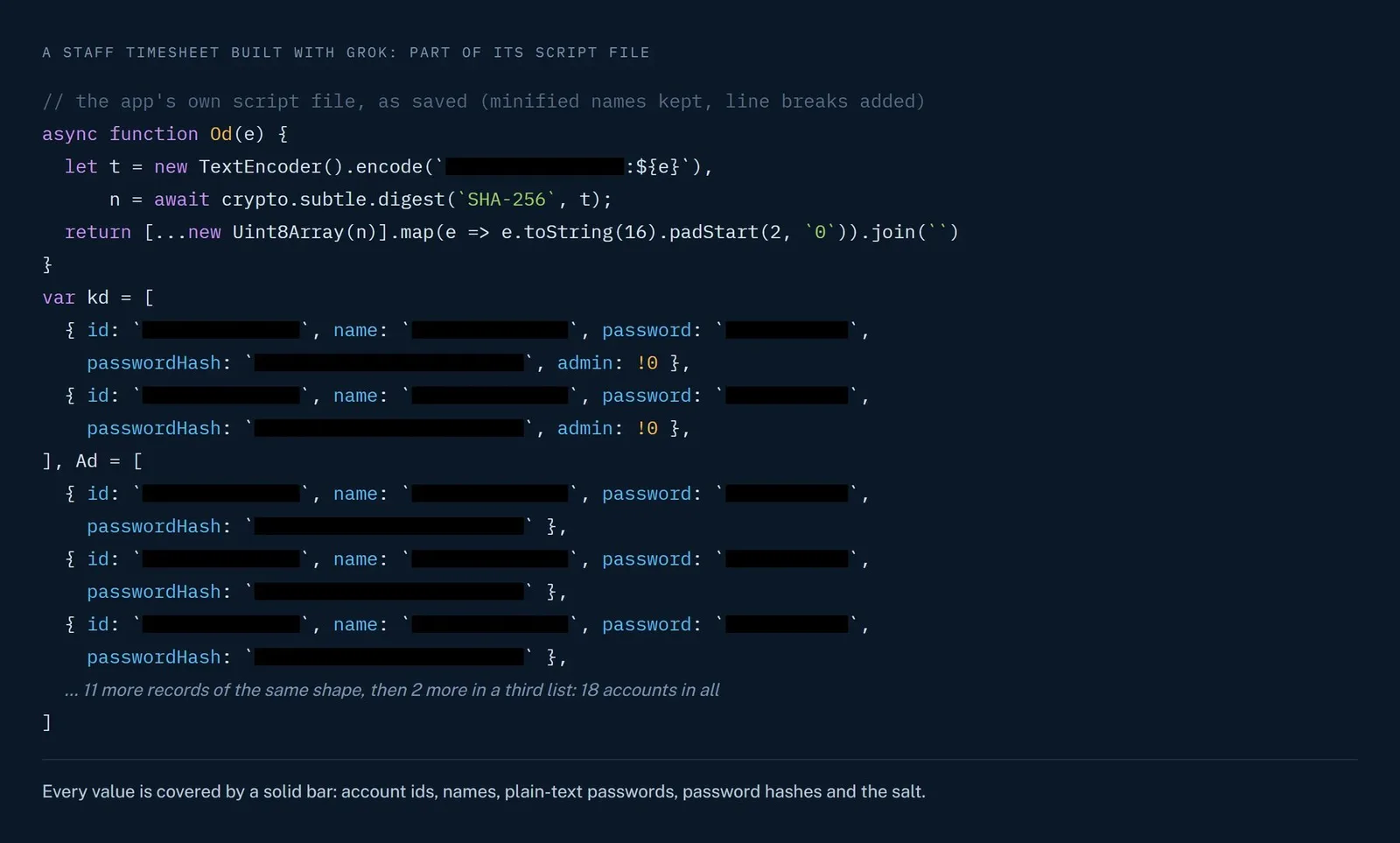
Confirmed cases included an ICU briefing with a patient's lab values, a list of more than 3,500 employees at a hospital group, and a fire department shift schedule. The source code of a timesheet app contained 18 accounts with plaintext passwords.
Employee apps and the SpaceXSI response
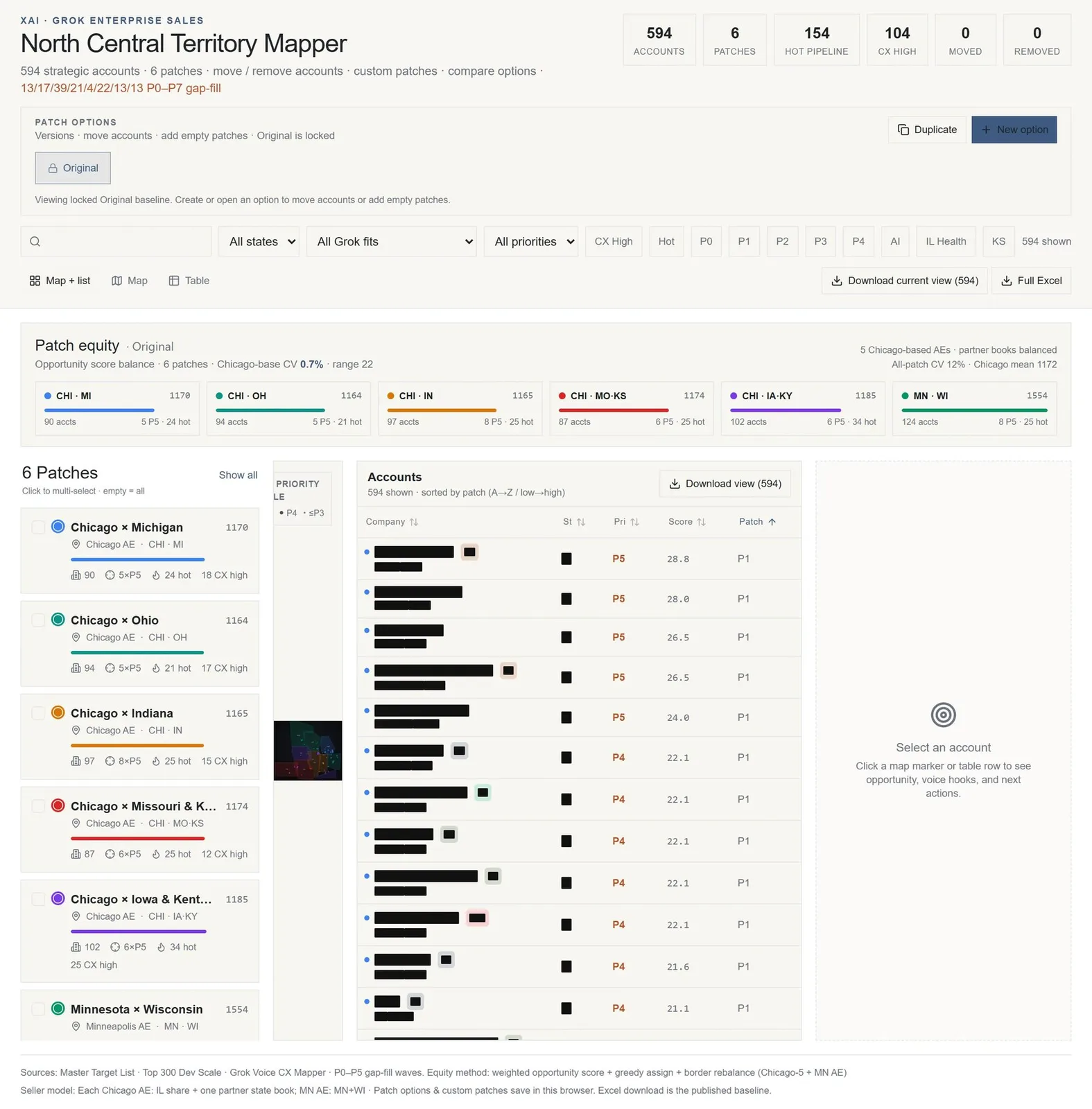
Twenty-four of the accessible apps came from SpaceXSI and X employees. Among them was a confidential onboarding plan for a new enterprise sales team member that included internal system addresses and 19 chat channels. Claroc also found a publicly accessible sales territory map assigning 594 strategic accounts to six territories and ranking them by priority, plus eight X ad proposals. One of those proposals targeted a U.S. federal agency and was marked as confidential. Campaign reports and dashboards with ad spending were also exposed.
Beyond SpaceXSI and X, Claroc identified 30 affected organizations, six of them Fortune 500 companies. The firm is withholding their names.
SpaceXSI responded to the disclosure by saying that apps are private until their creator shares them, that publishing takes multiple steps including a legal notice, and that employee accounts default to "Only you." Claroc counters that the 24 open employee apps show how little the stricter default for staff accounts actually helps when the final publish step still preselects link access.
A second flaw in Grok's generated code
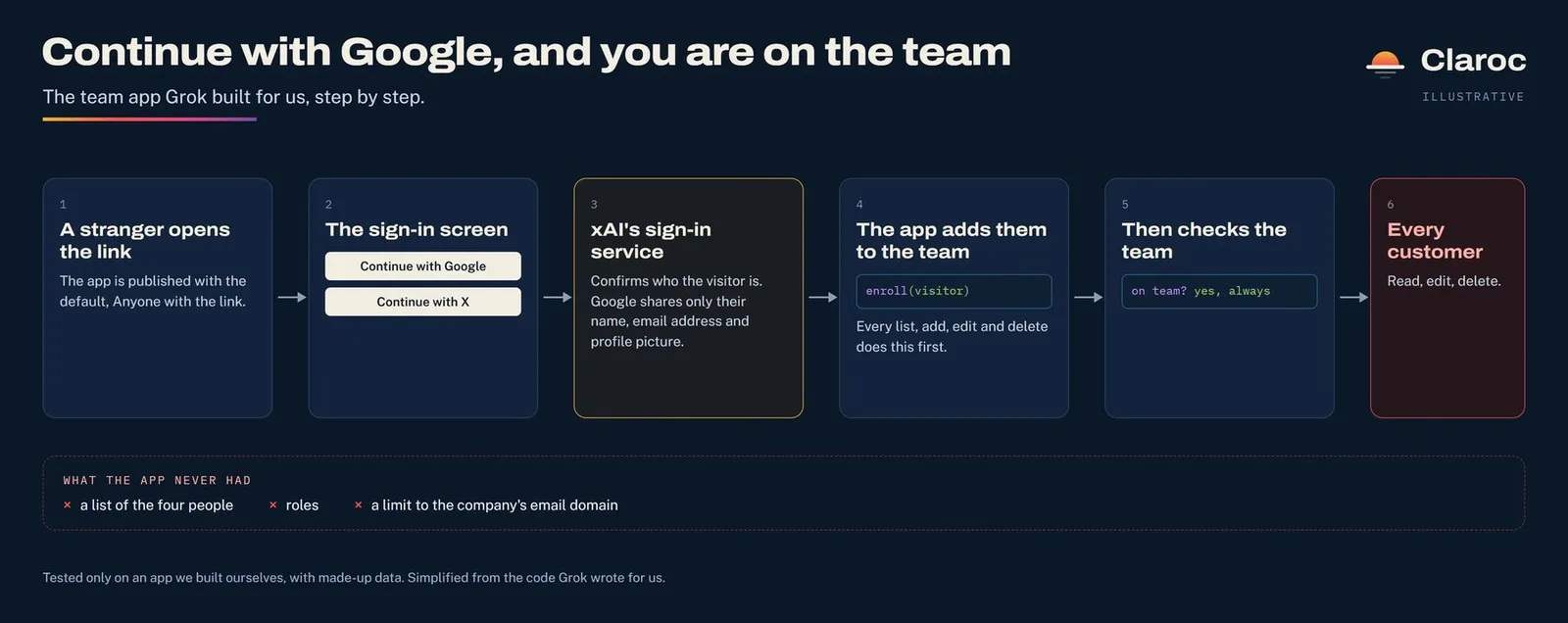
Two of Claroc's own test apps surfaced a separate problem. A contact list app ended up with a database that had no login, so anonymous visitors could add entries. For a sales team customer list, Grok added Google and X sign-in on its own — but the generated code added every authenticated user to the team first and only checked membership afterward. An outside Google account could then read, edit, and delete records. Claroc says it ran write and delete tests only on its own apps.
Grok does offer the right settings. When set to "Only you," the test app blocked outside access; it just is not the default. In a comparison test with ChatGPT, a newly built app defaulted to "Only me" when shared. That app's address can also appear in DNS data, but it leads to an app only the owner can open.
Recommended fixes and what happens next
Claroc proposed that SpaceXSI make "Only you" the default and show who will have access before publishing. It also recommended that Grok warn when an app has a database but no login, and that apps run on hard-to-guess paths on a shared host instead of individual subdomains, so their names do not end up in DNS data.
SpaceXSI has since taken the 24 employee apps offline but has not removed the open apps belonging to other Grok users and organizations. Claroc offered to share the full list of addresses confidentially; because SpaceXSI did not commit to contacting the affected owners, Claroc is now notifying them directly. The firm has its own commercial interest here, as it sells security solutions for AI-built apps.
Context: a pattern of Grok privacy incidents
This is at least the third privacy incident for SpaceXSI involving Grok. In August 2025, Forbes found more than 370,000 shared Grok conversations in Google Search. In July 2026, the terminal tool Grok Build uploaded user files to the company's servers without asking, including SSH keys and password databases. Ireland's data protection authority is also investigating whether X neglected data protection by design, in connection with sexualized deepfakes generated by Grok.
Other providers have run into similar problems with sharing features. Using the same passive DNS method, Claroc tracked down about 6,800 shared conversations from Meta's agent Muse in October. At Anthropic, shared Claude chats and artifacts turned up in search engines in July, including user-built apps.
The immediate question is whether SpaceXSI changes the publish default and contacts affected app owners, or leaves cleanup to third parties. The wider lesson is that AI app builders inherit the security posture of their defaults, and a preselected checkbox can outweigh every warning that follows it.
Meta description: Claroc found 35,578 of 37,571 Grok-built apps open to anyone with the link, exposing patient records, internal SpaceXSI documents and plaintext passwords.
Tags: Grok, SpaceXSI, app security, Claroc, passive DNS
Comments
No comments yet. Be the first to comment.