
“Muse Gadgets” Reimagines AI Hardware as an Open-Source DIY Project
Meta's Apache 2.0 Muse Gadgets lets makers build DIY AI hardware with ESP32 and Linux SDK, linking Muse to smart home devices.
Key Takeaways
- Meta has announced Muse Gadgets, an Apache 2.0 open-source project that lets makers build AI hardware around ESP32 boards and a Linux SDK.
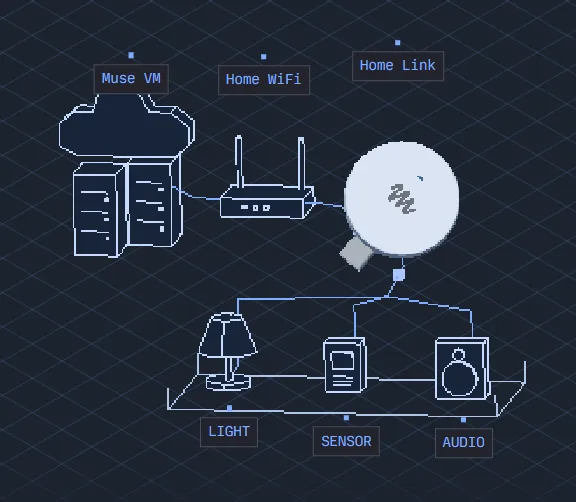
- The toolkit connects DIY devices to Meta’s Muse AI agent and includes Muse Home Link for integration with smart home devices.
- Muse Gadgets addresses an unsettled AI hardware category by inviting users to create their own device form factors instead of waiting for finished products.
- The Apache 2.0 license and Discord community support open modification, sharing, and early maker-driven adoption.
- The project also acts as a test bed, using maker prototypes and community feedback to reveal which AI hardware designs may shape future commercial products.
Meta description: Meta announces Muse Gadgets, an Apache 2.0 project for ESP32 boards and a Linux SDK that connects DIY hardware to the Muse AI agent and smart home devices.
Tags: Meta, Muse Gadgets, Apache 2.0, open-source AI hardware, ESP32

Meta has announced Muse Gadgets, an open-source effort aimed at letting makers construct their own AI hardware around ESP32 boards, a Linux SDK, and the company's Muse AI agent. The move matters because it gives makers a named path into an unsettled category: hardware that can bring the Muse agent into connected objects.
Background: AI hardware is still searching for a standard form factor
The announcement lands in a market where the physical shape of AI hardware has not been fixed. Among current AI gadgets, Meta's Ray-Ban smart glasses are arguably the most successful so far, while Apple and OpenAI are developing their own devices. That competition shows demand for dedicated AI hardware, but it also shows that companies are still testing different approaches: glasses, home hubs, and maker-built objects.
Muse Gadgets enters that gap. Instead of asking users to wait for a finished product from a large company, it invites them to assemble devices around the Muse agent. The practical question is not only what the software stack does, but what kind of hardware people actually want when AI moves beyond an app or a chatbot.
Development: From ESP32 boards to the Muse agent
The toolkit is built from firmware for ESP32 boards plus a Linux SDK, and its purpose is to connect homemade devices to Meta's AI agent Muse. That split covers two common maker environments: small microcontroller hardware and Linux-based systems that can support more complex code. The ESP32 side points toward compact gadgets, while the Linux SDK gives developers a broader base for building around Muse.
The announcement also references Muse Home Link, a connection between Meta's AI agent and smart home devices. That detail places the project near home automation rather than pure wearable AI. It suggests the agent could become a layer shared across connected objects, not just a feature of a single product.
Latest progress: Apache 2.0 licensing and a Discord community
The project’s code is distributed under the Apache 2.0 license, and discussion is taking place in a Discord community. The license gives makers a familiar open-source framework for modifying and sharing work, while the Discord channel signals that early adoption will be community-driven. The release is also presented as a way for Meta to observe which form factors people actually want, because the field has not yet settled on a standard hardware shape.
That second purpose is the more revealing part. The code release is not simply a developer convenience; it turns hobbyist experiments into feedback. Every prototype built around Muse, every connection to a home device, and every Discord discussion about a failed design creates information about the shapes, sizes, and interactions users prefer.
Current phase: A test bed for AI hardware form factors
At present, Muse Gadgets appears to be an open platform in its early stage rather than a finished consumer product. The essential facts are already clear: Meta announced the project, the code is Apache 2.0, ESP32 firmware and a Linux SDK connect devices to Muse, and Muse Home Link ties the agent to smart home devices. The open questions are how far the community will take the hardware, how much support Meta will provide, and whether these maker-built devices will influence the next generation of commercial AI gadgets.
The wider context remains the race between Meta, Apple, and OpenAI. Meta's Ray-Ban smart glasses show that a polished AI product can find an audience, while the open-source Muse Gadgets project suggests the company may also be watching the maker scene for the next form factor. What to watch next is not only new code or Discord activity, but whether small hardware experiments around Muse begin to reveal patterns that larger companies can turn into products.
Comments
No comments yet. Be the first to comment.