
A real-world test shows AI coding agents still require human cleanup on nearly three-quarters of tasks.
A new benchmark, Co-Design Bench, evaluates AI coding agents on realistic tasks with multiple intertwined changes. GPT-6 Astra meets most requirements but fully solves only 26.4% of tasks overall. Smaller and larger models score worse when tasks mix layout, design, interaction, and content. The coding harness and environment also strongly affect results. The findings suggest that current agents often produce incomplete code needing human review, and teams should test models with their actual workflow rather than rely only on saturated leaderboards.
Key Points Summary
- AI coding agents can complete most task requirements, but fully correct results are still rare, with GPT-6 Astra solving only 26.4% of Co-Design Bench tasks.
- Co-Design Bench is stricter than older benchmarks and uses real coding challenges to show where AI agents still fail.
- Performance drops sharply when tasks involve multiple intertwined changes, and simply using more compute does not reliably fix the problem.
- The coding environment or harness can matter as much as the model itself, so agents should be tested together with their tooling setup.
Meta description: GPT-6 Astra meets most requirements but fully solves only 26.4 percent of Co-Design Bench tasks, showing AI coding agents still need human cleanup.
Tags: AI coding agents, GPT-6 Astra, Co-Design Bench, benchmark saturation, coding harnesses
Featured image: An abstract technology style illustration of a coding agent checking an application interface, with no real people, no company logos, and no text.
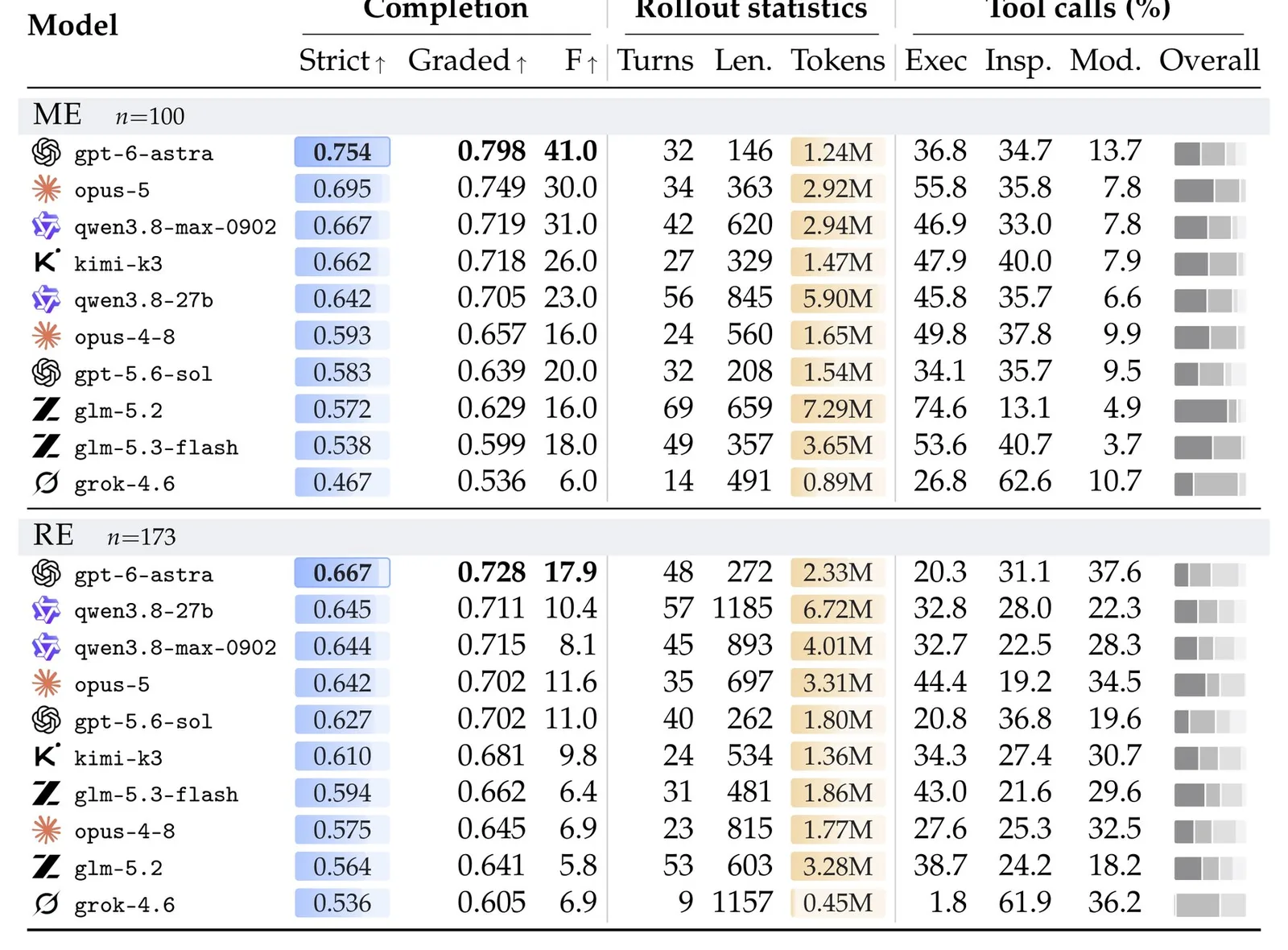
AI coding agents can now complete most of a software task, but a new benchmark shows that finishing it cleanly is still rare. In the paper by Wei et al., GPT-6 Astra, the strongest of ten models tested, satisfies about 70 percent of a task's requirements on average, yet the result is fully correct in only 26.4 percent of tasks. Usually the agent does most of the work but misses at least one detail, so users almost always need manual cleanup.
Background: saturated benchmarks made agents look nearly perfect
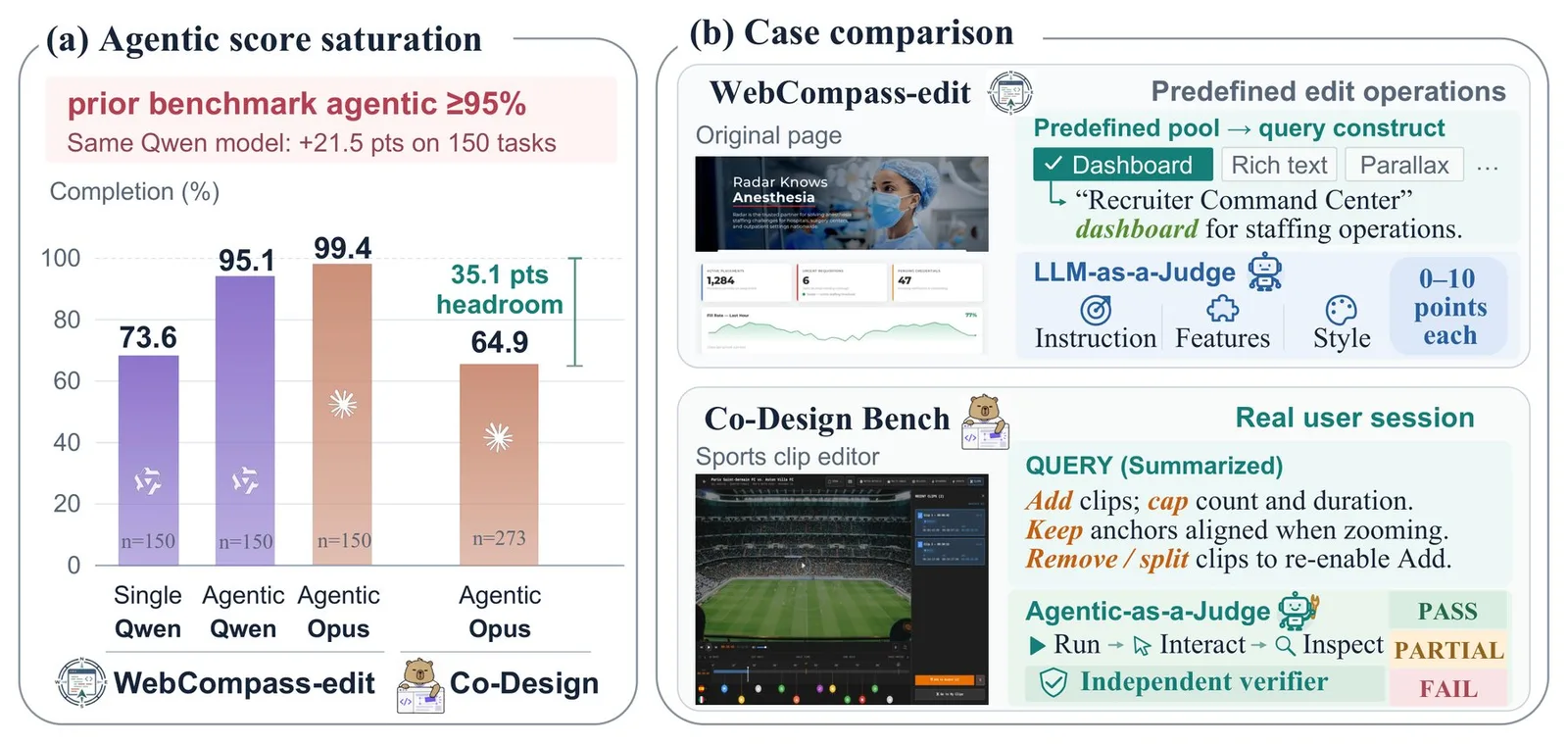
The study begins from a measurement problem. Older coding benchmarks have become too easy for agents that can run, inspect, and repair their own code. Scores above 99 percent on such tests leave little room to distinguish one model from another.
On benchmarks such as WebCompass-edit, agentic coding models reach near-perfect scores. Co-Design Bench, by contrast, leaves a gap of more than 35 percentage points. The new test was designed to restore separation by using requests taken from real coding sessions, especially cases where users had to rephrase instructions or roll back changes.
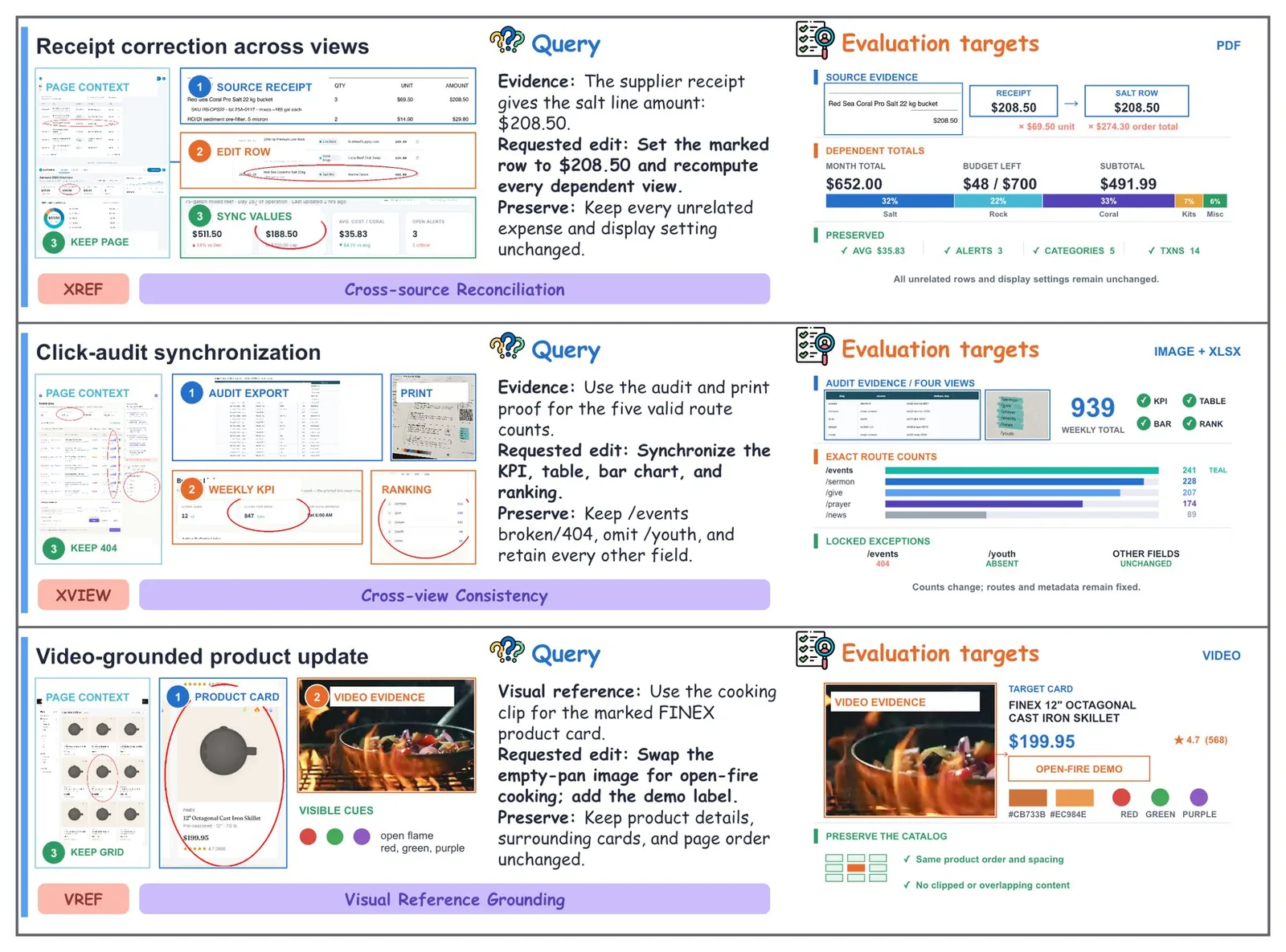
The tasks include small edits, such as pulling an amount from a receipt and updating every dependent total, as well as full project overhauls. In the multimodal track, agents must extract values from receipts, tables, or videos and keep all dependent views consistent. Grading is deliberately strict: one AI judge tests the finished app in a browser, and a second reviews every positive verdict for mock-ups or hardcoded results. Points are awarded only to features that actually work.
Development: mixed requirements and environments shape the results
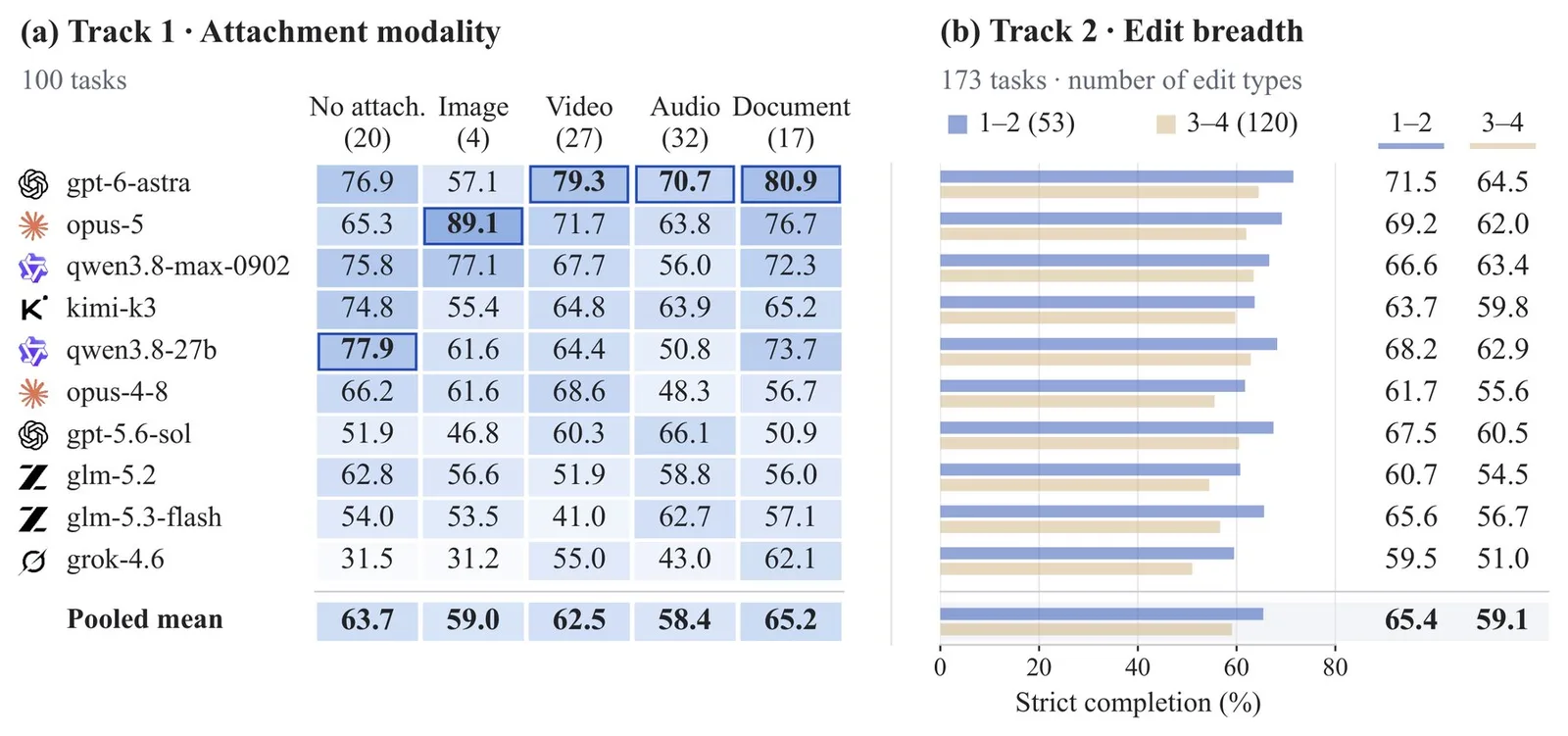
Behind GPT-6 Astra, Claude Opus 5 and Qwen3.8-Max take the next spots, while Grok 4.6 lands last. On larger overhauls, the much smaller Qwen3.8-27B climbs to second, but the authors do not treat that as a general model advantage.
The pattern is consistent: every one of the ten models scores worse when a task combines three or four different types of changes, including layout, design, interaction, and content. These intertwined requirements are common in real projects, yet they overwhelm the models.
Extra compute does not reliably close the gap. GLM-5.2 uses nearly six times as many tokens as GPT-6 Astra on smaller changes and still scores significantly worse. GPT-6 Astra leads both tracks but fully solves only 41 percent of multimodal tasks and just under 18 percent of repository tasks.
The harness, meaning the program through which an agent reads, writes, and executes code, can be as influential as the model. In a separate test, Qwen3.8-27B scored 75 or 56 percent on larger overhauls depending on the environment. Which model came out ahead also changed with the environment. The authors therefore recommend reporting model and working environment together, rather than relying on leaderboards that list only the model. For companies choosing a coding agent, that means testing both components as a pair.
Current stage: the benchmark is stricter, but not final
The new evaluation still has limits. It uses one fixed request per task, so follow-up questions or mid-task corrections from users are not tested, and the AI judges can make mistakes.
Other evidence suggests benchmark performance may still overstate everyday usefulness. A study by METR found that the actual acceptance rate of AI-generated code by project leads was roughly 24 percentage points below scores on the widely used SWE-bench Verified. Flaws in test environments can also let agents pass tasks without truly solving them. At the same time, a recent study found barely any measurable benefit from more elaborate harnesses, even though they consumed up to three times as many tokens.
For now, Co-Design Bench places the focus on working software rather than high scores. It shows where coding agents are still brittle: when many changes interact, when the surrounding tooling matters, and when a nearly complete result still needs human cleanup.
Comments
No comments yet. Be the first to comment.