
Amazon transforms Ring cameras into robots
Amazon's Ring has launched a robotics line that moves cameras to investigate alarms, with a $250 indoor drone and a $999.99 wheeled rover. Munich-based Agile Robots raised $500 million at an $8.5 billion valuation to expand in the United States, boost German manufacturing, and prepare for a possible IPO. Separately, US highway safety regulators are reviewing Waymo robotaxi behavior around stopped school buses after violations persisted despite a software update. Caltech reported a robot assembled part of an antenna frame in low Earth orbit without astronauts, extending in-space construction work. Together, the developments show robotics moving from fixed sensors and pilots into everyday security, industrial deployment, autonomous mobility, and orbital infrastructure.
Key Takeaways
- Amazon’s Ring launched a robotics division with a $250 indoor drone and a $999.99 business rover that move to investigate alarms and conduct patrols, marking a shift from fixed cameras to mobile responders.
- Munich-based Agile Robots raised a $500M round led by SoftBank at an $8.5B valuation to expand humanoids, increase manufacturing, enter new markets, and prepare for a possible IPO.
- U.S. safety regulators are scrutinizing Waymo after robotaxis continued illegally passing stopped school buses despite a software update, prompting a recall query covering 2,895 vehicles.
- Caltech’s ASTRA robot autonomously assembled part of an antenna structure in low Earth orbit, though similar robotic assembly milestones had previously been reported inside the ISS.
- The article also highlights rapid robotics growth across sectors, including humanoid development, industrial robots, military and research uses, and AI-driven advances in simulation, welding, surgery, and autonomy.
Amazon's Ring has launched a robotics division that turns its alarm-triggered cameras into mobile responders, while Munich-based Agile Robots closed a $500M round led by SoftBank at an $8.5B valuation. The two moves, both dated November 12, 2026, mark a shift from fixed sensors to machines that physically investigate what set off an alert.

Background: Ring's decade of doorbell cameras meets a mobility problem
Ring built its business on stationary cameras mounted at front doors. For six years, Amazon tried to push autonomy deeper into homes and offices, but those efforts stayed narrow. The Always Home Cam, a flying indoor camera, was sold only by invitation, and Astro for Business was discontinued in July 2024. Ring Robotics reduces the problem to hardware Amazon already sells at scale: when an alarm trips, something now travels to check.
Development: two products, two price points
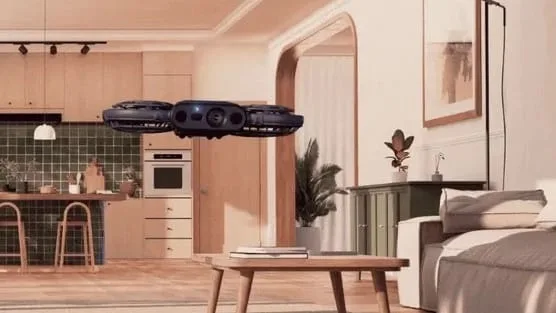
The Ring Robotics lineup includes a $250 indoor drone and a $999.99 wheeled rover for businesses.

The drone sits in a dock with its camera off until a flight begins. It then flies toward whatever triggered a sensor, such as a back-door contact, or runs scheduled patrols. It records 2K video with LED lights for low-light conditions and is set to ship on January 27, though Ring cannot sell it until the FCC authorizes it.

The rover conducts scheduled patrols, responds to alarms, records 4K video, and uses lights, sirens, and two-way audio to confront intruders. The drone records only while patrolling the area defined in Alexa Home Map. Its video encryption uses rotating keys, and Ring deletes its own copies after 24 hours.
Development: Agile Robots raises $500M at an $8.5B valuation
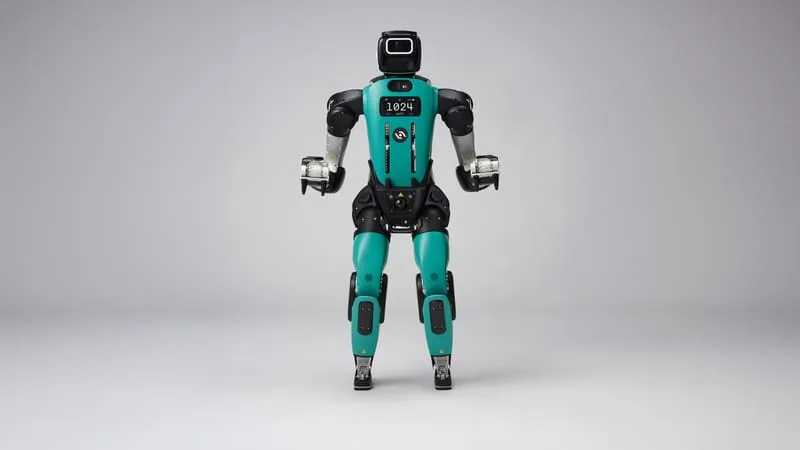
Agile Robots, a Munich spinout of Germany's Aerospace Center, raised $500M from SoftBank, Nvidia, and other investors. The company plans to use the funds to expand in the U.S., boost manufacturing in Germany, enter new markets, and prepare for a possible IPO.

Its ONE SN humanoid is built around Nvidia's Isaac GR00T stack and the Jetson Thor computer, an integrated system for training and deploying robot skills. A plant near Munich opened this year with capacity for up to 10,000 humanoids annually. Agile expects to place 1,000 to 2,000 of its smaller humanoid models next year with research labs and companies, naming Stanford and ETH Zurich among prospective users.

Founder and CEO Zhaopeng Chen told the New York Times that Agile has deployed close to 30,000 robotic systems, 3,000 to 4,000 of them humanoids, and that sales should double this year to about €600M ($668M). Those are company figures. The round comes five years after a 2021 SoftBank-led round valued Agile at more than $1B.

Development: NHTSA questions Waymo's school-bus software fix
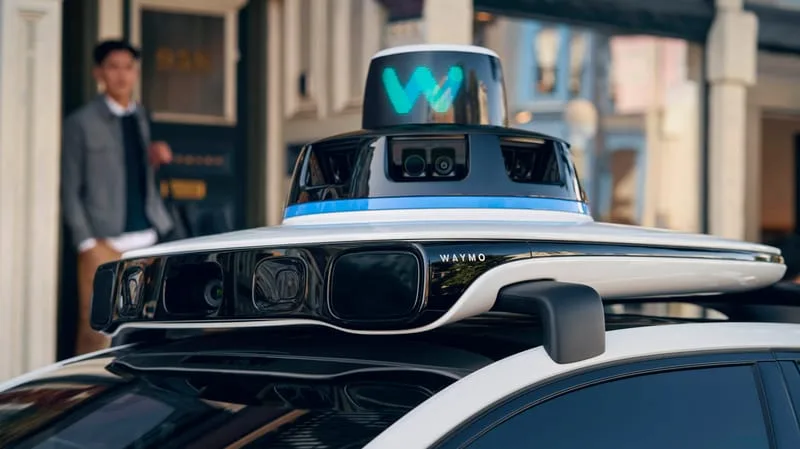
Federal safety regulators are scrutinizing Waymo's robotaxis again after finding that the vehicles continued illegally passing stopped school buses even after a software update was meant to correct the behavior.
NHTSA opened a new "recall query" covering 2,895 Waymo vehicles, saying most reported violations occurred after the update. Waymo finished pushing the software to affected vehicles in November 2025 and filed a recall on December 10 covering 3,067 fifth-generation vehicles. The defect involved robotaxis slowing or stopping, then driving past buses with red lights flashing or stop arms extended.

Austin ISD documented 19 violations by November 2025 and issued multiple $300 citations; Atlanta Public Schools reported six incidents that year. Waymo says it has received no school-bus-related citations since March 2026. NHTSA opened an investigation in January after a robotaxi struck a child near a Santa Monica elementary school. The query arrives as Waymo reportedly plans to expand its fleet fivefold to 20,000 vehicles by the end of 2027.
Development: Caltech's ASTRA assembles a structure in orbit
A Caltech robot assembled part of an antenna frame in low Earth orbit without astronauts, a milestone its team calls the first autonomous construction of a structure in space. The DARPA-funded ASTRA fits lightweight rods and metal joints together while deploying reflective film aboard Momentus' Vigoride 7 craft.
Two sections launched already built, and the robot added a third in orbit. The full 11-section antenna is unlikely to be finished before the mission ends in December. Engineers sent commands, checked photos, and tested fixes on a duplicate robot on Earth, automating the assembly as they troubleshot problems. The "first" claim needs context: robotics company GITAI reported autonomous assembly of structures and panels inside the International Space Station in 2021.
Quick hits across robotics
Boston Dynamics put Atlas on scooter wheels to stress-test its learned controller and hardware, feeding lessons into a more robust walking humanoid. Path Robotics, which builds AI-powered autonomous welding robots, raised $300M at a $2.45B valuation, nearly four times its previous mark. An Eric Trump–advised U.S. robotics startup is in talks to supply Israel's military with up to 1,000 humanoids for Gaza tunnels, per the Financial Times. NATO is reportedly testing amphibious robots that cross Arctic ice and open water. DeepMind unveiled Gemini Robotics 2.5, tested in Mercedes factories, alongside an open benchmark for whether robots resist unsafe instructions. Apple researchers trained a humanoid control system largely in simulation and reported a 91% success rate across 360 single-task trials covering six skills in six unfamiliar real-world environments. Mosaic Intelligence Labs raised $47M for AI surgical tools that map blood vessels in real time. Figure AI is hiring humans at $40–$45 per hour to supervise its humanoids overnight. The U.S. is using the Gulf conflict as a proving ground for autonomous mine-hunting vessels. A humanoid robot attempted an ultramarathon in Antarctica but could not finish amid extreme cold. Dynamic Creatures is partnering with Hasbro's Sixth Wall Studio to turn Hasbro characters into robots for theme parks. Tesla launched Robotaxi service in San Antonio and expanded Austin coverage to nearly 450 square miles, reaching eight cities across Texas and Florida.
What to watch next
Ring's drone hinges on FCC authorization before its January 27 ship date, and the agency's decision will determine whether the product reaches buyers on schedule. Agile's IPO preparations and its Munich plant ramp toward 10,000 humanoids a year will show whether its $8.5B valuation holds. NHTSA's recall query could pressure Waymo's plan to reach 20,000 vehicles by the end of 2027. ASTRA's mission ends in December with the antenna unfinished, leaving orbital construction unproven at full scale.
Comments
No comments yet. Be the first to comment.