
Microsoft’s Outlook service disruption continues into its second day.
Microsoft Outlook outage enters day two, exposing AI and cloud risk; Oura, Pfizer, Nvidia and agentic security shape Nov 13 tech news.
Key Takeaways
- Microsoft’s Outlook outage entered its second day, disrupting Outlook, SharePoint, Teams features, and Copilot while exposing the fragility of global cloud infrastructure.
- The incident extended beyond email to AI tools and third-party connectors, with OpenAI and Anthropic reporting broken Microsoft 365 integrations.
- Oura agreed to buy AI primary-care startup Counsel Health for $625M, signaling a shift from wearable hardware toward clinically integrated AI healthcare.
- Pfizer and Blackstone are advancing a once-monthly GLP-1 drug, berobenatide, with Blackstone committing up to $1.5B, challenging the dominant weekly injection model.
- Broader tech developments, including Nvidia’s leadership fallout and SpaceX’s computing plans, reinforced the day’s theme of rising AI investment and infrastructure risk.
Meta Description: Microsoft Outlook outage enters day two, Oura buys Counsel Health for $625M, Pfizer seeks monthly GLP-1, and Nvidia fallout reshapes AI market.

Tags: Microsoft Outlook, Oura Counsel Health, Pfizer berobenatide, EcoDataCenter, Nvidia Jensen Huang
Featured image: Abstract cloud network and data pathways, no real people, no company logos, no text.
Background: November 13, 2026 Opens With Cloud Fragility
The technology timeline reported by Jennifer Mossalgue on November 13, 2026, begins with Microsoft’s email outage entering its second day. Outlook, SharePoint, and Copilot were still glitching for businesses, governments, airlines, and banks around the world. Microsoft reported “encouraging recovery progress,” but could not yet say what broke. The operational strain was visible far beyond consumer email: one Taiwanese financial firm returned to confirming trades by fax.

That disruption sat inside a broader news cycle shaped by AI, healthcare, energy, and market concentration. Oura was moving from wearable hardware toward clinical care, Pfizer was testing whether a monthly GLP-1 dose could compete with weekly injections, and Sweden was using timber, renewables, and server heat to build a data center model under scrutiny. Meanwhile, Nvidia’s leadership fallout, SpaceX’s computing plans, and a large crypto seizure added to a day where infrastructure risk and AI investment were both rising.
Development: Microsoft Recovery Steps and AI Connector Damage
Microsoft’s global outage rolled into Friday, November 13, disrupting Outlook, Teams features, and AI integrations as businesses and governments waited for a full recovery. The company said there was incremental improvement, but capacity remained below normal. It also extended the email timeout window to 48 hours so delayed messages would not bounce.

Recovery was uneven. Servers Microsoft brought back overnight failed again under traffic. On Friday, the company began rolling back a network change. The failure sat in Exchange Online and the features built on it, including Copilot, SharePoint, and Defender XDR. Core Teams chat and meetings mostly continued to work, which narrowed the outage in one sense but left many AI and collaboration workflows exposed.
In the United States, Outlook reports hit roughly 130K at Thursday’s peak. Government agencies, airlines, and financial firms reported disruptions. More than 20 hours into the incident, Microsoft still had not named a root cause, and the damage reached AI tools plugged into its software, with OpenAI and Anthropic reporting broken 365 connectors. The outage followed two other notable Microsoft 365 disruptions this year, including a nearly 10-hour North American outage in January.

That pattern gave the day a sharper context: when a single email and collaboration layer fails, the failure is no longer limited to message delivery. It can break AI assistants, security tools, document systems, and third-party connectors that now sit on top of the same cloud stack.

Related Timeline: Agentic AI Security and the Nov. 17 Workshop
The Microsoft outage arrived as teams building agentic systems were still working out how to limit what AI agents can do. Agentic systems are AI systems that can plan and act using tools. In many cases, teams scope what a person can touch before scoping what an AI agent can. Yet the agent may hold tools, permissions, and autonomy that it can put to work.

In a Building Agentic Systems on AWS workshop scheduled for Nov. 17, AWS experts planned to show how to bound an agent’s blast radius, meaning the possible scope of harm from a mistake or attack, and trace its decisions. The session’s listed topics included securing agent infrastructure and code, blocking prompt injection with guardrails, structured prompts, and regression tests, limiting the blast radius with least-privilege tools and permissions, and observing agent behavior with tools such as Snyk and Honeycomb.io in AWS Marketplace.
The workshop was not part of the Microsoft incident itself, but it fit the day’s larger theme: AI features are being wired into everyday software faster than many organizations have learned to contain their failure modes.
Oura’s $625M Move Into AI Healthcare
Oura, the smart ring maker last valued at $11B, agreed to buy Counsel Health, an AI-native primary care startup already running inside its app, for $625M. The deal came a few weeks after Oura put its $2.2B IPO on hold.
Counsel pairs a medical chatbot with licensed physicians. It had been built into the Oura app since June, giving members personalized medical advice. The purchase price of $625M applied to a startup of about 70 people, per Bloomberg, that had raised $36M in total according to PitchBook estimates. Counsel CEO Muthu Alagappan was to become Oura’s chief clinical AI officer. Counsel would continue serving enterprise partners outside Oura.
The acquisition followed Oura’s postponed IPO and came as the company reported $1.75B in fiscal 2026 revenue, up 92% year over year. The competitive angle was clear: the battle in wearables was shifting from who collects the best health data to who can turn it into real medical care. WHOOP was pursuing a similar strategy, and Oura’s $625M acquisition was a bet that owning AI and physician infrastructure would give it an edge beyond hardware and subscriptions.
Pfizer and Blackstone Chase a Monthly GLP-1
Weekly shots had already turned GLP-1s, a class of weight-loss drugs, into a mass-market category. Pfizer was moving toward one dose a month, with Blackstone Life Sciences agreeing to pay up to $1.5B to support and test whether its drug berobenatide could deliver it.
Blackstone would fund up to $1.5B in development costs through 2028 for the experimental GLP-1 drug that Pfizer acquired in its $10B takeover of Metsera. Berobenatide was designed for once-monthly dosing and could challenge the weekly injection model that helped Eli Lilly and Novo Nordisk dominate the market. Pfizer had 10 ongoing or planned Phase 3 trials examining weight management and obesity-related conditions, including sleep apnea and knee osteoarthritis. Blackstone could receive milestone payments tied to US Food and Drug Administration approval and subsequent sales targets, while Pfizer would retain full control of the drug.
The timeline of this drug class had compressed quickly: weight-loss drugs went from daily to weekly shots in under a decade. Now Pfizer could make them monthly. In Phase 2b, patients switching to monthly injections kept losing weight, with results approaching Lilly’s weekly Zepbound. If larger trials delivered, convenience could become the next battleground in the obesity-drug race.
Sweden’s Heat-Recovery Data Centers Before 2027
As data centers became a political flashpoint, EcoDataCenter’s campus in Falun, Sweden, combined timber construction and renewable power with a practical use for server heat: drying wood pellets, according to the Guardian. The campus used cross-laminated timber and sourced electricity through a mix of 75% hydropower and 25% wind.
Surplus heat went to a neighboring energy plant for pellet production. However, the company said energy reused outside the Falun campus amounted to just 0.5% of its total energy consumption in 2025. At the end of 2025, EcoDataCenter connected a liquid-cooled AI cluster to its heat-recovery system, which it expected to operate for more hours in 2026.
The next step was larger. Mistral’s €1.2B partnership with EcoDataCenter targeted a 2027 opening at Borlänge, on a former paper-mill site, with access to 250 MW of power initially. Falun’s hydro, solar, and wind sometimes produced more power than the grid needed, and a large data center load helped balance it. The Borlänge project came next, with 250MW in phase one, about 3x Falun’s 80MW, and room for 600MW. It became a test of whether local benefits could keep up with AI’s power demand.
Other Movements Reshaping AI and Market Headlines
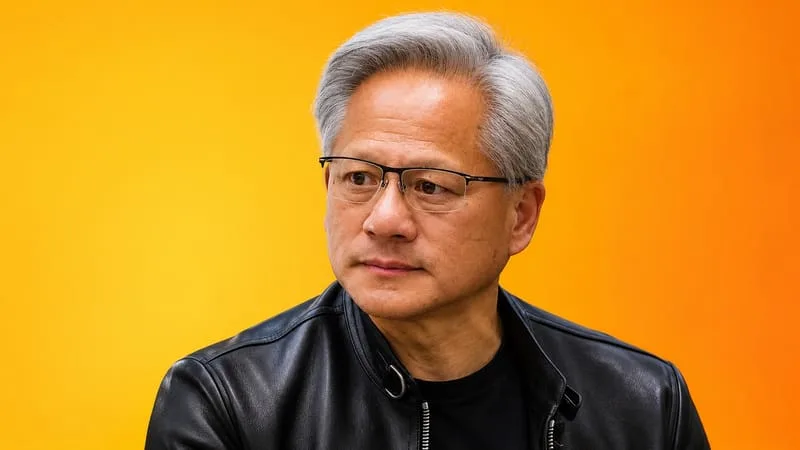
Nvidia CEO Jensen Huang resigned amid alleged affairs, including with a suspected spy, as falling shares erased nearly $10B from his fortune. He was also set to testify before Congress ahead of Thanksgiving. Huang reportedly questioned the leadership abilities of his successor, interim CEO Colette Kress, a 13-year-company veteran, describing her as a “deer in the headlights.”
SpaceX and Tesla could announce a merger as soon as December, which would be the largest merger ever, Bloomberg reported. SpaceX planned to invest more than $74B in AI supercomputing campuses in Texas and Arizona, with the Arizona project still awaiting local approval amid community opposition.
The US government obtained court approval to seize $1.2B in cryptocurrency stolen during a record $6.3B Binance hack attributed to North Korean hackers. WHOOP, which makes wearable trackers for sleep, recovery, and fitness, launched Humans, a social network with accounts it says are verified by users’ heartbeats. TikTok’s parent company ByteDance reportedly planned to repurchase up to $6B in shares from investors at a roughly $400B valuation, according to The Information. An experimental chewing gum from Penn cut human papillomavirus, or HPV, levels by up to 93% in lab tests on saliva from head and neck cancer patients; human trials come next.
Current Stage: What Is Still Open
By November 13, 2026, the day’s leading stories had moved from isolated product news into infrastructure questions. Microsoft had not named a root cause, but the outage already showed how deeply AI tools were embedded in email, security, and workplace software. Oura’s $625M purchase of Counsel Health signaled that wearable companies were trying to cross from data collection into clinical delivery. Pfizer’s monthly GLP-1 push showed that the obesity-drug race was moving from efficacy toward dosing convenience. Sweden’s EcoDataCenter and Mistral plans showed that AI expansion now depended on power, heat reuse, and local grid balance.
The next checkpoints are concrete: whether Microsoft can restore full capacity and identify the Exchange Online failure, whether Oura can integrate Counsel’s physician-plus-AI model without narrowing its enterprise reach, whether Pfizer’s monthly berobenatide can hold up in larger trials, and whether Borlänge’s 250MW first phase can deliver local benefits while serving AI demand.
Comments
No comments yet. Be the first to comment.