
Former DeepMind researcher believes AlphaGo's playbook could fix AI hallucinations
Former DeepMind researcher Thore Graepel founded Metis Reasoning to reduce AI hallucinations. Inspired by AlphaGo, it combines learned prediction with systematic search and an explicit knowledge ledger that records facts, confidence and open questions. The ledger verifies conclusions against calculations, proofs or evidence, and re-evaluates dependent answers when assumptions change. This approach aims to deliver cited, verifiable reasoning and may work with smaller models on edge devices and robots.
Key Takeaways
- Former DeepMind and AlphaGo researcher Thore Graepel founded Metis Reasoning to apply AlphaGo-style prediction and systematic search to improve AI reliability and reduce hallucinations.
- The proposed system uses an explicit knowledge ledger to track known facts, confidence levels, open questions, and assumptions, while a verification module checks conclusions against evidence, calculations, or proofs.
- Metis argues that larger language models alone will not solve trust problems because current models can fabricate answers, hide knowledge in weights, and provide unverifiable reasoning chains.
- If successful, the approach could enable source-cited explanations, editable knowledge without retraining, and smaller models for edge devices and robotics.
- The proposal remains at the research stage with no working system or benchmarks, and its biggest challenge is applying verified reasoning to messy real-world domains beyond controlled games or textbook examples.
Meta description: Metis Reasoning adapts AlphaGo search and a knowledge ledger to verify AI conclusions, citing hallucination and trust limits in current models.
Tags: Metis Reasoning, Thore Graepel, AlphaGo, AI reliability, knowledge ledger
Featured image: abstract technology style with a knowledge ledger and search nodes, no real people, no logos, no text
Metis Reasoning Adapts AlphaGo Search to Verify AI Conclusions
Thore Graepel, a former Deepmind researcher, founded Metis Reasoning to build AI systems that track what they know and check every conclusion against evidence. His team says larger language models alone will not fix reliability, because current systems can invent answers and hide knowledge inside weights.
Background: From AlphaGo to a Deepmind departure
Graepel earned a PhD in machine learning in Berlin in 2001. At Microsoft Research he helped build TrueSkill, the matchmaking system behind Xbox Live. At Deepmind he worked on AlphaGo, AlphaZero and MuZero. After Altos Labs he served on Google Deepmind’s team focused on the stage after artificial general intelligence, left over the summer, and holds the machine learning chair at University College London.
The 2016 AlphaGo victory over Go professional Lee Sedol underpins Metis’ pitch: learned prediction plus systematic search could make AI systems more reliable, including in robots. Bloomberg says Graepel is raising a low tens-of-millions round for Metis, with a follow-on of several hundred million dollars at a higher valuation already in the works.
He is another Deepmind veteran building outside Google. Former colleague David Silver founded Ineffable Intelligence and closed the largest seed round of any European startup. Tim Rocktäschel co-founded Recursive, valued at $4.65 billion. Others have moved to competitors. The Financial Times reported Deepmind dissolved the team behind AlphaFold, and Nobel laureate John Jumper left for Anthropic with two colleagues. CNBC links the talent drain partly to limited internal access to Google’s tensor processing unit chips and bureaucracy, while Deepmind loses independence and Demis Hassabis has stepped back from day-to-day operations.
Development: A knowledge ledger replaces weights
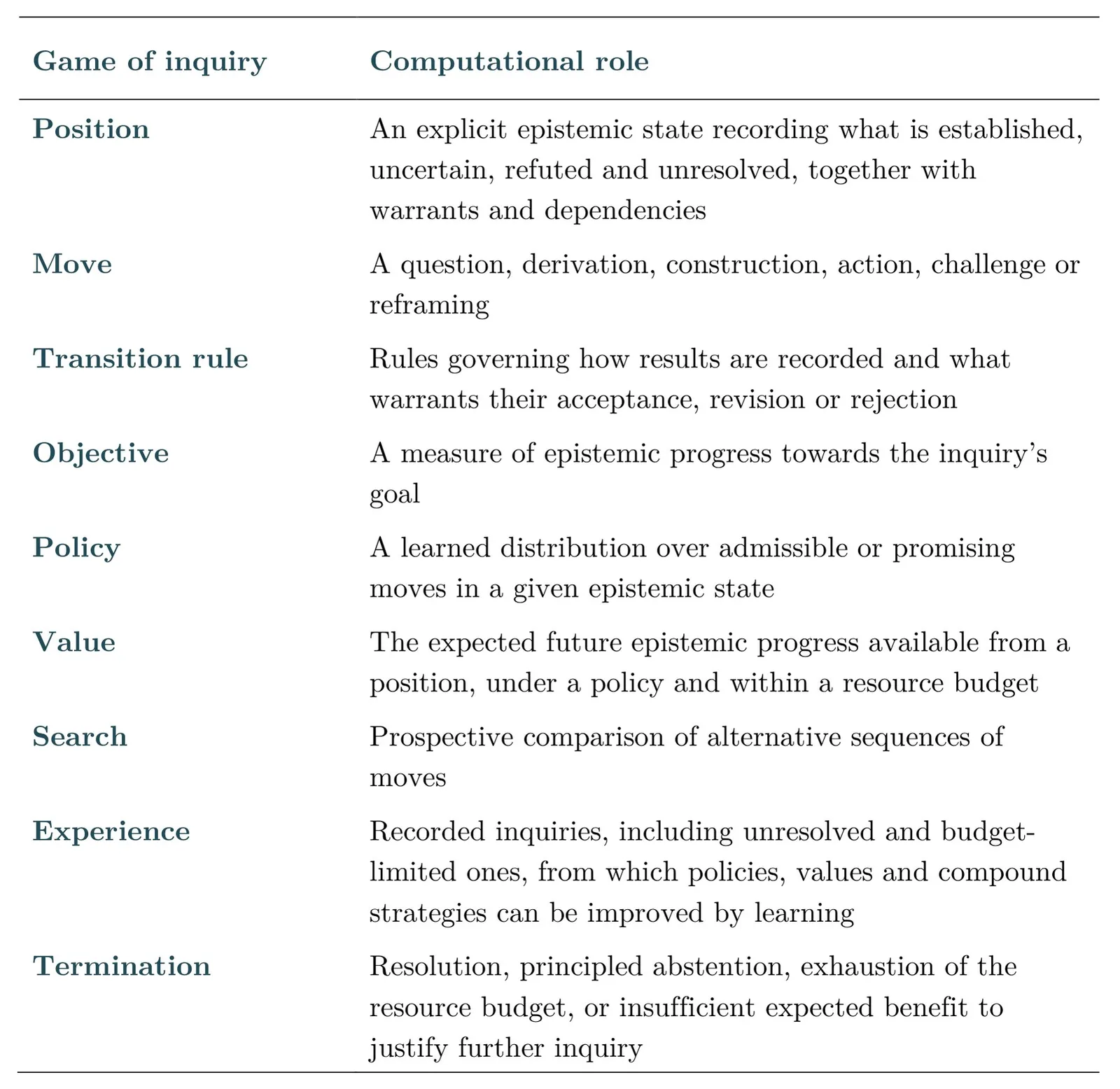
Graepel presented Metis Reasoning at Nvidia’s GPU Technology Conference in Berlin, where Nvidia has expanded its platform for robotics and physical AI with the goal of turning robotics’ data problem into a compute problem. Metis compares today’s language models to AlphaGo’s prediction network, which suggested moves. AlphaGo paired that network with systematic search through game sequences and found Move 37, a move the network would have given a human player roughly a one-in-ten-thousand chance of making. Metis wants to bring that kind of search to general reasoning.
The paper proposes an explicit knowledge ledger, comparable to the game board. Microsoft’s GraphRAG organizes knowledge outside model weights in a knowledge graph, and Google’s AlphaGeometry2 pairs a language model with a symbolic engine that verifies mathematical proofs. Metis wants to extend those principles to open questions in the real world.
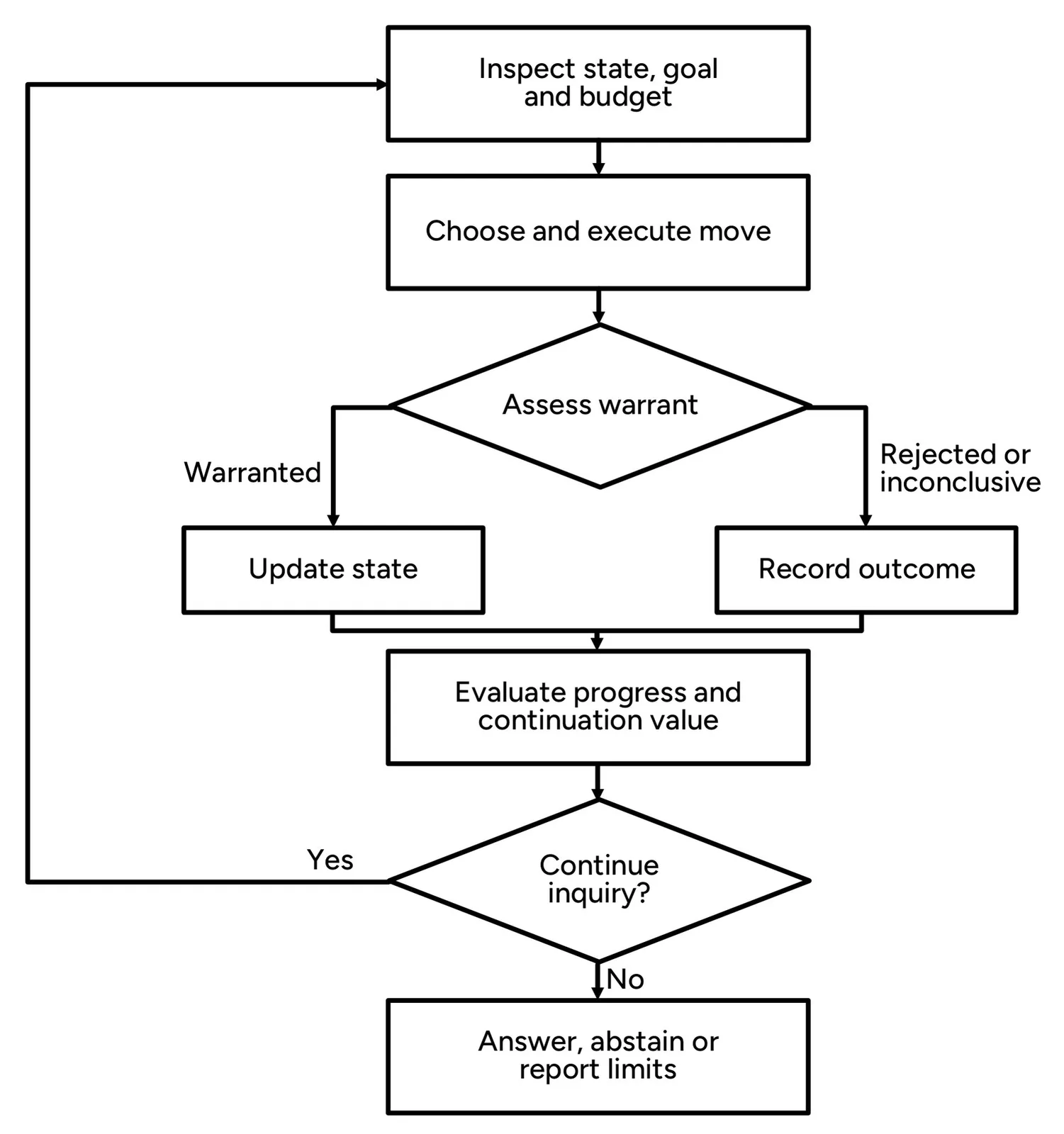
The ledger records what is known, confidence, and open questions. A separate module checks new entries against calculations, formal proofs, or empirical evidence. If an assumption falls away, every dependent conclusion is re-evaluated. A move can be a question, an experiment, or a challenge to an assumption; the system picks whichever reduces uncertainty about the original question most, delivering an answer or justified abstention.
Two neural networks suggest and evaluate moves, trained on logged prior investigations but unable to override verification rules. Metis says this should yield fewer hallucinations, source-cited explanations, and knowledge that can be changed or deleted without retraining. Because reasoning breaks into small steps, it could favor smaller models on edge devices and in robots.
Latest: Why trust remains the bottleneck
Companies still do not trust language models enough to deploy them, according to Metis. The company argues more data and compute improve language models but do not solve fundamental problems: fabricated answers, unverifiable reasoning chains, and knowledge locked inside weights. The paper says hallucinations come from training, because models learn plausible rather than true text, and chains of thought often fail to show how an answer was reached.
That explains AI’s limited economic impact so far, the paper says. When agents act for companies, errors are hard to trace and wrong knowledge cannot be removed. AI took off in software engineering because code is easy to test and roll back, but medicine, finance, chip design, and robotics need verifiable systems from the ground up.
The white paper describes only a research program, with no working system, no benchmarks, and no comparisons with current reasoning models. It acknowledges that the real world, unlike Go, gives only partial information, evidence can be expensive, and some questions have no answer. The biggest open question is how a verified knowledge ledger would work in messy domains beyond textbook examples, given symbolic AI systems once failed because all their knowledge had to be entered by hand.
Current stage: A proposal, not a deployed system
Metis Reasoning now sits between a Deepmind-inspired research idea and a funded attempt to test it. The Berlin presentation and reported funding effort mark the current stage. The next test is whether the ledger, verification module and uncertainty-reducing moves can work outside controlled games and textbook domains.
Comments
No comments yet. Be the first to comment.