
Wabi, the AI agent that builds mini apps, is now valued at $1,250,000,000 following its latest funding round.
Wabi, founded by Eugenia Kuyda, raised $55 million at a $1.25 billion valuation, pivoting to a personal AI agent messenger for daily tasks.
Key Takeaways
- Wabi raised $55 million at a $1.25 billion valuation, reflecting strong investor interest in its AI agent direction.
- Founded by Eugenia Kuyda, Wabi has pivoted from prompt-built mini apps to Wabi 2.0, a personal AI agent messenger for everyday tasks.
- The product aims to create small, task-specific interfaces such as meal planners, fitness plans, and local recommendation tools during ordinary conversations.
- The funding round was led by IVP, with participation from Andreessen Horowitz, Forerunner, Amazon Alexa Fund, and notable angel investors.
- The broader trend shows investors backing agentic AI software that goes beyond simple chat interfaces.
Meta description: Wabi, founded by Eugenia Kuyda, raised $55 million at a $1.25 billion valuation and is pivoting to a personal AI agent messenger for daily tasks.
Tags: Wabi, AI agents, Eugenia Kuyda, IVP, personal agent
Featured image: Abstract technology style image showing soft glowing prompt boxes transforming into mini app cards, no real people, no company logos, no text.
From prompt-built apps to a personal agent
On Thursday, Wabi, which now describes itself as a “personal agent,” said it had raised $55 million at a $1.25 billion valuation. The startup was founded by Eugenia Kuyda, who previously founded the AI companion startup Replika. Wabi originally focused on allowing anyone to build apps using prompts, placing app creation inside a text-based workflow.
The funding reflects a broader pattern in the race to build the winning AI assistant: investors are backing multiple approaches, not just chat interfaces. Wabi is now positioning itself as software that can create the interfaces a person needs to get things done, rather than simply responding to requests.
The pivot announced last month
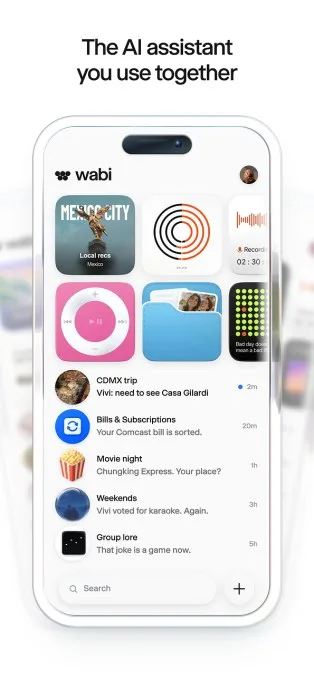
Last month, Wabi announced a pivot of sorts to become an AI messenger. The updated product, referred to as Wabi 2.0, is described as a personal AI agent that can build interfaces for everyday tasks. The company suggests Wabi could be used to build mini apps for things like meal planning, tracking local restaurants, planning date nights, creating fitness plans, designing specialized trivia games, and more.
The shift moves the product from a prompt-to-app concept toward a messenger format. Instead of treating every task as a separate app request, Wabi frames itself as an agent that can assemble small tools during ordinary interactions.
Investor interest in agentic software
The additional funding indicates that Wabi’s investors agree that its new agentic angle has some potential, especially given the market around AI agents is hot right now. Instinct, a viral AI agent, pulled in another billion at a $10 billion valuation in September. Tolan, which makes a cute, muppet-like AI companion to help people navigate life, just raised $30 million.
Alex Lim, general partner at IVP, which led the new round, said in a statement: “Eugenia has a unique sense for where AI is headed and a track record of great taste in building it.” Lim added: “She has a clear vision for how people will interact with AI, one that goes far beyond the text box or command line. Wabi is the expression of that vision, and we’re thrilled to support her.”
Other participants in the round included Andreessen Horowitz, Forerunner, Amazon Alexa Fund, and angel investors such as Shopify CEO Tobi Lütke, Salesforce CEO Marc Benioff, former Yahoo! head Marissa Mayer, former Twitter CEO Dick Costolo, and one half of The Chainsmokers, Alex Pall.
What the round suggests about the current stage
The $55 million raise at a $1.25 billion valuation puts Wabi among the startups trying to define how AI assistants should work before users rely on them daily. Its pivot from prompt-built apps to an AI messenger shows an attempt to make agentic software more practical: not a single chat window, but a system that can create small interfaces for specific needs.
For now, the latest progress is the funding and the repositioning around Wabi 2.0. The next signal will be whether investors and users treat the messenger-as-agent format as a distinct product category, or as another variant of the broader AI assistant race.
Comments
No comments yet. Be the first to comment.