
After blocking Muse, Amazon now allows users to text Alexa for shopping assistance.
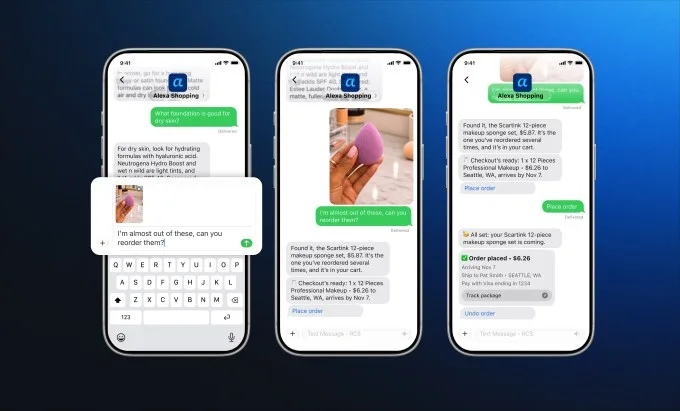
Amazon is piloting a text-based Alexa shopping agent for select US users, enabling search, comparisons, orders, and personalized recommendations.
Key Takeaways
- Amazon is testing a text-based Alexa AI agent for shopping, allowing select US customers to chat with Alexa by text to search products, compare items, manage orders, and complete purchases.
- The feature supports low-friction shopping tasks, including photo-based product matching, price tracking, list management, web searches, and order status checks.
- The rollout comes shortly after Amazon blocked Meta’s Muse from querying its shopping site and just before the holiday season, suggesting Amazon is testing messaging as a controlled entry point for AI-driven commerce.
- Access is currently limited: invited users can enable the feature, while others can join a waitlist, with a broader rollout expected in the coming weeks.
- The move reflects a wider industry trend in which platforms are choosing whether to allow external AI agents or build their own, aiming to keep shopping interactions inside their own ecosystems.
Meta description: Amazon is inviting select US customers to text Alexa to shop, compare products, manage orders, and build AI agent preferences before holiday season.
Tags: Alexa, Amazon, AI agents, text shopping, US customers
Featured image: Abstract technology style image showing chat bubbles and a shopping cart, with no real people, company logos, or text.
Background: Amazon Enters the Text-Based AI Agent Race
Amazon said on Friday it is rolling out a text-based Alexa AI agent for shopping, inviting select US customers to chat with Alexa through text messages. The move places Amazon alongside consumer AI agents such as Muse and Instinct, where users give instructions in natural language and the assistant carries out tasks. It shows how platforms may use messaging to retain control over AI shopping interactions.
The timing matters for two reasons. First, Amazon had previously limited outside AI access to its shopping site; in September, it blocked Meta's Muse from querying it. Second, the feature is appearing just before the holiday shopping season, when shopping activity rises. For readers, this suggests Amazon is not simply testing AI chat as a novelty. It is testing a lower-friction entry point for shopping, because many consumers already use messaging rather than opening apps or websites.
Development: From Alexa Shopping Upgrades to Text Messaging
The messaging feature extends Alexa's recent shopping-focused upgrades. It lets customers search for products, add items to a cart, and complete purchases through text messages. It can also maintain lists, track prices, search across the web, compare products, and check order status.
Customers can send a photo of an item or a person wearing clothing, and Alexa can look for comparable listings on Amazon. This could be useful when a user sees clothing or a product offline and wants a similar listing without typing detailed descriptions.
Amazon says Alexa will learn users' preferences over time and suggest items accordingly. That statement frames the rollout as ongoing personalization, not a one-time shopping tool.
Latest Progress: Limited Invites and a Broader Rollout Ahead
Amazon is starting with limited access. A selected group of US customers will receive an invitation by text asking them to turn on the shopping feature. Users who receive access can communicate with Alexa in natural language for shopping tasks. Users who do not receive an invite can sign up for a waitlist. The company expects a wider rollout in the coming weeks. Readers should treat early access as a controlled pilot, not a general launch.
Current Stage: Platforms Choose Their Own AI Agent Paths
The rollout is one step in a broader market shift. As consumer-focused AI agents grow, platforms are deciding whether to let outside agents operate on their services or build their own. Last month, delivery company DoorDash said third-party agents had so far placed only hundreds of orders in total on its platform. DoorDash also said it plans to focus further on its own text-based agent, which it launched in September.
For now, Amazon's Alexa text agent is in a limited early stage. It is not a full replacement for the Amazon shopping app or website. Its significance is the channel: Amazon is testing whether text conversations can become a routine way to shop, compare products, and manage orders, while keeping users inside its own AI experience rather than leaving Amazon to external agents.
Comments
No comments yet. Be the first to comment.