
Agility, the humanoid robot maker, goes public on Nasdaq at a $2.5 billion valuation.
Agility Robotics lists Digit on Nasdaq at $2.5 billion; Apple delays its robot, China blocks SoftBank's ABB deal, and Xiaomi logs eight factory hours.
Key Takeaways
- Agility Robotics' humanoid robot Digit began trading on Nasdaq via a SPAC merger at a $2.5 billion pre-money valuation, despite only $1.8 million of 2025 revenue and significant losses, bringing its unproven warehouse economics into public quarterly scrutiny.
- Digit 5 is designed for extended daily operation, with repeated lifting, fast recharging, safety-focused evaluations, a major 1,000-robot contract, and planned expansion to the EU and UK in 2027.
- Apple's first home robot has reportedly been delayed to 2027 or later, largely because making it act autonomously remains difficult, even though the hardware is described as mostly complete and the target price may exceed $1,000.
- China blocked the China portion of SoftBank's $5.4 billion deal for ABB's robotics business over concerns that factory robot data could leave China and train foreign AI models, signaling tighter regulatory scrutiny of robotics transactions.
- Xiaomi showed two humanoids completing eight cumulative hours of factory work sorting car parts, but withheld key metrics such as success rate and human interventions, underscoring the gap between impressive demos and proven industrial productivity.
Meta description: Agility Robotics lists Digit humanoid on Nasdaq at $2.5 billion as Apple delays, China blocks SoftBank ABB deal, Xiaomi logs eight factory hours today.

Tags: Agility Robotics, Digit humanoid, robotics IPO, humanoid robots, Apple HomeView
Featured image: Abstract humanoid robot silhouette moving warehouse totes under soft blue light, no real people, no company logos, no text.
Agility Robotics' Digit humanoid began trading on Nasdaq as AGLT on Nov. 5, 2026, at a $2.5 billion pre-money valuation, according to Jennifer Mossalgue's robotics briefing. The Oregon startup's tote-hauling humanoid has $1.8 million of 2025 revenue, so the listing brings quarterly disclosure to a company whose warehouse-floor economics remain unproven. The same briefing also moved through Apple's delayed home robot, China's block of a SoftBank-ABB deal, and Xiaomi's eight-hour humanoid factory run.
Background: Years of Tote Hauling and a Small 2025 Revenue Base
Before the listing, Digit had spent years moving totes in warehouses and auto plants. The $2.5 billion pre-money valuation equals about 1,400 times Agility's 2025 revenue, and more than half of that revenue came from five robots sold to one investor. Agility reported a $138.1 million loss and $99.8 million of operating cash burn in 2025.
The company reached Nasdaq through a special-purpose acquisition company merger with Churchill Capital Corp XI, a route expected to bring $465 million before expenses, including $100 million in the bank. That financing gives Agility a public market structure, but it also places the company's small revenue base under repeated quarterly scrutiny.
Development: The Nov. 5 Listing and Apple's Robot Delay
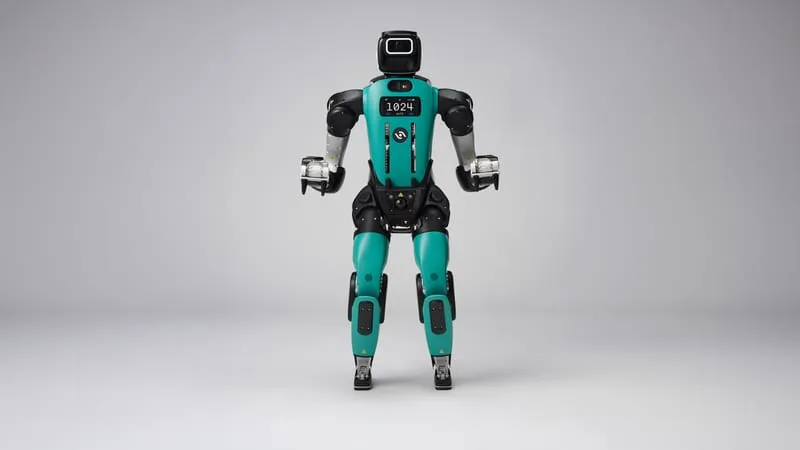
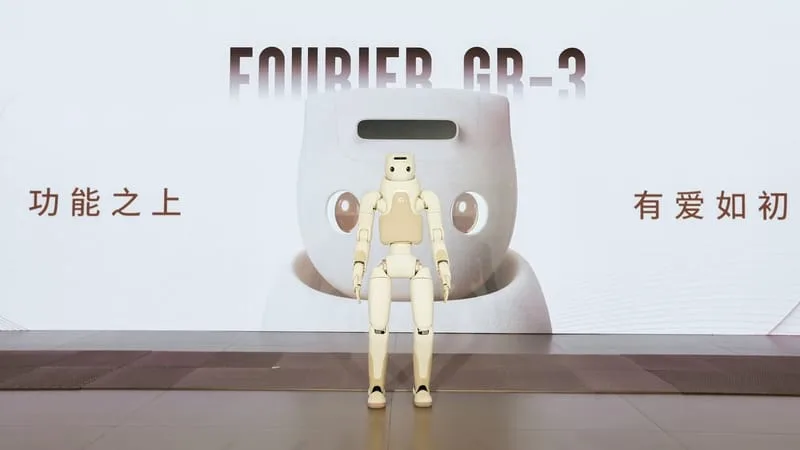
Agility's Nasdaq debut also framed the company as the first US humanoid pure play. Its Digit 5 unit, unveiled in September, stands 5 feet 11 inches, lifts 50 pounds repeatedly, and recharges in 9 minutes, enough for 20-plus hours of work a day. Agility describes the humanoid as designed to operate next to people without barriers and says it was the first humanoid to go through a field evaluation against Occupational Safety and Health Administration standards.

The company's largest contract covers 1,000 robots over three years, and its RoboFab plant in Salem, Oregon, is designed to build 10,000 a year. Agility plans to bring Digit 5 to the EU and UK in 2027.
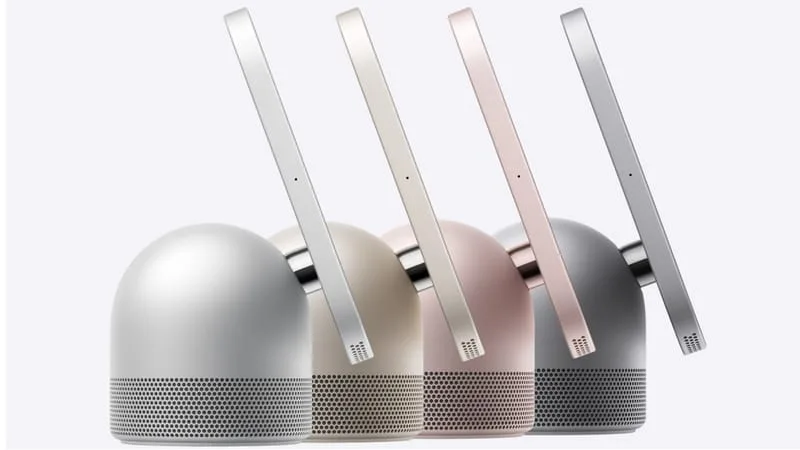
Apple's first home robot has reportedly been in development for about two years, but the harder problem has been turning a swiveling screen into an AI that acts on its own. The Information reported the launch now leans toward 2027 or later. The hardware is reportedly mostly done: J595 is said to be a 9-inch screen on a swiveling robotic arm designed to turn toward people during calls.

Apple reportedly wants the device to understand who and what is around it, react autonomously, and control parts of the smart home. The reported target is 2027 at about $1,000 or more, though software delays could push the launch into 2028. Apple has also reportedly explored mobile, flying, and chore-focused household robots, though those concepts appear much further from market.
Ars Technica noted that reported features such as following you on FaceTime or switching on lights look “underwhelming” next to existing smart home gear, or even a basic robot vacuum, making $1,000 or more a hard sell. J595 could ship as HomeView Ultra, alongside Apple's new HomeView display.
Latest Progress: China Blocks ABB Deal and Xiaomi Logs Eight Hours
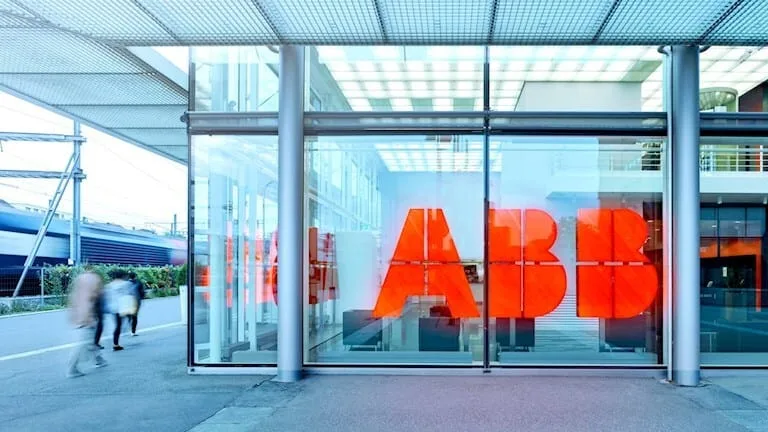
China's foreign-investment security review office blocked the China leg of SoftBank's $5.4 billion deal to buy ABB's robotics business, and ABB confirmed the move Thursday. The unit's biggest market was at risk because regulators reportedly feared data from factory robots could leave China and train AI models abroad, including OpenAI's, where SoftBank is a major investor.
China makes up about 30% of ABB's robotics business. ABB also builds robots and runs a research and development center at a $150 million factory in Shanghai, open since 2022. The deal would have routed ABB's factories and customers into SoftBank's physical AI holdings, Skild included. Coming after China's intervention in Meta's Manus takeover in April, the block means future robotics deals involving Chinese operations could also face scrutiny over who gets to buy and use the data.
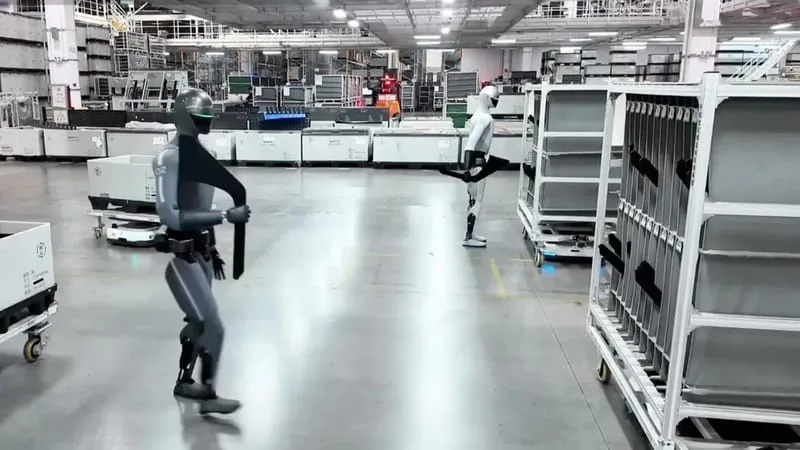
Xiaomi posted a video on X of two full-size humanoids logging eight cumulative hours sorting car parts at its electric vehicle factory in China, its longest published factory run so far. The demo features two humanoids moving center-console side covers from bins into racks; Xiaomi says its robots can also correct anomalies autonomously.
The eight hours come from a cumulative work-time counter, posted at 100 times speed. At one break, Xiaomi's on-screen status card reads charging. Xiaomi has not disclosed how many parts were sorted, the success rate across the shift, how often humans stepped in, or which anomalies the robots catch.
Figure says Figure 02 worked 10-hour shifts at BMW and loaded 90,000 or more parts, while Boston Dynamics' Atlas demoed parts sorting at Hyundai's US electric vehicle plant. Eight hours of autonomous, self-correcting factory work is a serious achievement, but Xiaomi still has not shown output or intervention numbers. Electrek argues the wheeled robot helper spotted in the demo could be the more practical design: wheeled humanoids with room for bigger batteries, no walking needed.
Current Stage: Quarterly Numbers, Quick Updates, and Source Context
Agility now has to publish quarterly numbers in a sector where rival Figure was valued at $39 billion while still private. The immediate question from the briefing is whether Digit can earn enough on the warehouse floor to justify that price.
The same Nov. 5, 2026 roundup also reported that Figure's F.03s are walking out of the factory, with a new video from CEO Brett Adcock showing them crossing campus months after the company said it built its 1,000th unit. Boston Dynamics' new Stretch robot, which unloads trucks, is built to break down less, with an 81% reduction in internal cabling and a full swerve-drive swap now taking about one hour rather than a full day.
Baidu said its new Apollo World simulator, used to train its Apollo Go robotaxis, can generate up to 100,000 kilometers of simulated driving per day with camera and lidar streams. Shield AI built its first full-scale X-BAT prototype in a year, an AI-piloted fighter jet built to fly without a runway. Testing is next, and production is targeted for 2029.
China's robotics boom is reportedly slowing down, with funding falling to $1.6 billion in October, 67% below June's peak, as worries grow that some companies will not survive. Waymo will reportedly end Uber's exclusivity in Austin and Atlanta in Jan. 2028, adding bookings through its own app while potentially remaining on Uber.
A soft robotic exosuit that assists scuba divers' kicks has cut air use by up to 30% in tests, potentially buying them more time underwater. BMW will expand its Society of Automotive Engineers Level 2 driver-assistance system into German cities in 2027, adding navigation-guided support for turns, lane changes, and right-of-way situations. Nearly 90 teams competed with robots on China's Mount Tai this week in the inaugural World Robot Mount Tai Climbing Competition. MIT researchers developed a system that helps robots detect and correct mistaken memories of objects by comparing images from different angles.
The briefing's source context completed the timeline. Its header listed Read Online, Sign Up, and Advertise, and it opened with a greeting to robotics enthusiasts plus a line saying Apple's first robot faces another delay. It referenced a prior AI newsletter item saying AI agents can now make your phone calls, a Tech newsletter item saying Apple can't build enough iPhone Duos, and a Robotics newsletter item saying Meta builds its first humanoid robot. Its tool guide asked “Which free AI tool should you actually use?” and it invited readers to a Nov. 11 workshop with Nate on “Use Claude to its full potential.”
Recent newsletters included Meta builds its first humanoid robot by Jennifer Mossalgue in 6 minutes, Humanoid maker Figure eyes $1.5 billion by Rowan Cheung in 5 minutes, The self-driving future grabs a giant shovel by Jennifer Mossalgue in 6 minutes, and Clone Robotics unveils synthetic human prototype by Rowan Cheung in 5 minutes. The newsletter ended with Stay Ahead on AI, saying 3,500,000 or more readers get bite-size AI news updates straight to their inbox every morning with The Rundown AI newsletter, and that it is 100% free. It closed with That's it for today, the prompts Nailed it, Average, and Fail, and a sign-off from Rowan, Zach, Shubham, Jennifer, and Nate, The Rundown's editorial team.
Comments
No comments yet. Be the first to comment.